



Introduction
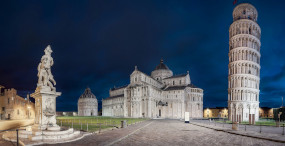
Leaving Pisa to explore Tuscany and the Ligurian coast gives you a perfect springboard: trains, cars and ferries make it possible to reach art cities, medieval villages, rugged coasts and sun-drenched islands all in a single day. This article lays out ten essential day trips from Pisa, tailored for every kind of traveler — history buffs, hikers, food lovers, photographers and families. Each destination includes practical details: full names of sights to visit, exact addresses, approximate prices in euros, current opening hours, immersive descriptions and local tips to make the most of your day.
Contenu de l'article
Why base yourself in Pisa rather than elsewhere? For one, Galileo Galilei International Airport (Aeroporto Internazionale di Pisa « Galileo Galilei ») is well connected, and Pisa Centrale train station is a regional hub where local and InterCity trains converge. The city also offers good value for accommodation, letting you explore the region without changing hotels every night. The day trips listed here keep travel times reasonable for a single day: typically 30 minutes to 2 hours max to reach the first attraction, leaving you time for sightseeing, strolling and a relaxed lunch.
Each itinerary includes exact addresses — handy for GPS and planning — as well as entrance fees and opening times (note: prices and hours can change with the season and public holidays, so always check before you go). Descriptions are designed to be immersive: you’ll not only know what to see, but what to feel — the golden light on a medieval façade, the cool hush of an artwork beneath a dome, the scent of bread baking in a narrow lane. Finally, local tips will help you save time (best visiting hours, skip-the-line tickets, alternatives if a site is closed).
Throughout the sections you’ll find visual signposts

placed to inspire you and help you imagine each place. Whether you’re in Pisa for a short stop or a longer stay, these ten day trips will let you mix cultural highlights, natural panoramas and tasty stops — all while keeping Pisa as a convenient, welcoming base.
1. Florence: the Renaissance masterclass (Duomo, Uffizi Gallery, Ponte Vecchio)
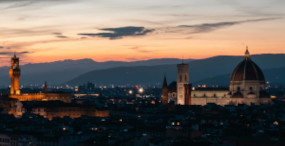
Florence (Firenze) is Tuscany’s cultural capital and an absolute must for a day trip from Pisa. By train from Pisa Centrale the journey takes roughly 50 minutes to 1 hour 10 minutes depending on regional or faster services. Arriving at Firenze Santa Maria Novella, everything is walkable. Start at the Cathedral of Santa Maria del Fiore (Duomo di Firenze), then head to the Galleria degli Uffizi, and finish with a stroll along the Ponte Vecchio.
– Cathedral of Florence (Cattedrale di Santa Maria del Fiore) — Piazza del Duomo, 50122 Firenze FI, Italy. Price: combined ticket for the complex (Cathedral, Campanile, Baptistery, Museo dell’Opera del Duomo) about €20 (indicative). Opening hours: generally 10:00–17:00 (varies by season; masses and religious services may restrict access to the nave). Climb the dome (Cupola del Brunelleschi) with prior reservation: often open 08:30–19:00 depending on season.
– Galleria degli Uffizi — Piazzale degli Uffizi, 6, 50122 Firenze FI, Italy. Price: full ticket around €20–25 (online booking recommended to avoid queues). Opening hours: usually 08:15–18:30 (closed Mondays).
– Ponte Vecchio — Ponte Vecchio, 50125 Firenze FI, Italy. Free, accessible 24/7.
Visiting the cathedral is a sensory journey: the polychrome façade, the Baptistery mosaics and the strenuous but rewarding climb up the dome give unique views over Florence. The Uffizi, situated along the Arno, houses masterpieces by Botticelli, Leonardo da Vinci and Michelangelo. Foot traffic is heavy in high season; aim for the first opening hour or late afternoon for softer light and fewer crowds.
Practical tips: buy skip-the-line tickets for the Uffizi and the dome several days in advance, wear comfortable shoes for the cobbles and book a city-center restaurant if you want to try bistecca alla fiorentina. Stop by the Central Market (Mercato Centrale, Piazza del Mercato Centrale, 50123 Firenze FI) for an authentic lunch break: many stalls with dishes priced around €10–20 each.
 Click here to book your ticket for the cathedral and crypt

Visiting the cathedral is a sensory journey: the polychrome façade, the Baptistery mosaics and the strenuous but rewarding climb up the dome give unique views over Florence. The Uffizi, situated along the Arno, houses masterpieces by Botticelli, Leonardo da Vinci and Michelangelo. Foot traffic is heavy in high season; aim for the first opening hour or late afternoon for softer light and fewer crowds.
Practical tips: buy skip-the-line tickets for the Uffizi and the dome several days in advance, wear comfortable shoes for the cobbles and book a city-center restaurant if you want to try bistecca alla fiorentina. Stop by the Central Market (Mercato Centrale, Piazza del Mercato Centrale, 50123 Firenze FI) for an authentic lunch break: many stalls with dishes priced around €10–20 each.
2. Lucca: city walls, towers and cycling
Lucca is a charming medieval town just 20–30 minutes by train from Pisa. Famous for its fully walkable Renaissance walls, Lucca is perfect for a relaxed day of walking, history and great food. Its atmosphere is calmer than Florence, ideal for families or travelers seeking authentic Tuscan life.
Main sights:
– The city walls walk (Passeggiata delle Mura di Lucca) — Piazzale Verdi, 55100 Lucca LU, Italy. Free, open continuously. This green ring around the historic center is perfect for cycling (rentals about €6–12 per day).
– Torre Guinigi — Via Sant’Andrea, 45, 55100 Lucca LU, Italy. Price: about €4–6 to climb to the top. Opening hours: 09:00–19:00 in season (varies off-season).
– Piazza dell’Anfiteatro — Piazza dell’Anfiteatro, 55100 Lucca LU, Italy. Free, open 24/7.
Lucca’s walls offer a shady promenade lined with linden trees, ideal for a morning stroll or picnic. Climbing Torre Guinigi — with its rooftop garden — rewards you with a surprising view over terracotta roofs and the surrounding hills. Piazza dell’Anfiteatro, built on the remains of a Roman amphitheatre, is ringed by cafés and restaurants where you can sample local specialties like tordelli lucchesi (stuffed pasta) for about €12–18 per plate.
Practical tips: rent a bike near the walls (many rental shops available), arrive early to avoid tour buses and explore local artisan boutiques in the narrow streets. If time allows, join a short guided tour (often €10–15) to learn about Roman history and visit Puccini’s birthplace (Casa Natale di Giacomo Puccini, Corte San Lorenzo, 9, 55100 Lucca LU — ticket about €5–8, hours 09:30–18:00).
Click here to discover Lucca and Pisa on a self-guided bike tour

3. Cinque Terre: coastal paths and colourful villages (Monterosso, Vernazza)
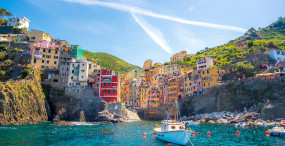
The Cinque Terre is one of Italy’s most iconic coastal landscapes: five villages clinging to the Ligurian coast, connected by scenic trails and a regional train. From Pisa, expect about 1 hour 20 minutes to 1 hour 50 minutes by train to La Spezia, then 10–20 minutes to reach Monterosso al Mare or Vernazza. A day trip is doable, but start early to get the most out of it.
Practical points and highlights:
– Monterosso al Mare (historic center and beach) — Via Roma, 19016 Monterosso al Mare SP, Italy. Beach access is free or paid depending on the section (sunbeds and umbrellas €10–25 per day). Train access: Monterosso station.
– Vernazza — Via Roma, 19018 Vernazza SP, Italy. Village promenades are free; the small harbor and beach are perfect for relaxing. Train access: Vernazza station.
– Sentiero Azzurro (Blue Trail) — trail sections connecting villages. Some sections require payment via the Cinque Terre Card: about €7.50–16 per day (prices vary by section and season). Opening hours: trails are open daily but check for closures (landslides sometimes close stretches).
Click here to visit the Cinque Terre with a small group

The first view of Monterosso arriving from the south is spectacular: pastel houses clustered below a sandy bay, with turquoise water begging you to swim. Vernazza, with its small marina and amphitheatre-like houses, is among the most photogenic villages; climb to the viewpoint for a panorama over the harbor. The coastal trails offer unique sea views, but some stretches are demanding: bring light hiking shoes and plenty of water.
Practical tips: buy the Cinque Terre Card (train + trails) if you plan to visit multiple villages and hike — it simplifies fares. Bring a change of clothes if you plan to swim and book lunch in the villages (seafood pasta around €12–20). In high season, fast boats between villages are an alternative (€8–20 depending on distance) and offer stunning sea-level views.
4. San Gimignano and the Chianti wine route
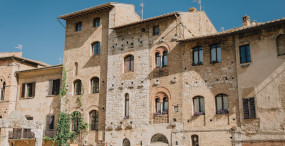
San Gimignano, nicknamed the « medieval Manhattan » for its tall towers, is perfect for a cultural outing paired with wine tasting in the Chianti region. From Pisa Centrale expect 1 hour 15 minutes to 1 hour 45 minutes by car, or about 1 hour 40 minutes to 2 hours by train/bus combinations. The visit mixes history, views and gastronomy.
Highlights:
– Historic Centre of San Gimignano — Piazza del Duomo, 53037 San Gimignano SI, Italy. Free to wander the town. Access to the Torre Grossa (Palazzo Comunale): Piazza del Duomo, 1, 53037 San Gimignano SI, Italy. Price: about €8–10 to climb and visit the museum. Opening hours: 10:00–19:00 (varies by season).
– Museo Civico e Torre Grossa (Palazzo Comunale) — Piazza del Duomo, 1, 53037 San Gimignano SI. Prices and hours as above.
– Chianti tasting (example estate): Podere Il Palagetto — Località Palagetto, 53037 San Gimignano SI. Tastings €10–25 depending on the package. Opening hours: tastings by reservation, typically 10:00–17:00.
Wandering San Gimignano’s lanes feels like stepping back in time: medieval towers create a distinctive skyline, while Piazza della Cisterna and the Duomo house remarkable frescoes. Climbing Torre Grossa offers panoramic views over the Tuscan countryside dotted with vineyards. Afterward, follow the Chianti wine route — winding country roads, vineyards and olive groves — for a tasting. Family-run estates often include cellar tours and small charcuterie plates at reasonable prices (simple tasting €10–15, full tasting €20–30).
Practical tips: reserve tastings in advance, especially on weekends or in high season. If you’re driving, choose a small car for narrow country lanes and don’t drink if you’re behind the wheel — many estates offer transfers or you can hire a driver. For edible souvenirs, buy a bottle of estate olive oil (€8–20) or a local wine (€15–30).
Click here to book a San Gimignano tour with tasting

5. Siena: Piazza del Campo and the Gothic cathedral
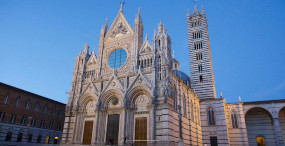
Siena is another classic Tuscan destination that makes for a great day trip from Pisa. By car it’s about 1 hour 30 minutes; by train/bus expect roughly 2 hours depending on connections. The city boasts a remarkably well-preserved medieval center, with narrow streets leading to the famous Piazza del Campo and the majestic Cathedral of Siena (Duomo di Siena).
– Piazza del Campo — Piazza del Campo, 53100 Siena SI, Italy. Public square, free to access and the center of events like the Palio. Open 24/7.
– Duomo di Siena (Cattedrale di Santa Maria Assunta) — Piazza del Duomo, 8, 53100 Siena SI, Italy. Exact address. Price: complex ticket (Duomo, Museo dell’Opera, Baptistery) around €8–15. Opening hours: generally 10:00–19:00 (variable by season and religious services).
– Museo Civico e Torre del Mangia — Piazza del Campo, 1, 53100 Siena SI, Italy. Price: about €8–10 to climb Torre del Mangia and visit the museum. Opening hours: usually 10:00–18:00.
Click here to explore Siena, San Gimignano and Pisa in a day

Piazza del Campo, shell-shaped, is ringed by Gothic palaces and cafés where you can sip an espresso or grab a panino. The Duomo, with its black-and-white marble, houses works by Pisano, Donatello and Pinturicchio; the Piccolomini Library is worth a visit for its colorful frescoes. Climb Torre del Mangia for sweeping views over Siena’s rooftops and the surrounding countryside.
Practical tips: Siena is very hilly — wear comfortable shoes. If you visit in July/August expect high temperatures and aim for morning or late-afternoon visits. The Palio di Siena (two annual horse races) draws huge crowds, so avoid those dates if you prefer a quieter visit. For lunch, try ribollita (a hearty peasant soup) or pici al ragù di cinghiale (pasta with wild boar sauce) at a local trattoria (dishes generally €10–18).
6. Volterra: Etruscan history, medieval palaces and alabaster workshops
Volterra, about 1 hour 30 minutes by car from Pisa, is a less-touristed treasure with strong authenticity. An ancient Etruscan town, it preserves a Roman amphitheatre, medieval walls and a thriving tradition of craftsmanship — especially alabaster carving.
Highlights:
– Museo Etrusco Guarnacci — Via Don Minzoni, 15, 56048 Volterra PI, Italy. Price: about €6–9 (Etruscan collections). Opening hours: 09:00–19:00 depending on season.
– Roman Theatre of Volterra — Località teatro romano, 56048 Volterra PI, Italy. Price: variable, often included in local circuits (check locally).
– Alabaster workshops (example): Bottega dell’Alabastro — Via Porta all’Arco, 9, 56048 Volterra PI, Italy. Workshops with demonstrations and small sculptures €5–50 depending on the object. Opening hours: often 10:00–18:00.
Walking through Volterra is a sequence of steps, viewpoints and sun-warmed squares. The Museo Etrusco Guarnacci displays funerary urns and objects that tell the pre-Roman story of the area. Alabaster workshops invite you to watch stone being shaped — a craft passed down through generations — and are ideal places to pick up a handcrafted souvenir.
Practical tips: Volterra’s streets are narrow and cobbled — exercise caution if you’re driving (park on the outskirts, for example Parcheggio Via Don Minzoni). Book a guided tour if you want a close-up of archaeological sites or a private demonstration in a workshop. For lunch, try local antipasti and a regional wine (meals typically €12–25).
7. Livorno and the coast: Terrazza Mascagni, aquarium and central market
Livorno, under an hour by car or train from Pisa, is a port city often overlooked by tourists but rich in local experiences: seaside promenades, lively markets and seafood cuisine. It makes an excellent day focused on the sea, food and port life.
Highlights:
– Terrazza Mascagni — Viale Italia, 57127 Livorno LI, Italy. Seafront promenade, free and open all day.
– Mercato Centrale di Livorno — Via delle Cateratte, 18, 57123 Livorno LI, Italy. Opening hours: generally 07:00–14:00 (check days open). Fresh produce, fish stalls and street-food counters.
– Aquarium of Livorno — Terrazza Mascagni, 57127 Livorno LI, Italy (or Via del Fosso Reale depending on entrance). Price: about €8–12. Opening hours: often 09:00–18:00 depending on season.
Terrazza Mascagni, a checkerboard promontory facing the sea, is ideal for a morning walk. The Central Market is the city’s beating heart: fish, shellfish, vegetables and local specialties — try a panino con cacciucco (bread topped with the local fish stew) typical of Livorno. The aquarium offers a pleasant family stop, while the canals of Venezia Nuova recall Venice on a smaller, more intimate scale.
Practical tips: pair a morning market visit with an evening stroll on the Terrazza for golden light. Public transport from Pisa is frequent; parking in central Livorno can be limited, so use public car parks on the outskirts. Try fresh fish dishes in a harbor trattoria (seafood menus €15–30).
Click here to book a Livorno and Pisa bus tour

8. Elba Island (Isola d’Elba): beaches, Napoleon and crystal-clear sea
Isola d’Elba is a classic seaside escape: crystal-clear water, varied beaches and coastal towns. The trip from Pisa combines driving to Piombino (about 1 hour 10 minutes), then a ferry to Portoferraio (ferry 30–60 minutes depending on the company). It’s a longer day but very rewarding.
Practical details and must-sees:
– Ferry Piombino → Portoferraio — Port of Piombino, 57025 Piombino LI, Italy. Price: about €18–35 round-trip per person depending on vehicle and season. Schedules: multiple departures daily, more frequent in summer.
– Museo Nazionale delle Residenze Napoleoniche (Palazzo dei Mulini) — Piazza della Repubblica, 8, 57037 Portoferraio LI, Italy. Price: about €6–12. Opening hours: generally 10:00–18:00.
– Recommended beaches: Spiaggia di Sansone (pebbles and turquoise water) — access via local roads; Spiaggia di Procchio (sandy beach) — great for families. Beach access is free; services like chairs and umbrellas are paid (€10–25).

Portoferraio, the island’s capital, features Genoese fortresses, lively harbor streets and the Napoleonic museum in the Palazzo dei Mulini where Napoleon stayed during his exile. Elba’s beaches range from rocky coves with crystal-clear water perfect for snorkeling to long sandy stretches for swimming. Renting a scooter or small car on the island saves time and lets you visit more spots.
Practical tips: book ferry tickets and vehicle rentals in high season, leave early in the morning to make the most of the day, and bring snorkel gear if you enjoy snorkeling. Pack a picnic or pick a seaside restaurant for lunch (menus usually €12–25). Note: parking on the island in summer can be paid and fills up fast.
Conclusion
From Pisa, the choice of day trips is exceptional: in a matter of minutes you can move from medieval towers to Renaissance museums, hilltop villages to coves with translucent sea. Each destination here offers a different yet complementary experience: Florence for art and historical power, Lucca for a relaxed vibe and cycling on the walls, Cinque Terre for sea panoramas and hiking, San Gimignano for towered silhouettes and Chianti wines, Siena for its legendary square and Gothic Duomo, Volterra for Etruscan archaeology and alabaster, Livorno for port atmosphere and markets, and Elba for beaches with a Napoleonic twist.
A few final tips to get the most out of these days: plan tickets in advance for the most in-demand sites (Uffizi, Florence dome, Cinque Terre trails), leave early to save time and enjoy morning light, and alternate cultural visits with food breaks to keep the day enjoyable. When driving, favor small secondary roads to discover hidden views, but park on the outskirts of historic centers — most Italian historic towns restrict vehicle access with limited-traffic zones (ZTL). By train, check schedules on Trenitalia or regional services to optimize connections from Pisa Centrale.
Finally, embrace the unexpected: a café in a sunlit piazza, a local vendor offering you an exceptional olive oil taste, or a side street opening onto an unforeseen panorama can turn a great day into an unforgettable memory. Pisa, with its iconic tower and central location, is an ideal base for exploring Tuscany and beyond — bring sturdy shoes, a camera and a healthy curiosity, and set off to discover.