





Introduction
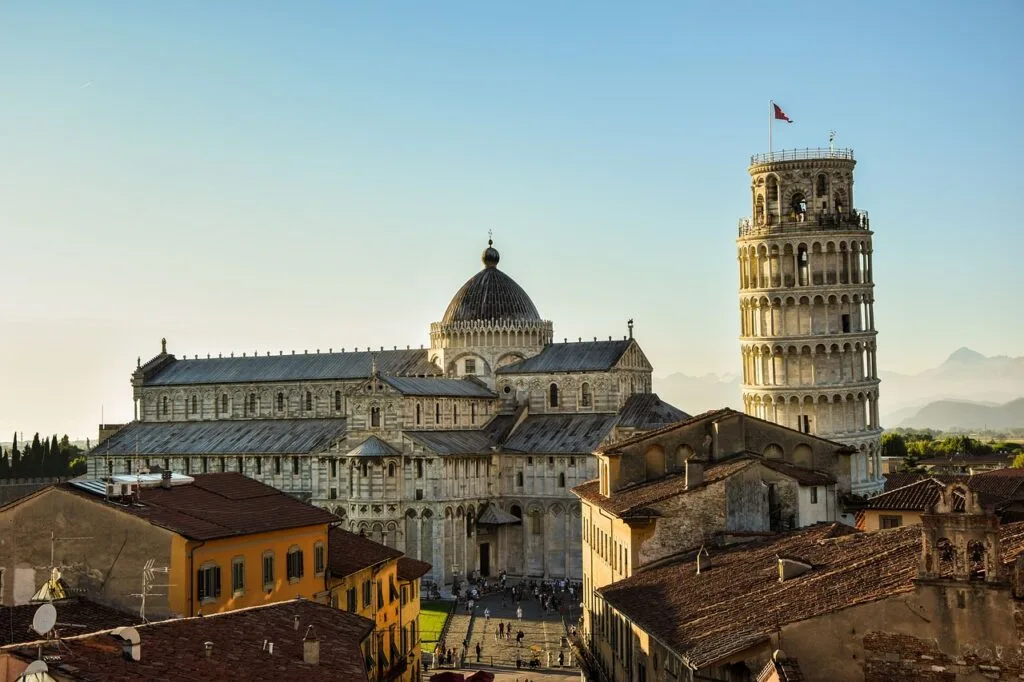
Pisa isn’t just synonymous with its world-famous leaning tower — it’s a city where history, medieval architecture and the banks of the Arno make for fantastic photo opportunities. Whether you’re an amateur shooter, a pro, a travel influencer, or simply a visitor hunting for memorable images, Pisa offers a wide range of backdrops — from the white marble and gilded mosaics of the Piazza dei Miracoli to the medieval alleys of Borgo Stretto and the golden reflections on the Arno at sunset. This guide highlights the 10 best photo spots in Pisa, with precise addresses, indicative prices in euros, opening hours, immersive descriptions and local tips to help you get the most from your shoots.
The city lends itself to many photographic approaches: wide-angle architecture, close-up detail work (mosaics, sculptures, frescoes), soft-lit portraits and lively urban scenes. Tuscan light plays its part: warm morning and evening light flatters stone façades, while misty winter days give a softer, more intimate mood. Each season offers a different palette — spring blooms near the gardens, sharp shadows in summer, golden tones in autumn and calm atmospheres in winter. This article will guide you to exact spots with clear markers (addresses and practical info) so you can plan your photo sessions efficiently.
Throughout the sections you’ll find concrete recommendations: best times (sunrise and sunset, quiet hours to avoid crowds), suggested lenses (wide-angle, telephoto, macro), basic camera settings (ISO, aperture, shutter speed) and handy accessories (light tripod, ND/PL filters, remote shutter). I’ll also outline the entrance fees and ticketing info for major monuments — useful if you plan to shoot from inside historic buildings — as well as local rules (restricted-access zones, opening hours, tripod bans in certain places).
Finally, to help you visualise these locations before you go, image markers have been inserted at the most visual and relevant spots. They’re there to inspire you and give framing and mood ideas. Ready your memory cards, check your batteries and let yourself be led through the best photographic angles Pisa has to offer.
Piazza dei Miracoli: iconic heart and wide-angle compositions
The Piazza del Duomo (also known as Piazza dei Miracoli) is the natural starting point for any photo session in Pisa. Several architectural gems line the lawn: the Torre Pendente di Pisa (Leaning Tower of Pisa), the Cattedrale di Santa Maria Assunta (Pisa Cathedral), the Battistero di San Giovanni (Pisa Baptistery) and the Camposanto Monumentale (Monumental Cemetery). For wide-angle shots, the best vantage point is along the access path on the Corso Italia side, where you can capture the tower’s perspective against the sky.
Address: Piazza del Duomo, 56126 Pisa PI, Italy
Price: Combined Piazza dei Miracoli ticket (access to monuments, varies by options) roughly €18-€22 for a standard visit; entrance to the cathedral is often free but controlled (booking recommended).
Opening hours: The piazza is accessible 24/7 for the exterior areas; the monuments typically open from 8:30 to 20:00 depending on the season — check online before your visit.
Photo tips: to avoid excessive distortion on wide-angle shots, use a 16–35mm (full frame) or 10–20mm (APS-C). Early morning (just after sunrise) and late afternoon offer golden light on the marble and softer contrast. Bring a polariser to deepen the sky and reduce reflections on the marble. If you want a crowd-free image, arrive before 8:00 in high season. For an iconic composition, place the tower on a rule-of-thirds intersection and include lawn elements in the foreground to add depth.
 Click here to buy your ticket for the Piazza dei Miracoli
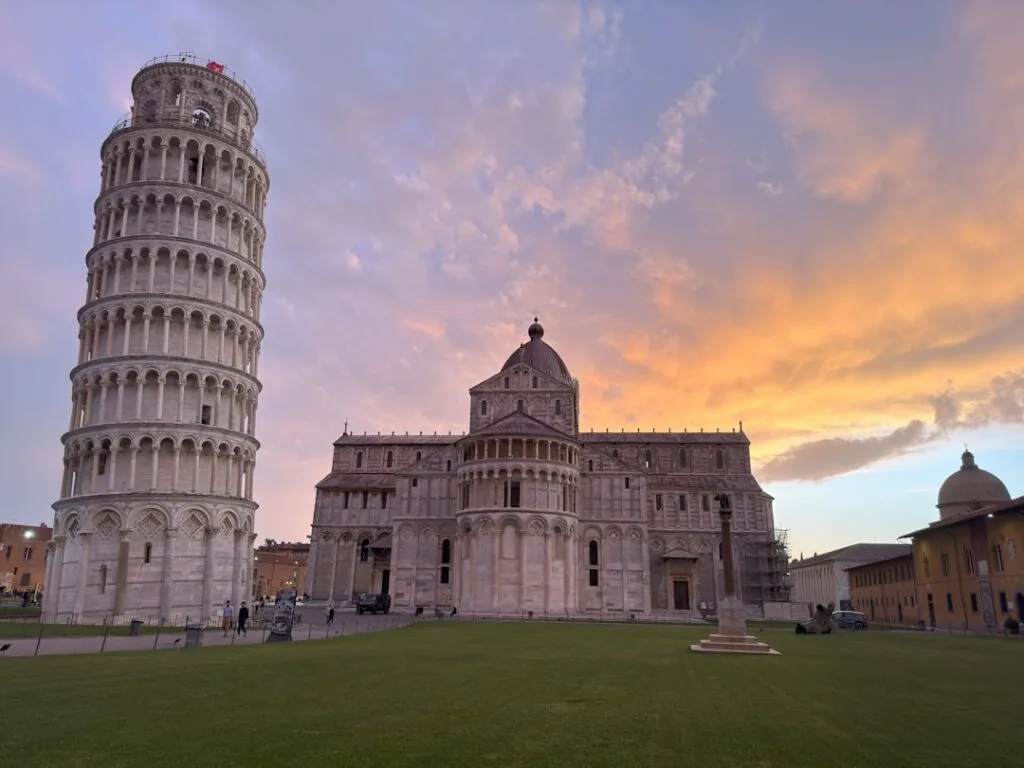
Shooting the piazza at night creates a dramatic result: directed lighting on façades, a deep sky and far fewer tourists later on. Note, however, there can be access restrictions and closed-off areas after monument hours.
Leaning Tower of Pisa and Cattedrale di Santa Maria Assunta: interiors and the ascent
The Torre Pendente di Pisa (Leaning Tower of Pisa) is the most photographed symbol, but the neighbouring Cattedrale di Santa Maria Assunta offers equally spectacular interiors. Climbing the tower is a unique photographic experience: from the top you get panoramic views of the Piazza dei Miracoli, the city and the Tuscan hills on the horizon.
Address – Torre Pendente di Pisa: Piazza del Duomo, 56126 Pisa PI, Italy
Price: Tickets to climb the tower are around €20 per adult (prices vary by season and ticket type). Online booking is strongly recommended.
Opening hours: generally 9:00–20:00 (varies). The last ascent is often 30 minutes before closing. Check the day of your visit for exact times.
Address – Cattedrale di Santa Maria Assunta: Piazza del Duomo, 56126 Pisa PI, Italy
Price: The cathedral usually offers free entry (donations suggested) but access to restricted areas, the crypt or the loggia may be charged. Combined tickets for the Cathedral, Baptistery, Campo Santo and Museo dell’Opera del Duomo average €10-€20.
Opening hours: the cathedral often opens early in the morning and closes in the late afternoon; times can change for religious services.
Practical tips for the tower: the climb is via a narrow spiral staircase — bring compact lenses and protect your gear. Wait times can be long; timed reservations are mandatory in high season. For interior cathedral photography, use moderate ISOs (400–1600 depending on your body) and apertures between f/2.8 and f/5.6 to capture light without losing sharpness. A 35mm or 50mm prime works well for intimate scenes and a 24–70mm for versatility.
Click here to book your ticket for the tower and cathedral
Click here to book a professional photo session at the Leaning Tower
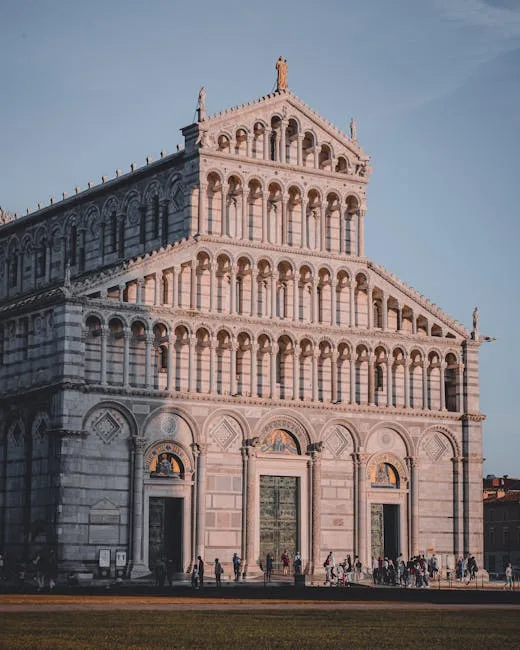
Composition tip: from the cathedral forecourt, look for angles where the tower and the façade align to create a narrative image that shows the whole monumental complex.
Battistero di San Giovanni and Camposanto Monumentale: details, frescoes and textures
The Battistero di San Giovanni and the Camposanto Monumentale offer a wealth of sculptural details, frescoes and photographic textures. The baptistery, with its large dome and distinctive acoustics, is perfect for interior architectural shots with light streaming through high windows. The Camposanto houses frescoes and ancient sarcophagi: for photographers who love texture and color, the interior reveals layers of pigment, craquelure and historical patina that tell centuries of stories.
Address – Battistero di San Giovanni: Piazza del Duomo, 56126 Pisa PI, Italy
Price: Entrance to the Baptistery around €5-€7 (often included in a combined ticket).
Opening hours: typically from 9:00 to 19:00; hours vary by season.
Address – Camposanto Monumentale: Piazza del Duomo, 56126 Pisa PI, Italy
Price: Entrance to the Camposanto approximately €5 (may be included in the combined ticket).
Opening hours: generally aligned with other monuments in the complex, about 9:00–19:00.
Photo tips: to capture fresco detail, use a fast lens (f/1.8–f/2.8) and raise ISO sensibly, or bring a light tripod if allowed (check at the entrance). Macro details on sculptures and mosaics call for shallow depth of field to isolate textures: a 50mm macro or 100mm macro is recommended. In the Baptistery, take advantage of the acoustics for a motion portrait (choral echoes) if you’re lucky enough to witness a demonstration.
Respect the artworks: flash is often prohibited to protect the paintings; stay behind barriers and avoid shots that disturb other visitors.
Click here to buy a ticket for the Baptistery and Cathedral
Ponte di Mezzo, Lungarno and Arno reflections: urban scenes and sunsets
The Arno river runs through Pisa and offers ideal perspectives to photograph the city from a different angle. The Ponte di Mezzo is one of the main bridges and a great vantage point to capture reflections of colourful houses and façades in the water. The Lungarno quays, especially the stretch between Ponte della Fortezza and Ponte della Vittoria, provide photogenic walks, riverside cafés and spots where the sun sets behind monuments, painting the sky in warm hues.
Address – Ponte di Mezzo: Via Ponte di Mezzo, 56126 Pisa PI, Italy (central crossing)
Price: Free (public space).
Opening hours: open 24/7, but best light is at sunrise/sunset.
Technical tips: for stunning reflections, work with slow shutter speeds (0.5–1/15s) using a small tripod and an ND filter if needed to smooth the water. A telephoto (70–200mm) is great to isolate architectural details reflected in the Arno, while a wide-angle captures the river’s curve and quay perspective. In summer, wait for sunset to enjoy orange light and bustling cafés; in winter, low and misty skies can create dramatic atmospheres.
Local advice: the riverbanks are generally safe, but be cautious at night — stick to well-lit, populated areas. If you plan a sunrise session, check local times and weather; after rain, reflective surfaces can produce very graphic images.
Click here to take a self-guided bike tour to the sea
Borgo Stretto, Piazza dei Cavalieri and medieval alleys: intimacy and urban portraits
For more intimate, urban shots, Borgo Stretto is the quintessential medieval street. Lined with historic shops, arcades and richly decorated façades, it’s ideal for environmental portraits, leading-line compositions and texture studies. Nearby is the Piazza dei Cavalieri, the former seat of civic power, featuring the elegant façade of the Palazzo della Carovana (Scuola Normale Superiore) and the statue of Cosimo I de’ Medici — a perfect setting for formal and architectural shots.
Address – Borgo Stretto: Borgo Stretto, 56126 Pisa PI, Italy (historic centre)
Address – Piazza dei Cavalieri: Piazza dei Cavalieri, 56126 Pisa PI, Italy
Price: Free (public spaces). Some university buildings may house museums or guided visits at variable rates (€3-€10).
Hours: public access is continuous; shops and cafés typically open from 9:00 to 19:00.
Photo tips: for natural-light portraits, look for arcades which provide soft, diffused lighting — great for well-lit eyes without harsh shadows. Late mornings and evenings bring low-angle light that enhances façade relief. Use arches as natural frames to isolate your subject. For a documentary feel, capture daily life: street vendors, cyclists, students and shop windows.
Local practical tips: the city centre is largely pedestrianised, which makes tripod setups for long exposures easier. Still, be mindful of foot traffic and ask permission for close-up portraits. Borgo Stretto cafés often serve Tuscan pastries that make excellent food-subjects to complement your visual report.
Click here to book a 2-hour walking tour

Local practical tips: the city centre is largely pedestrianised, which makes tripod setups for long exposures easier. Still, be mindful of foot traffic and ask permission for close-up portraits. Borgo Stretto cafés often serve Tuscan pastries that make excellent food-subjects to complement your visual report.
Other must-see spots: Giardino Scotto, Camposanto Vecchio and viewpoints from the walls
Beyond the main tourist sites, Pisa hides lesser-known but equally photogenic spots. Giardino Scotto is a public garden near the walls with bridges, trees and views of the tower in the distance — great for landscape compositions that mix nature and architecture. The remains of the Mura medievali di Pisa (medieval walls) provide elevated vantage points in places where you can capture the city from unusual angles. Finally, the San Francesco neighbourhood and Piazza delle Vettovaglie are ideal for market scenes and street photography.
Address – Giardino Scotto: Via del Giardino Scotto, 56126 Pisa PI, Italy
Address – Piazza delle Vettovaglie: Via Sant’Andrea, 56126 Pisa PI, Italy (historic centre)
Price: Free for gardens and most viewpoints. Some accesses to the walls may be limited or paid during local events.
Hours: gardens and public squares are accessible during the day; shops and markets follow normal hours (morning until 14:00, some reopen late afternoon).
Practical tips: for market photography like at Piazza delle Vettovaglie, shoot in the morning when stalls are lively and colours pop. Panoramic views from the walls often benefit from a telephoto to compress planes and capture city density; an 85–200mm is ideal. Vary your framing with environmental portraits, material details (cobblestones, bench wood, discreet graffiti) and everyday life scenes (elderly folks chatting, kids playing).
Click here to discover the surroundings of Pisa by e-bike
Click here to discover Pisa beyond the Tower by golf cart
Safety tip: keep your gear close, especially in busy spots. An anti-theft backpack and a security strap for your camera are useful investments.
Conclusion
Pisa is a city to be discovered image by image: every corner, façade and stretch of the Arno offers chances to tell a unique visual story. From the monumental and much-photographed Piazza dei Miracoli — with the Torre Pendente di Pisa and the Cattedrale di Santa Maria Assunta — to the intimate alleys of Borgo Stretto and the golden reflections on the Arno, you have an exceptional palette to build a rich and varied portfolio. The spots listed in this article include precise references (addresses, approximate prices and opening hours) as well as technical and practical tips to maximise your chances of getting striking images.
Before you head out for a shoot, plan around light: sunrise for near-empty perspectives on the Piazza dei Miracoli, late afternoon for Arno reflections, and evenings for nightscapes. Book tickets to climb the tower and for time-limited visits ahead of time to avoid disappointment. Respect monument rules (no flash, protected zones) and the rhythm of locals: often the best moments to photograph the city are when it’s most authentic — markets, coffee breaks or students studying in shaded squares.
Finally, beyond settings and gear, bring a curious mind: let unexpected framings surprise you, experiment with close-up textures and environmental portraits, and take the time to interact with Pisans — their stories and local festivals can add invaluable human dimension to your images. Pisa is an open-air photographic laboratory; with these 10 key spots and the practical tips provided, you’re ready to capture the city’s soul from every angle.