





Introduction: the magic of a tilted icon
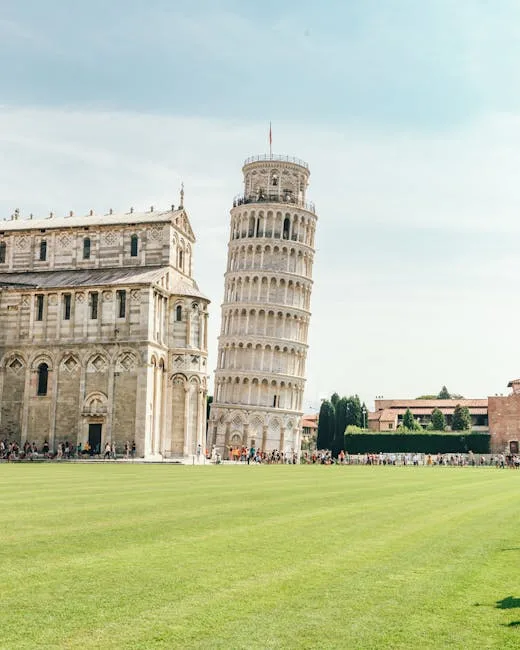
The Leaning Tower of Pisa, or Torre Pendente di Pisa, is arguably one of the most instantly recognizable monuments on the planet. Set at the heart of a UNESCO World Heritage ensemble, the tower stands as a symbol of history, architecture and Italian spirit, drawing millions of visitors every year. But the real experience goes beyond the classic hand-in-the-air photo: it’s a sensory journey, a stroll through Romanesque art, a close encounter with centuries of engineering and restoration, and a special moment where light, stone and perspective combine to create something unique.
When you visit Pisa, you’re not just checking an attraction off a list: you’re wandering the Piazza del Duomo, admiring the sculpted façade of the Duomo di Pisa, listening to the echo in the nave, feeling the mystical atmosphere of the Battistero di San Giovanni, and losing yourself in the calm of the Camposanto Monumentale. The tower, a few steps away, remains the centerpiece of a panorama that unfolds as you move — shifting with every angle, step, and hour of the day. Lighting, sky color, the flow of visitors and the gentle Tuscan breeze constantly change how the site feels.
This comprehensive guide gives you a practical, immersive overview: a concise history, precise practical info (exact addresses, prices in euros, opening hours), tips to prepare your visit, recommended itineraries, photography pointers, and alternatives for those who want to avoid crowds while making the most of Pisa. Whether you’re planning a half-day stop or a longer stay, you’ll find concrete landmarks and local advice to turn your stop at the Leaning Tower into a memorable experience.
Before you buy tickets, it’s worth knowing that the Leaning Tower is part of a larger complex: tickets and entry slots are often limited and time-stamped. Turning up unprepared can mean long waits or missing your ideal photo slot. In the sections below we’ll cover visiting procedures, the best times for photographs, nearby cultural alternatives, and practical recommendations on accessibility, parking and dining. Finally, a few local tips will help you enjoy the Tuscan charm while steering clear of tourist traps and respecting the site.
 Click here to book your ticket to the Square of Miracles
History and architecture: understanding the Tower of Pisa and the Piazza del Duomo
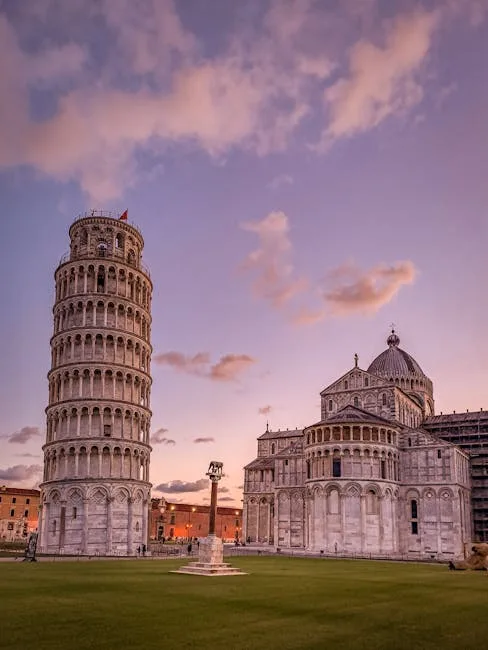
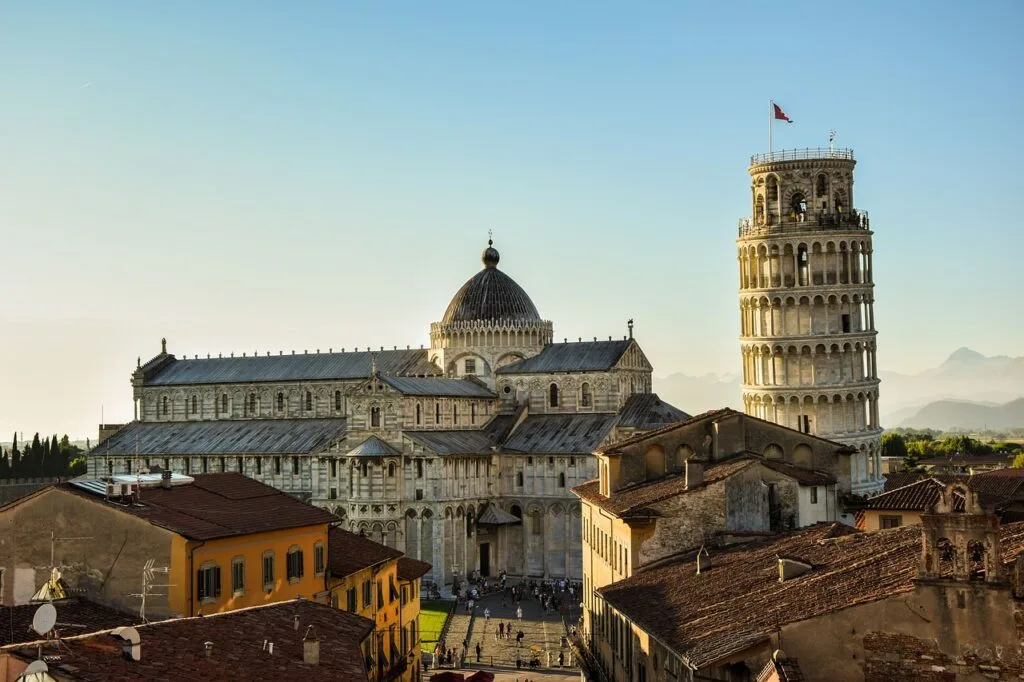
The Leaning Tower of Pisa, officially named Torre Pendente di Pisa, is the bell tower of the city’s cathedral, built in several stages between the 12th and 14th centuries. Its tilt began almost as soon as construction started in 1173 due to a foundation of marshy alluvial soil. The structure reaches roughly 56 meters at its highest side and consists of eight levels, with a belfry housing several bells. Built of white marble, the tower features a series of arcades and columns that showcase Pisan Romanesque style, rich with Byzantine and Islamic influences thanks to medieval Mediterranean trade.
The tower sits in the center of the Piazza del Duomo, sometimes called the « Piazza dei Miracoli » (Square of Miracles), alongside three other major monuments: the Duomo di Pisa (Cattedrale di Santa Maria Assunta), the Battistero di San Giovanni and the Camposanto Monumentale. The official address for the complex is: Piazza del Duomo, 56126 Pisa PI, Italy. The whole ensemble is an outstanding example of Pisan Romanesque art, with richly decorated façades, polychrome marbles and interior frescoes.
Visiting the tower also means learning about the many stabilization interventions that have kept it standing. In the 20th and 21st centuries, emergency work, counterweights and soil extraction beneath the north side helped reduce the tilt and ensure visitor safety. The result is a delicate balance between preservation and presentation: protective nets, timed entry slots and limited numbers per slot help secure the monument for future generations.
For those who enjoy technical history, the tower visit lets you observe the inner structure: tight spiral staircases, period materials and how openings and arches affect stability. Nearby, the Duomo di Pisa displays carved capitals, a mosaic above the high altar and a decorative program that tells of Pisa’s medieval maritime wealth. The Battistero di San Giovanni, with its acoustic dome, is a perfect example of the sound and artistic skills of medieval builders.
Click here to discover the Square of Miracles and the Leaning Tower
Practical info: addresses, opening hours, prices and bookings
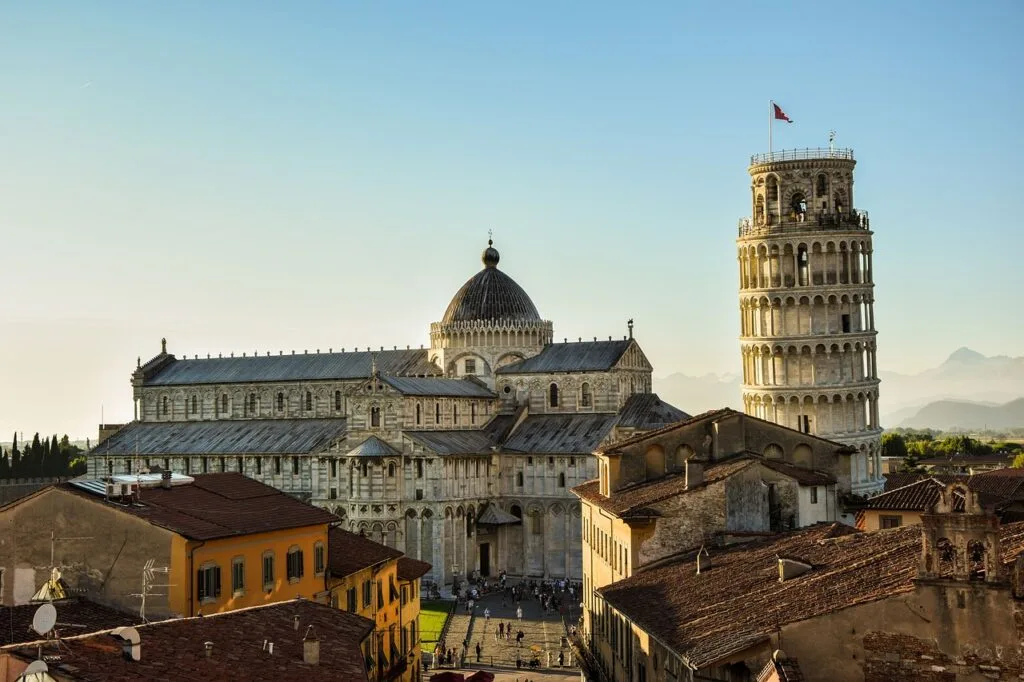
To plan an efficient visit to the Leaning Tower and the Piazza dei Miracoli, here are the essential practical details based on the latest public information — always double-check before you travel, as times and prices can change seasonally.
Useful addresses
- Torre Pendente di Pisa (Leaning Tower of Pisa) : Piazza del Duomo, 56126 Pisa PI, Italy.
- Duomo di Pisa (Cathedral of Santa Maria Assunta) : Piazza del Duomo, 56126 Pisa PI, Italy.
- Battistero di San Giovanni (Baptistery) : Piazza del Duomo, 56126 Pisa PI, Italy.
- Camposanto Monumentale : Piazza del Duomo, 56126 Pisa PI, Italy.
- Main station – Pisa Centrale : Piazza della Stazione, 56125 Pisa PI, Italy.
The monuments are very close to each other; you can visit most of the piazza on foot. From Pisa Centrale station expect a 20–25 minute walk along via Bonanno Pisano and via S. Martino, or about 10 minutes by city bus.
Opening hours (indicative)
- Torre Pendente di Pisa : typically open from 09:00 to 19:00 (last climbs depend on timed slots). Exact hours vary by season (longer in spring/summer, shorter in winter).
- Duomo di Pisa : usually open 10:00 to 18:00; extended hours on some days and during peak season.
- Battistero di San Giovanni : often open 10:00 to 18:00, with scheduled singing and acoustic demonstrations at set times.
- Camposanto Monumentale : roughly open 09:30 to 17:30.
It’s strongly recommended to buy tickets online for the Leaning Tower. Slots are limited and time-stamped: without a reserved ticket you may be denied access to climb. Combination tickets are available to visit several monuments in the Piazza del Duomo.
Click here to buy your ticket for the Leaning Tower and cathedral
Prices (in euros, indicative)
- Ticket for the Torre Pendente di Pisa : around €20.00 per adult (standard rate). Reduced rate €10.00 for youth and possible student discounts; children and very young visitors may be exempt depending on daily policy.
- Piazza dei Miracoli combined pass (including the Duomo, Baptistery, Camposanto and Museo delle Sinopie) : roughly €27.00 to €30.00 depending on options and discounts.
- Duomo entry : often included in a pass or around €5.00 to €8.00 if purchased separately.
These prices are indicative and may vary by season and site management policies. Check the official Opera della Primaziale Pisana site or official ticket platforms for up-to-date prices and slots. Book at least a few days ahead in high season.
Visiting tips: make the most of your time and photos
There are simple tricks that can significantly improve your visit to the Leaning Tower and the Piazza dei Miracoli. The golden rule: plan ahead. Climb slots are limited and sell out fast in high season. Booking online guarantees you entry at your preferred time and keeps you out of long queues.
Best times to visit: aim for sunrise or the blue hour at dusk for magical photos. At those times, the low light flatters the marble and the piazza is much quieter. Mid-morning the square is often crowded with tour groups and coaches, making photography trickier. For an interior visit, the earliest morning sessions help you avoid heat on the spiral staircase during summer.
Photography tips:
- For the classic shot, use forced perspective (the famous « pushing the tower » pose): stand at a good distance and use a medium focal length to keep proportions natural.
- For architectural shots, use a moderate wide-angle and frame the Duomo in the background; the symmetry of the arcades is very photogenic.
- For textures and details, get close to the columns, capitals and marbles: the stone reveals layers of history in close-up.
- If you like panoramas, climb the viewpoint at the Museo dell’Opera del Duomo for a broad view over Pisa’s roofs and the lungarno (riverside).
On-site practical tips:
- Arrive 20 minutes before your climb slot: ticket checks and security take time.
- The tower’s stairs are narrow and steep; if you suffer from vertigo or heart issues, skip the climb. Very young children are sometimes not allowed for safety reasons.
- Large bags may be refused; bring a small bag and a light jacket. Paid luggage storage may be available nearby.
- Respect silence and conservation rules inside the Duomo, Baptistery and Camposanto to enjoy the place and help preserve its decorations.
Click here to book a guided tour of the Duomo and the Leaning Tower
Explore the city beyond the tower: routes and top picks
Pisa is more than the Tower: the city has a charming historic center, pleasant quays along the Arno, lively squares and a delicious food scene. After visiting the Piazza del Duomo, here are some suggested routes to keep discovering.
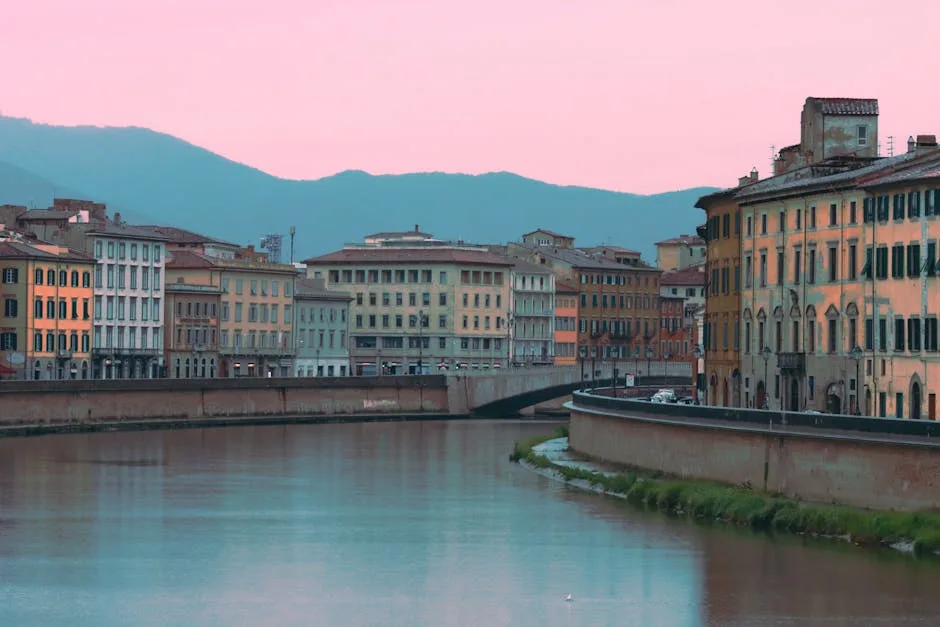
Walk along the Arno: head southwest toward the Ponte di Mezzo and enjoy the colorful façades, cafés and small craft shops. At sunset the view over the river from the bridge is especially pretty. Useful address: Ponte di Mezzo, Pisa.
Medieval quarter and Borgo Stretto: a few minutes on foot brings you to via Borgo Stretto, a pedestrian street full of shops, bookstores and historic cafés. It’s a great spot for a coffee break or an aperitivo. For food, consider:
- Osteria dei Cavalieri (around Via Santa Maria 1, 56126 Pisa): local Tuscan cuisine and a fine wine selection.
- La Vecchia Lira (Via San Martino): pizzas and traditional dishes in a friendly setting.
Museums and culture: the Museo Nazionale di San Matteo (Piazza San Matteo in Soarta, 1) houses remarkable medieval and Renaissance collections. The Palazzo Blu (Lungarno Gambacorti, 9) hosts temporary shows and both modern and classical art.
Half-day trips: from Pisa you can easily reach Lucca in 30 minutes by train, or Marina di Pisa for a beach break. Florence is roughly one hour by train and makes a perfect full-day cultural outing.
Click here to discover Pisa on a walking tour
Local tips, safety and heritage respect
Visiting the Leaning Tower carries a collective responsibility: preserve, respect and help maintain a positive coexistence between tourists and locals. Here are practical, responsible tips based on local customs.
Respect the site: avoid climbing on monuments, touching frescoes or leaving litter. Site stewards enforce the rules and fines for inappropriate behavior can be hefty. Don’t picnic on the lawns of the Campo dei Miracoli — signs mark the allowed areas.
Personal safety: Pisa is generally safe, but as in any tourist city be wary of pickpockets, especially in busy areas like the station, the piazza and on buses. Keep your documents, phone and wallet in an inner pocket or a travel belt.
Getting around: public transport is straightforward. The CPT bus network connects you with the beach and other neighborhoods. From Pisa Centrale direct trains run to Lucca, Florence and La Spezia. If you’re driving, several paid car parks surround the piazza; parking on the outskirts and walking or taking a shuttle into the piazza is often smarter.
Food tips: try Tuscan classics — ribollita (peasant soup), bistecca alla fiorentina at well-reviewed restaurants, and local desserts like cantucci with a glass of Vin Santo. For coffee, favor cafés frequented by locals rather than those right on the piazza, which tend to be pricier.
Alternatives and themed experiences: unusual outings around Pisa
If you’ve already seen the Tower or want something more offbeat, here are ideas to enrich your stay:
- Night-time guided visit : evening walks in the historic center offer a different vibe, with the cathedral lit up and local stories told by guides.
- Craft workshops : join a pottery or handmade paper workshop in Lucca, easily reached by train from Pisa.
- Wine tastings : half-day trips to the hills around Pisa for tastings at small family-run wineries of Tuscan wines.
- Bike ride along the Arno : bike rentals are available in town; the flat riverside route is pleasant and family-friendly.
For architecture lovers, the contrast between the Piazza dei Miracoli and Pisa’s medieval urban fabric is fascinating: plan time to wander off the main routes, step into small churches and discover artisan workshops. Local markets, like the one sometimes held on Borgo Stretto, are great places to pick up regional products (olive oil, Castile soap, textiles).
Click here to book a Chianti wine tasting
Click here to take a self-guided bike ride to the sea
Conclusion: experiencing the Leaning Tower beyond the picture
The Leaning Tower of Pisa is more than a photo opportunity: it’s a gateway to understanding the history, architecture and life of a Tuscan city shaped by maritime trade and a rich artistic past. To get the most from your visit, book your time slot, reserve online and take the time to explore the Duomo, the Baptistery and the Camposanto. The exact address (Piazza del Duomo, 56126 Pisa PI, Italy) and the practical tips here — indicative hours, prices in euros and local advice — will help you plan a smooth and memorable visit.
Remember that the Leaning Tower can be enjoyed on several levels: from afar for the iconic silhouette on the Piazza dei Miracoli; up close for the physical experience of the climb and the feel of the materials; and in context, with the Duomo and Baptistery, to grasp the full medieval vision. Outside peak times, at sunrise or sunset, you’ll find light that flatters the marble and reveals carved details.
Finally, travel with respect: help preserve the site, follow the rules and favor responsible tours. Whether you’re traveling with family, friends, or solo, leave room for curiosity: wander the nearby streets, taste Tuscan cuisine, stroll along the Arno at dusk and let the city tell you its stories. The Leaning Tower will stay on your photos, but most of all in your memory — an unmissable panorama that goes beyond an image to become a full, sensory and deeply Tuscan experience.