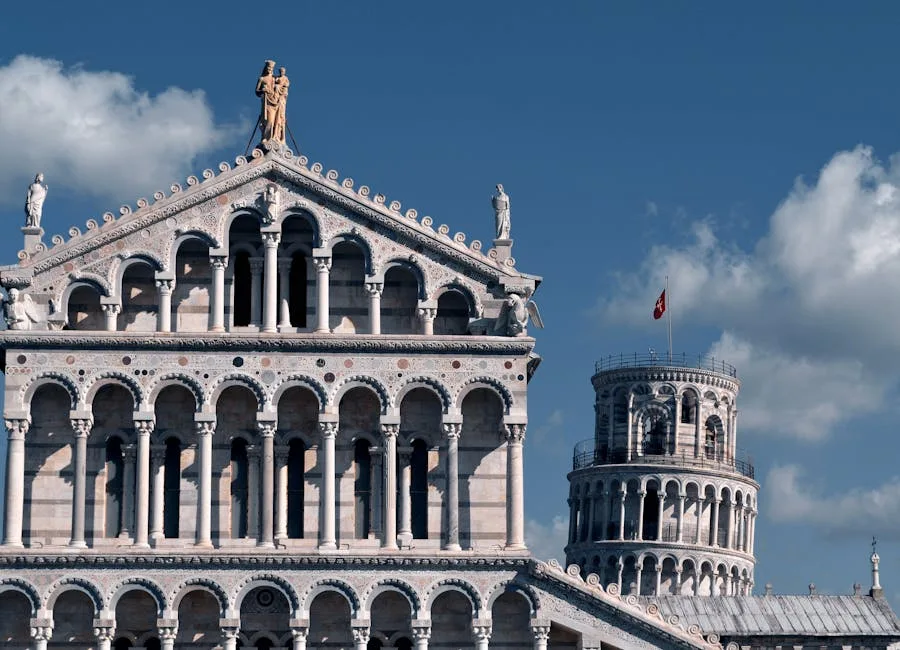






Introduction: Why Authentic Pisa Is a Playground for Photographers
Pisa is more than its famous Leaning Tower. Beyond the crowds and the usual tourist shots, the Tuscan city unfolds medieval lanes, glossy façades, Arno‑lined quays and squares where the light can change character in minutes. For photographers — whether hobbyists or pros — Pisa offers a surprisingly broad palette: Romanesque and Gothic architecture, water reflections, everyday portraits, carved details, colorful food markets and unexpected urban perspectives. This article lays out photo routes designed to capture Pisa’s authenticity, steering clear of clichéd images while still using the must‑see monuments as anchoring points.
Shooting authentic Pisa means varying your focal lengths and the times of day: golden hours on the Piazza dei Miracoli, backlit Arno scenes at dawn, the textures of stone and mosaics inside the Cathedral of Santa Maria Assunta, market scenes on Via Santa Maria, or panoramas from bridges and nearby hills. Each of the routes below is doable on foot or by bike, with precise addresses, opening hours, estimated prices and practical tips to optimize your shots — booking ahead, using a tripod where allowed, or favoring lenses suited for detail and perspective.
Here I propose four complementary routes: a refreshed classic around the Piazza dei Miracoli, an exploration of the Arno banks and quieter neighborhoods, a bike ride out to the hills for sweeping views, and a set of night shots to capture Pisa’s soul after sunset. Each route includes framing suggestions, ideal moments, exact reference points (full place names, addresses and opening times) and logistical advice — transport, parking, gear security and respect for sacred spaces.
Photography in Pisa also means dealing with tourist flow. Book the most requested monuments (like the Torre Pendente) in advance, arrive early to enjoy soft light and emptier streets, or use midday to incorporate vibrant human activity as your main subject — these strategies will help you produce more original images. And don’t forget respect: in churches some areas ban flash and tripods; in public spaces always ask before photographing people up close.
Ready to explore? Each section below walks you step by step with exact addresses and prices in euros (€), so you can plan your photo outings precisely. Bring two lenses (a 16–35mm wide angle and a 70–200mm telephoto or a fast 50mm), a spare battery, a cloth to wipe morning dew and, if needed, a small folding tripod that complies with local rules. Follow these itineraries to discover Pisa from a true, intimate and visual angle.
Itinerary 1: Piazza dei Miracoli and a Revisited Monumental Center
Start your day at the Piazza dei Miracoli, Pisa’s historic and artistic heart. This wide esplanade brings together the Torre Pendente di Pisa (Leaning Tower of Pisa), the Cattedrale di Santa Maria Assunta (Duomo di Pisa), the Battistero di San Giovanni (Baptistery) and the Camposanto Monumentale. Shared address: Piazza del Duomo, 56126 Pisa PI, Italy. For the best photo session, arrive between 07:30 and 09:30 in high season to enjoy soft light and fewer tourists.
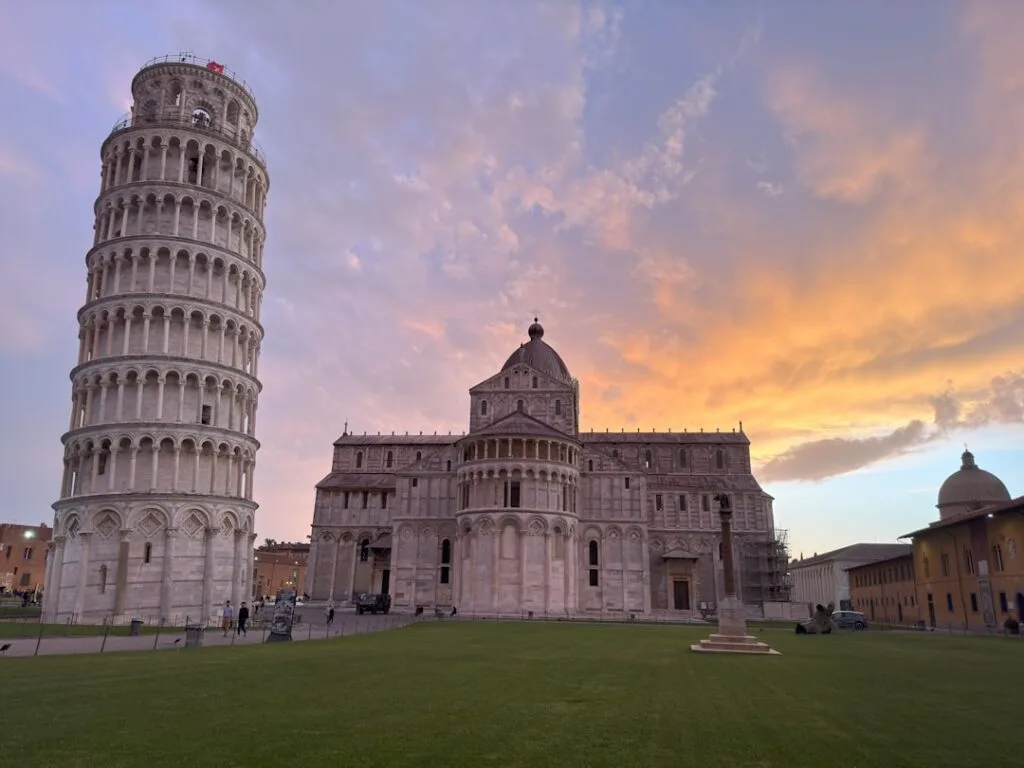
Practical information and indicative prices:
- Torre Pendente di Pisa — Address: Piazza del Duomo, 56126 Pisa PI. Hours: generally 09:00–20:00 (seasonal variations). Price: around €20–€26 to climb the tower (online booking recommended).
- Cattedrale di Santa Maria Assunta — Address: Piazza del Duomo, 56126 Pisa PI. Hours: usually 10:00–19:00; access may be restricted during services. Price: free entry but access ticket for the Piazza dei Miracoli may be required (~€3 if part of a combined ticket).
- Battistero di San Giovanni — Address: Piazza del Duomo, 56126 Pisa PI. Hours: 09:00–18:00; Price: around €5–€7.
- Camposanto Monumentale — Address: Piazza del Duomo, 56126 Pisa PI. Hours: 09:00–19:00; Price: around €7–€10 (often included in a combined Piazza ticket).
- Museo dell’Opera del Duomo — Address: Piazza del Duomo, 56126 Pisa PI. Hours: 09:00–19:00; Price: around €5–€10 depending on exhibitions.
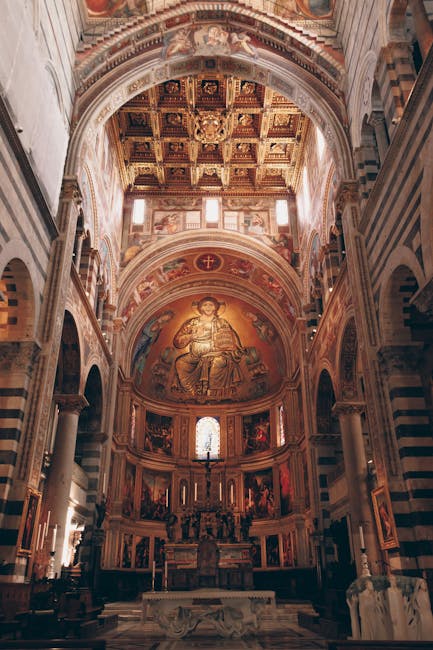
Shooting tips: for the tower, favor a focal length between 24 and 50mm to include the cathedral and baptistery; a wide angle (16–24mm) can dramatize the perspective play but watch for distortion. Inside the cathedral, follow the rules (no flash, no tripod without permission) and use higher ISO if needed for interior architecture shots; compose using arches, columns and the rose window to create strong leading lines. The Baptistery offers magical opportunities with reflections on wet floors and side light streaming through high windows.
 Click here to book monument tickets for Piazza dei Miracoli
Click here to book a professional photo session at the Leaning Tower
Itinerary 2: Arno Banks, Authentic Neighborhoods and Markets
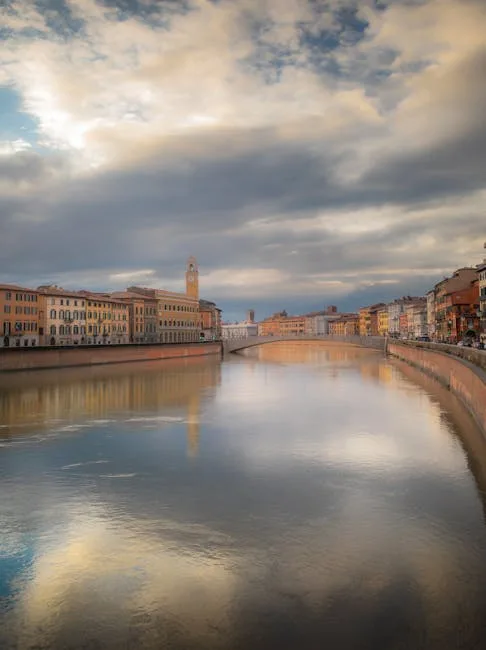
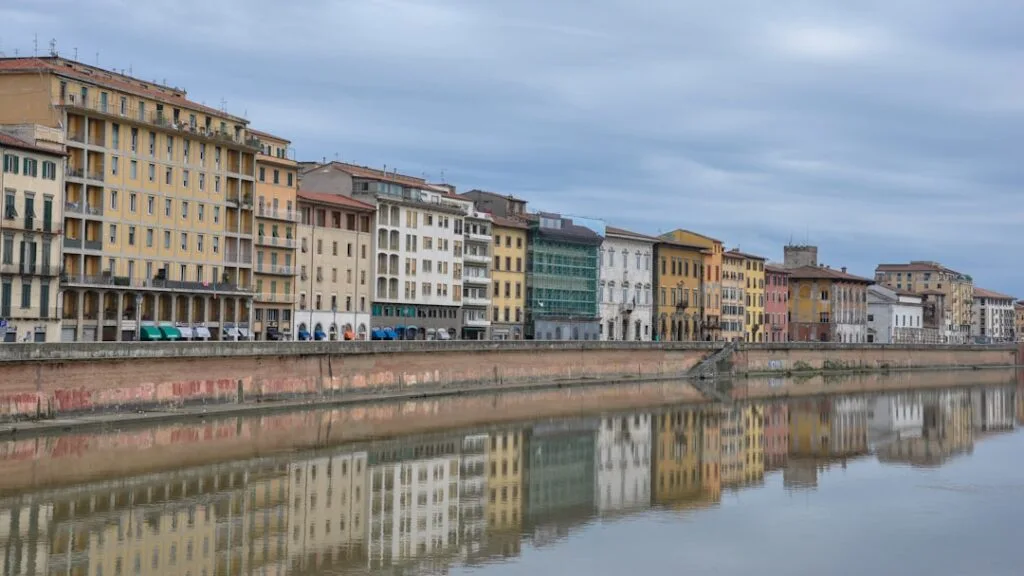
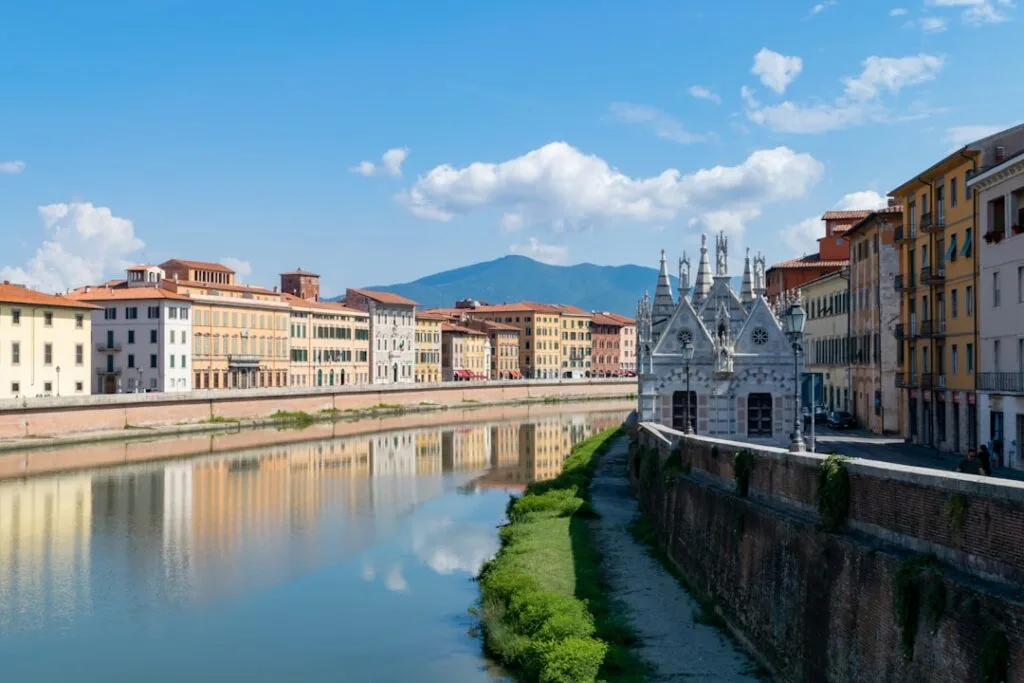
After the Piazza dei Miracoli, head toward the Arno to explore Pisa’s everyday, lively side. Start at the Ponte di Mezzo (Piazza XX Settembre, 56125 Pisa) and follow the quays between Lungarno Gambacorti and Lungarno Antonio Pacinotti. These riverfronts offer reflections, colorful façades and local scenes ideal for portraits and street photography.
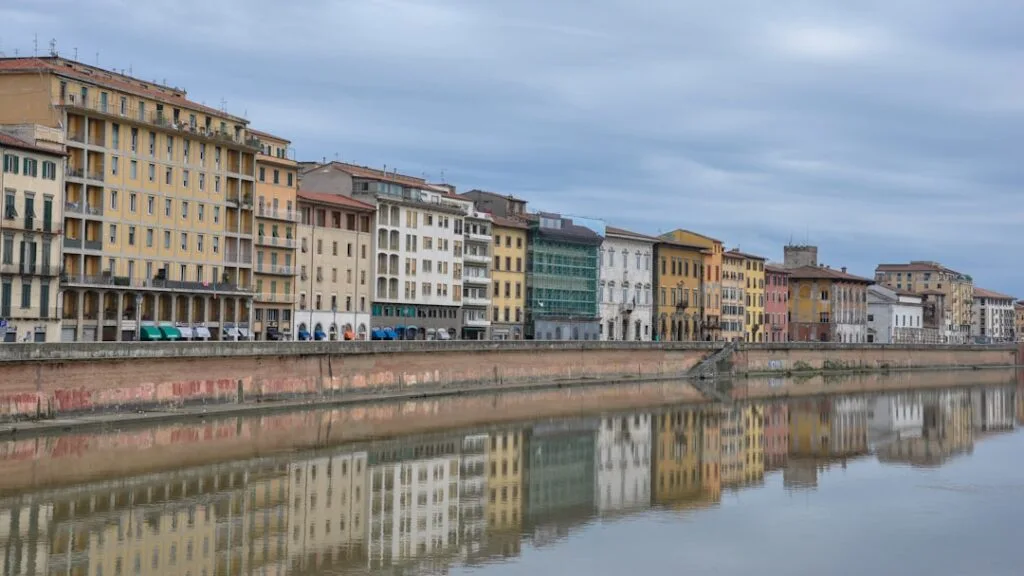
Points of interest and useful addresses:
- Ponte di Mezzo — Piazza XX Settembre, 56125 Pisa. Excellent for sunset captures and water reflections.
- Chiesa di Santa Maria della Spina — Lungarno Gambacorti, 56125 Pisa. Small Gothic church near the Arno, exact address: Lungarno Gambacorti 8, 56125 Pisa. Hours: often open 09:00–19:00 depending on services; free entry or donation.
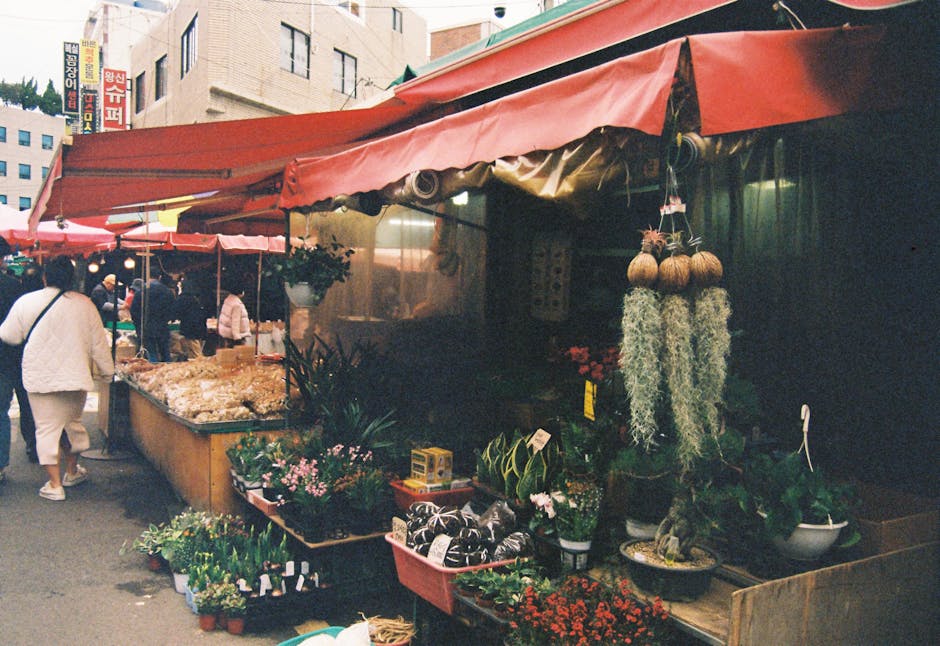
- Mercato di Piazza delle Vettovaglie — Via Santa Maria, 56126 Pisa. Market hours: generally 07:00–14:00 (market days vary). Here you’ll find stalls of fruit, cheese, fish and local faces — perfect for life‑style images.
- Museo Nazionale di San Matteo — Piazza San Matteo in Soarta, 56127 Pisa. Hours: 09:00–13:00 / 15:00–19:00; Price: around €4–€6. Collection of medieval objects and Tuscan paintings.
Techniques and tips: on the Arno, use slow shutter speeds (1/4–1/15 s) with a light ND filter to smooth the water and capture colorful reflections, or increase shutter speed to freeze passersby and boats. Favor a 35–50mm for environmental portraits and an 85mm for compressed details of façades. At the Via Santa Maria market, spot colorful stalls and isolate a vendor or a local product for narrative shots — always ask permission for close portraits.
Local practical tips: parking in the center can be paid and limited (ZTL — restricted traffic zones). Check before you park: most central zones restrict vehicle access for non‑residents during certain hours; prefer car parks like Parcheggio Piazza Manin (Viale delle Piagge area) or riverside parking lots. For cyclists, use the lanes along the Lungarni and lock your bike securely: thefts remain possible in high season.
Click here to join a street food and highlights walking tour
Click here to take a walking discovery tour of Pisa
Itinerary 3: Bike Ride, Hills and Panoramas
Pisa isn’t entirely flat: the surrounding hills — notably the San Giuliano Terme area and some outskirts — offer wide perspectives over the city and the Tuscan countryside. Rent a bike or an MTB for a half‑day and follow a route that takes you from Porta a Mare toward San Rossore and then up to viewpoints near Monte Pisano.
Rentals and addresses:
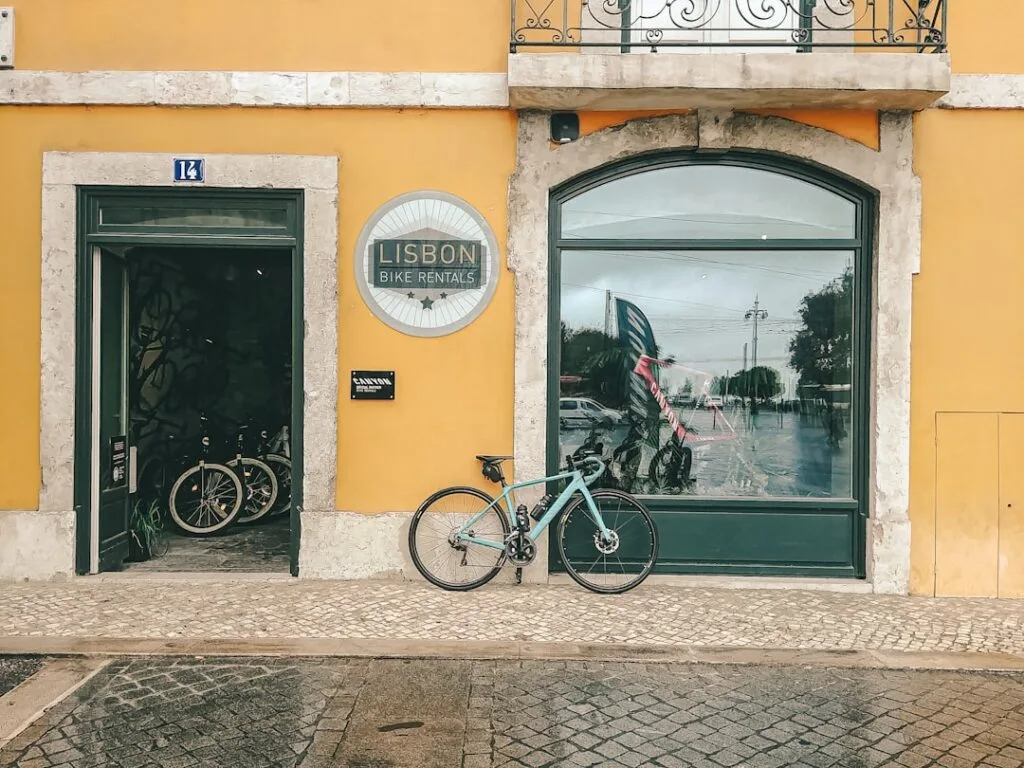
- Pisa Bike Rental — Lungarno Antonio Pacinotti 14, 56125 Pisa. Hours: 09:00–19:00. Price: around €10–€20/day depending on bike type.
- San Rossore Natural Park entrance — Via Darsena, 56122 Pisa (park access area). Hours: park accessible all day; some zones regulated. Entry: free, guided activities may be paid.
- Monte Pisano viewpoints — access via secondary roads around Calci and San Giuliano Terme. Suggested stops: Piazzale di Calci, Via di Montemagno.
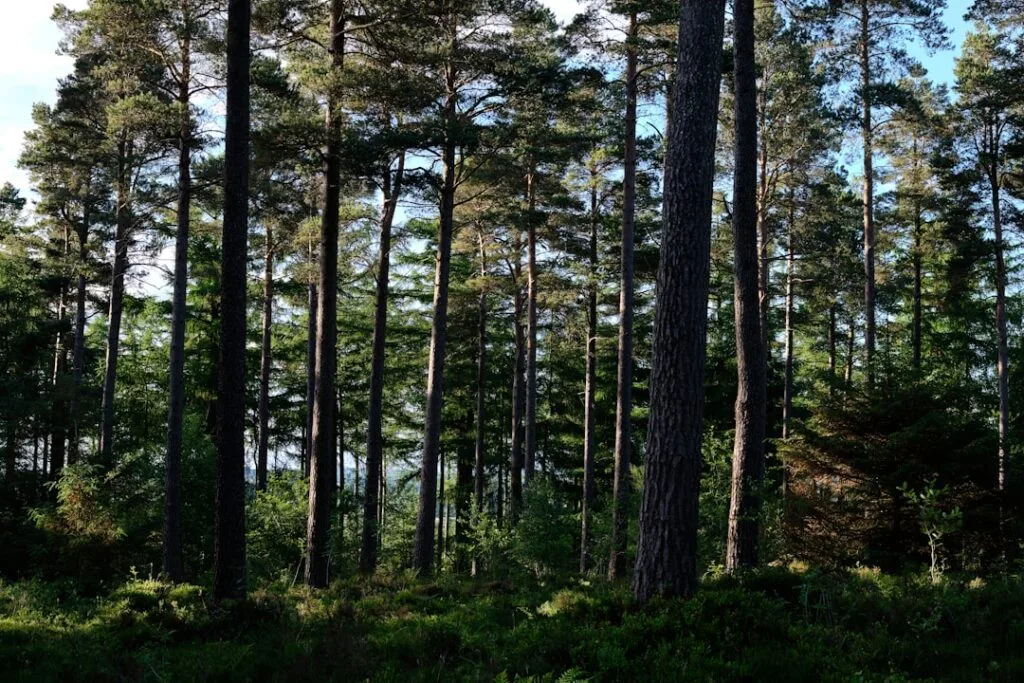
Photographing by bike: a bike lets you reach the edge of San Rossore where pine trees create dappled light perfect for portraits and backlighting. At the edge of the Monte Pisano hills, look for panoramas facing southwest to capture Pisa’s skyline with the Leaning Tower as a small element — useful for minimalist compositions where the city becomes a dot in a Tuscan landscape.
Useful techniques: bring a lightweight 24–70mm and a small 70–200mm telephoto to isolate the distant city. Panoramas can be shot in multiple frames for stitching (portrait orientation, 30% overlap). Protect your gear from dust and wind with a waterproof bag, and use a secure strap attached to the bike frame to avoid accidents on the road.
Click here to take an electric-bike guided tour around Pisa
Click here to rent a self-guided bike ride from Lucca to Pisa
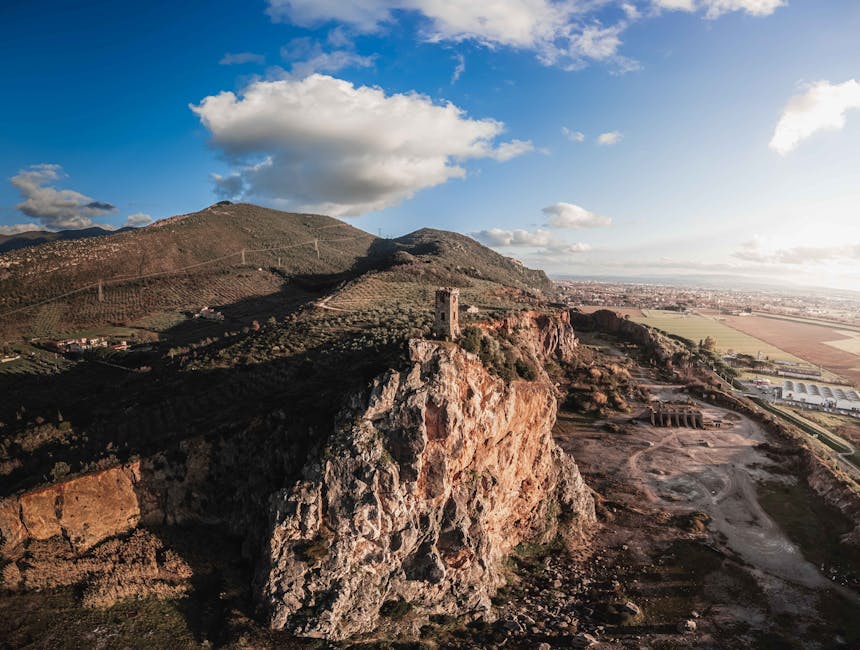
Safety and logistics tips: stay hydrated, wear a helmet, and don’t leave gear visible when stopping for a coffee. Some hill roads are steep and require frequent gear changes; plan stops in villages (Calci has good cafés and an interesting monastery: Certosa di Calci, Via Roma 79, 56011 Calci PI — hours and prices vary). For guided services, check with local tourist offices (Ufficio Informazioni e Accoglienza Turistica, Piazza Vittorio Emanuele II 7, 56126 Pisa — often open 09:00–18:00).
Itinerary 4: Pisa by Night — Lights, Reflections and Nocturnal Atmosphere
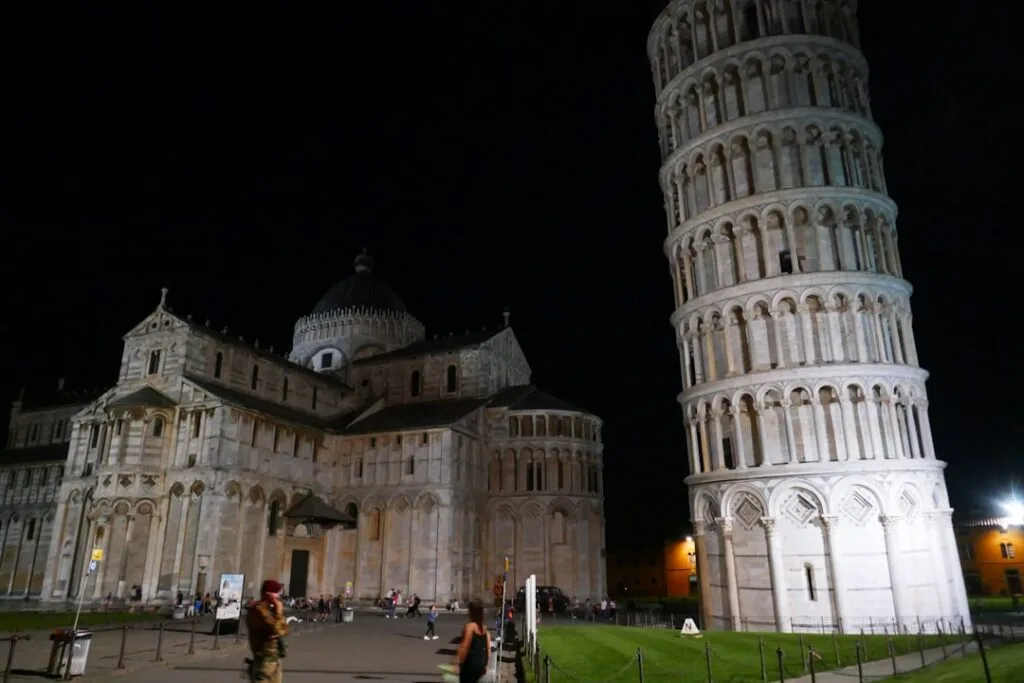
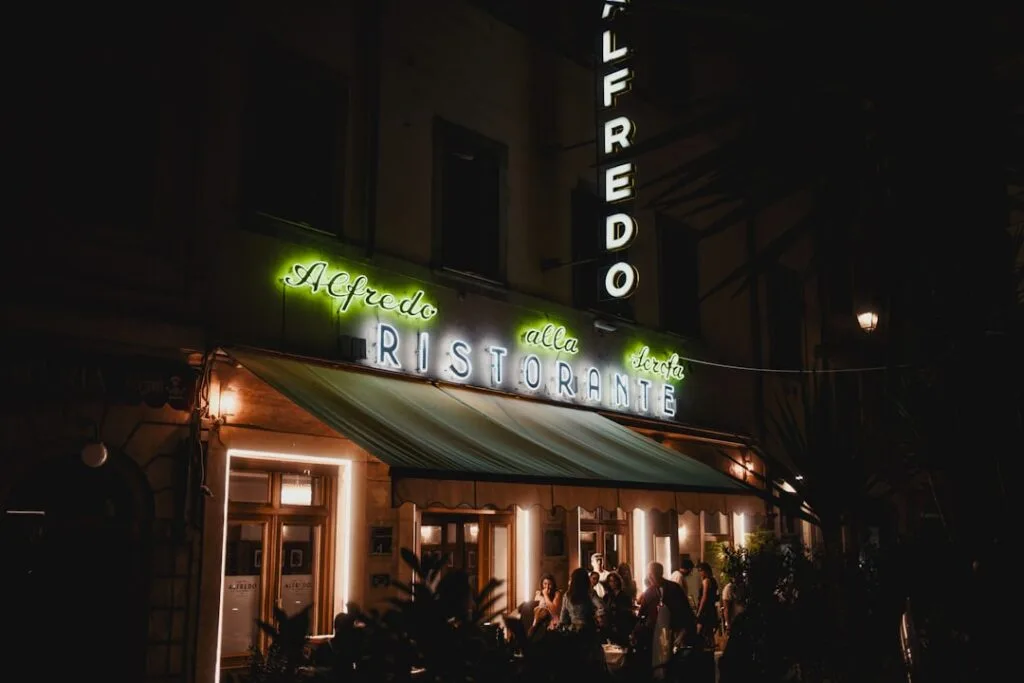
At night, Pisa takes on a different mood: warm lights bring out the marble, the Arno becomes a mirror and alleyways reveal intimate scenes. This route focuses on night photography between the Piazza dei Miracoli, the Lungarno and the lively squares.
Not-to-miss spots and addresses:
- Piazza dei Miracoli — The monumental complex is often lit after sunset (illumination generally from around 20:30 until midnight, depending on season). Use the blue hour for compositions that mix deep sky with warm lighting.
- Ponte di Mezzo — Great for capturing reflections of urban lights on the Arno. Address: Piazza XX Settembre, 56125 Pisa.
- Piazza dei Cavalieri — Address: Piazza dei Cavalieri, 56125 Pisa. A beautiful historic square, lit façades and cafés make it ideal for night scenes and street portraits.
- Osterias and bars along Borgo Stretto — Via Borgo Stretto, 56127 Pisa. A lively evening area, perfect for capturing food and convivial life.
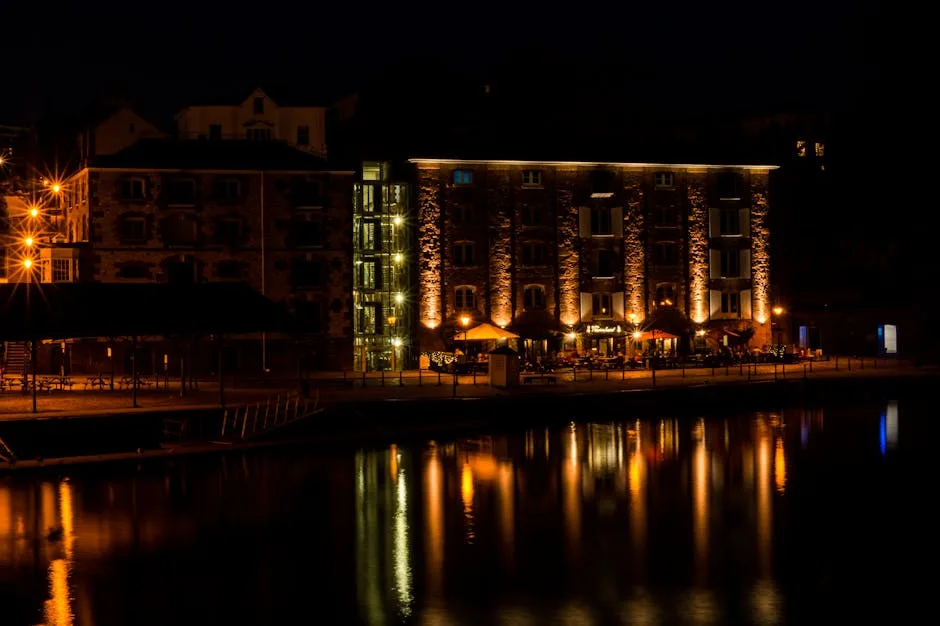
Night techniques: use a tripod for long exposures (5–30 s depending on the scene) and lower ISO to limit noise (ISO 100–400). If you want to include human silhouettes, set an intermediate shutter speed (1/8–1/30 s) to partially freeze motion and keep a dynamic atmosphere. Reflections on the Arno demand stability and a focus point on the water surface; try several apertures (f/8–f/11) to maximize depth of field and capture architectural details in the background.
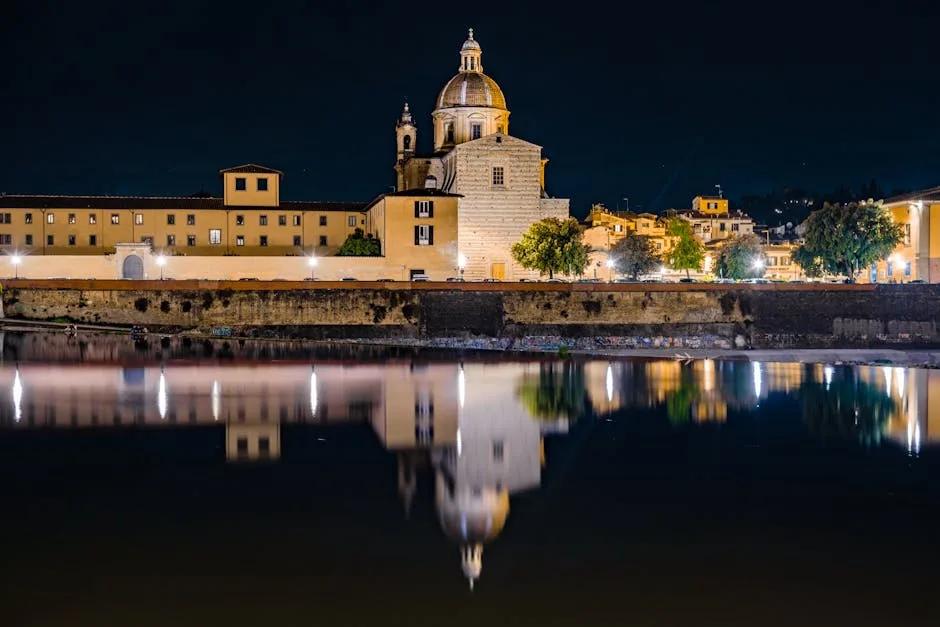
Practical tips: at night favor well‑lit and busy spots; Pisa is generally safe but stay vigilant with expensive gear. Cafés and bars on Borgo Stretto often close around midnight or later in high season — a great chance to photograph convivial scenes with warm lighting. Finally, bring light pollution filters if you have them and a remote shutter release to avoid camera vibration during long exposures.
Click here to enjoy an ultimate culinary experience with a local host
General Tips for All Itineraries
Whether you’re on foot, by bike or using public transport, a few practical rules will make your photo outings easier:
- Bookings: buy your Torre Pendente tickets online in advance (official site) to avoid queues and secure a time slot.
- ZTL: watch out for restricted traffic zones. If arriving by car, find the nearest car park and avoid entering the ZTL without authorization to prevent fines.
- Tripod: often banned in churches and sometimes restricted at monuments; ask for permission when needed. For night shots, bring a compact tripod and a remote release.
- Respect: ask permission for close portraits, especially from older people and market traders.
- Weather: light changes fast in Tuscany — monitor local forecasts and adapt your route: morning mist on the Arno, dramatic clouds over the hills, clear skies for panoramas.
- Gear security: use an anti‑theft strap, keep your bag closed and avoid leaving expensive bodies visible during unsupervised breaks.
Conclusion: Telling Pisa’s Story Beyond the Postcard
Shooting authentic Pisa combines preparation with curiosity. The suggested itineraries cover the essentials (Piazza dei Miracoli) while opening windows onto everyday life — Arno quays, markets, hills and luminous nights. Every place has its rhythm: the Piazza dei Miracoli requires silence and patience to capture volumes and marble textures; the Arno calls for sensitivity to reflections and street scenes; the Monte Pisano hills demand physical readiness and lightweight gear; the night requires technique and caution.
Beyond technical settings, the key is to tell a story: why this angle? What should the viewer feel when looking at the photo? Look for contrasts (historic/everyday), graphic repetitions (columns, arcades) and fleeting moments (reflections, passersby, vendors closing up). The addresses and times given are planning anchors, but leave room for the unexpected — exceptional light, a local procession or a temporary market can turn an outing into a memorable session.
Finally, respect the places and the people you photograph. In Italy, politeness opens doors: a smile, a few words in Italian (even simple ones: “Buongiorno” or “Posso fare una foto?”) often make subjects more comfortable and improve the quality of portraits. Use these itineraries as a guide, but mostly as a starting point to explore your own version of Pisa. Secondary streets, little‑used stairways and small hidden squares can become your best images — the ones that tell the authentic Pisa story, far from postcards, and stay in your portfolio.