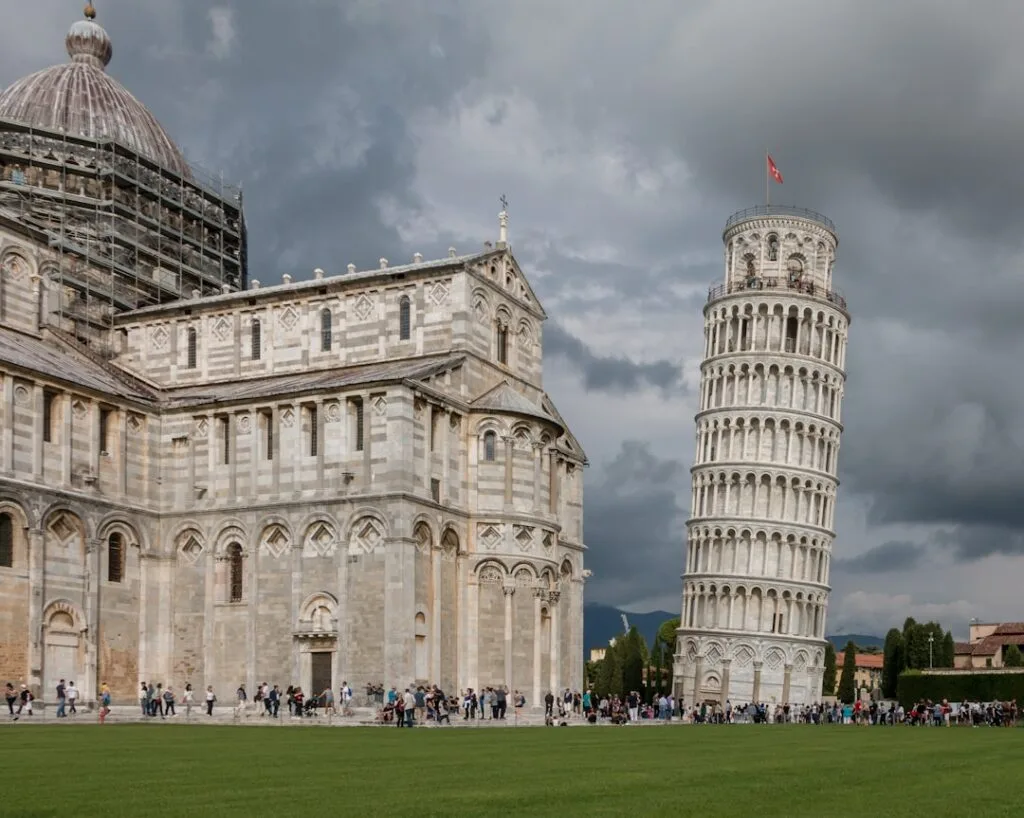






Introduction: Pisa — history, neighborhoods and what to discover
Pisa isn’t just the Leaning Tower you see on every postcard. It’s a city steeped in maritime, academic and artistic history, visible across its neighborhoods. Nestled in Tuscany on the banks of the Arno, Pisa was a major maritime republic in the Middle Ages and later became a cultural hub thanks to its university, founded in 1343. Wander the streets and you’ll find stately squares, medieval alleys, lively riverbanks and gems of Romanesque and Gothic architecture. This guide offers a neighborhood-by-neighborhood exploration of Pisa’s must-see areas, with exact addresses, opening times, price ranges and practical tips to make the most of each spot.
Whether you’re stopping by on a short layover or staying several days, knowing how the neighborhoods are laid out will save you time and help you experience the city more authentically. From the famous Piazza dei Miracoli to the charming Borgo Stretto, via the university quarter and the Lungarno riverside, each district reveals a different side of Pisa: religious fervour, medieval commerce, student life and riverside calm. We describe the main sites — the cathedral, baptistery, Camposanto, museums — but also lesser-known places worth a detour, like Santa Maria della Spina church or the lively Piazza delle Vettovaglie.
We’ll also give you practical information: exact addresses (handy for GPS), opening hours (check seasonal variations), indicative prices in euros for visits and local tips — when to buy tickets, how to get around on foot or by public transport, where to taste Pisan specialties, plus little tricks to avoid peak crowds. The goal is to help you organize visits by neighborhood, optimize routes and enjoy a gradual discovery, from the monumental core to everyday life spots. Pack comfortable shoes, a city map and your camera: historic Pisa awaits with its history-laden stones and unexpected views along the Arno.
Follow this must-see neighborhood guide to build a tailor-made itinerary: each section includes detailed descriptions, practical info on hours and prices, local tips and photo suggestions to capture the essence of each place. At the end you’ll find recommendations to extend your stay, sample Pisan cuisine and avoid tourist traps. Happy reading and safe travels!
Piazza dei Miracoli: Pisa’s monumental heart
Piazza dei Miracoli (Square of Miracles) is Pisa’s defining landmark. It groups together the city’s most famous monuments: the Cattedrale di Santa Maria Assunta, the Battistero di San Giovanni, the Torre Pendente (Leaning Tower of Pisa) and the Camposanto Monumentale. Address: Piazza del Duomo / Piazza dei Miracoli, 56126 Pisa PI, Italy. The complex is a UNESCO World Heritage site and a prime example of Pisan Romanesque architecture.
Visiting Piazza dei Miracoli takes planning: the Leaning Tower is visited in timed slots and visitor numbers are limited. Indicative price: climbing the Torre Pendente is around €20 per person (2024 rate; online booking recommended on the official site opapisa.it). The cathedral is normally free to enter but may require a ticket (€0–€5) when access is controlled; the Baptistery and the Camposanto each charge roughly €5–€10. Approximate opening hours: Torre Pendente 09:00–20:00 (seasonal), Cattedrale 10:00–19:00, Battistero 09:00–18:00, Camposanto 09:00–18:00. Note: hours change in low season and during religious holidays — check current times before your visit.
Practical tips: buy Torre Pendente tickets online in advance (timed entry required). If you plan to visit the cathedral, dress respectfully (shoulders covered, no very short shorts) and allow time to see the interior lighting, the crypt and the Opera del Duomo museum. Expect crowds between 11:00 and 15:00; the best light and fewer people are early morning or late afternoon. Combined tickets (Monumental Complex) can reduce the cost if you want to see everything in one day.
 Click here to Book Monumental Complex ticket with Leaning Tower access
Click here to Reserve baptistery and cathedral tickets with audioguide
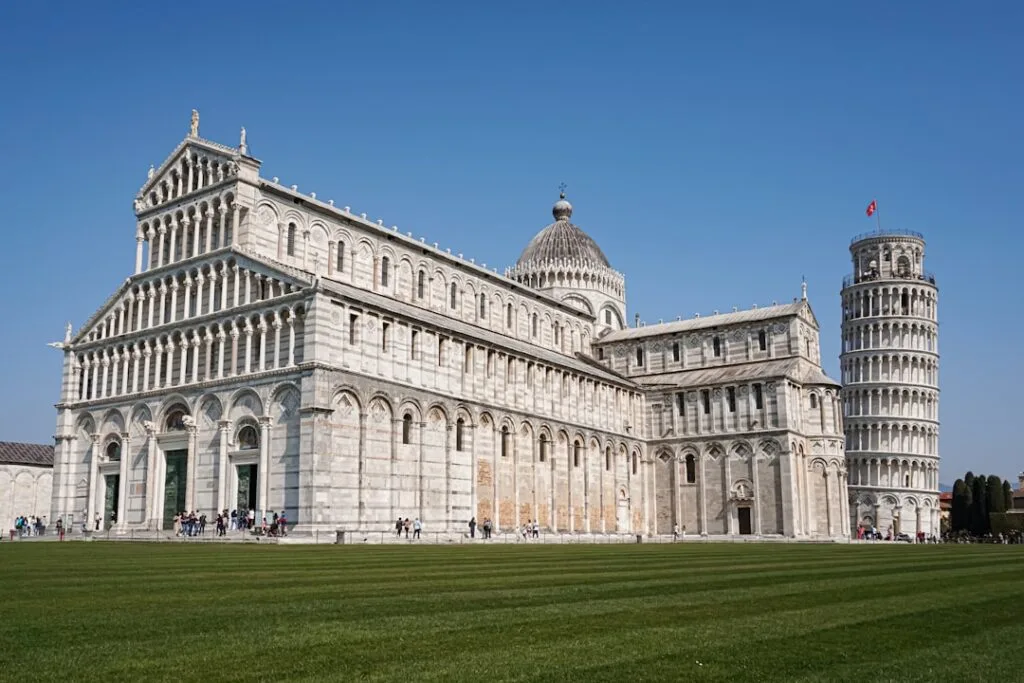
Immersive description: arriving on the square, the green lawn framed by gravel paths sets off the almost-luminous white buildings under the sun. The cathedral, with its marble-clad facades, columns and interior mosaics, commands respect. Climbing the tower gives you a tangible sense of the tilt: the 294 steps lead to an outstanding view over the Arno and the Tuscan countryside. The Baptistery, renowned for its exceptional acoustics, sometimes hosts choral demonstrations — a fleeting, moving experience not to miss.
Practical tips: buy Torre Pendente tickets online in advance (timed entry required). If you plan to visit the cathedral, dress respectfully (shoulders covered, no very short shorts) and allow time to see the interior lighting, the crypt and the Opera del Duomo museum. Expect crowds between 11:00 and 15:00; the best light and fewer people are early morning or late afternoon. Combined tickets (Monumental Complex) can reduce the cost if you want to see everything in one day.
Borgo Stretto and the old town: medieval lanes and artisan shops
Borgo Stretto is the emblematic street of the pedestrian historic center: a medieval thoroughfare lined with arcades, traditional shops, cafés and palaces. Address: Borgo Stretto, 56127 Pisa PI, Italy (it starts near Piazza delle Vettovaglie and leads to Piazza dei Cavalieri). Beyond it, the old town unfolds in a network of narrow streets with churches, historic gates and artisan workshops.
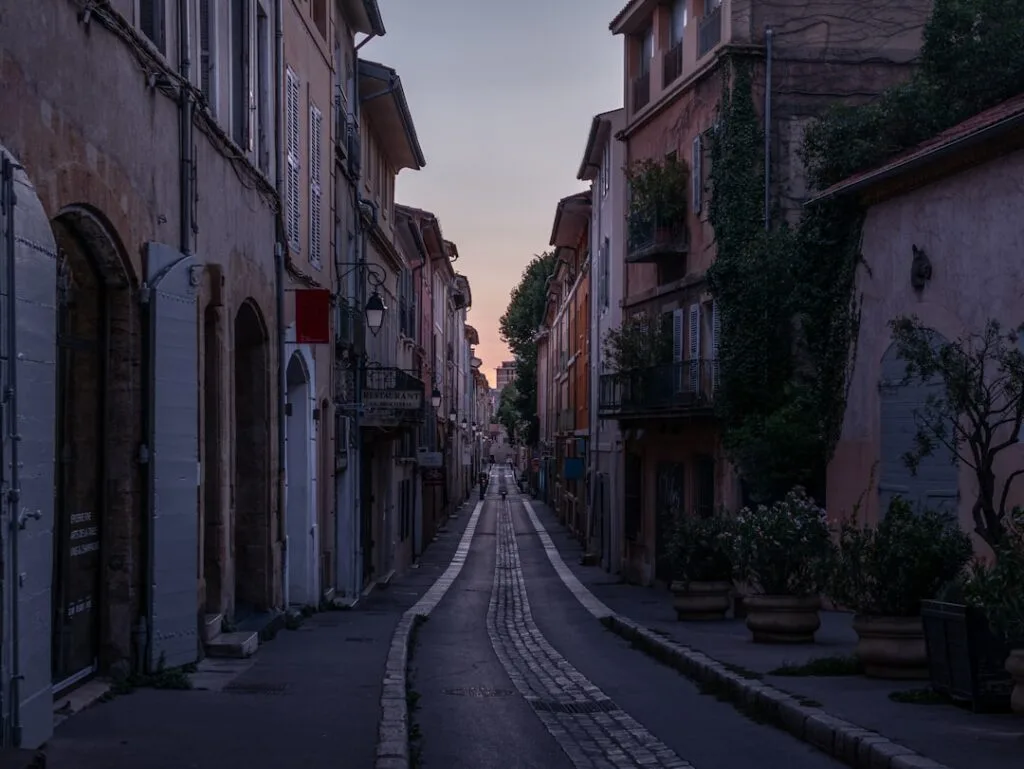
Detailed description: strolling along Borgo Stretto you’ll notice warm-colored facades, leather and ceramics shops, and bookstores that reflect the city’s academic spirit. At one corner rise palaces like Palazzo Gambacorti (Piazza XX Settembre 4, 56127 Pisa), the former town hall and now a venue for temporary exhibitions. Nearby, Piazza delle Vettovaglie (Via delle Vettovaglie, 56127 Pisa) is a historic food market where stalls sell local products in the afternoon and bars buzz in the evening.
Hours and prices: most shops open between 09:00 and 19:30, with some staying open later in summer. Markets and shops are free to enter; for workshops or private experiences (e.g. a ceramics class), expect €10–€30 per person depending on the activity. Central museums (for example Museo Nazionale di Palazzo Reale) charge around €5–€8 and usually open 10:00–18:00, though times vary by exhibition.
Practical tips: explore on foot, without a rigid map, to appreciate architectural details. At lunchtime, go for a light meal like schiacciata (local focaccia), crostini or a lampredotto sandwich at a small trattoria for an authentic taste. Shops generally accept cards, but carry cash for markets and tiny stalls. In the evening Borgo Stretto quiets down and the lights highlight the arcades — great conditions for photography.
Click here to Join a street-food walking tour and taste local specialties
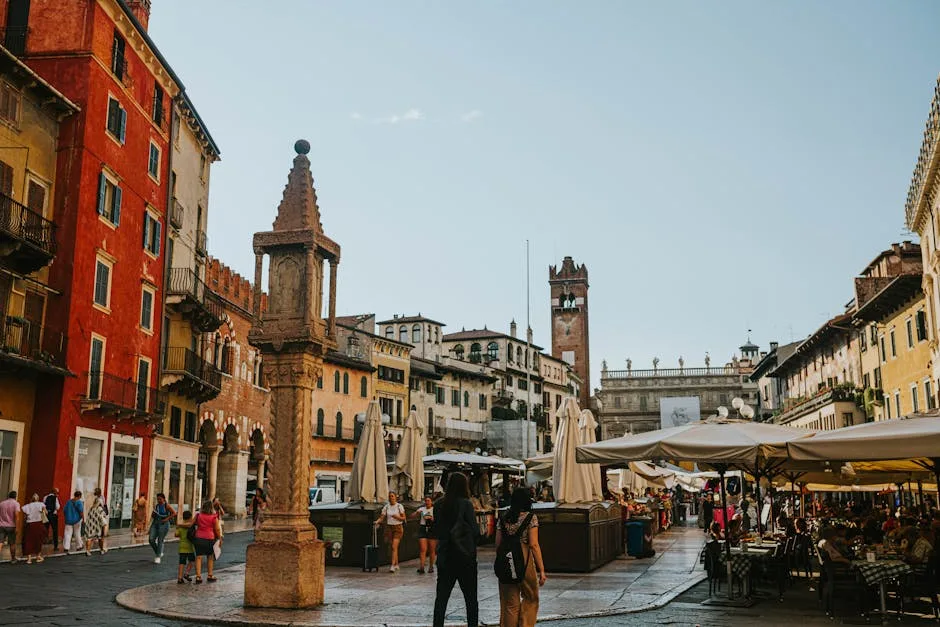
Piazza dei Cavalieri and historic institutions
Piazza dei Cavalieri (Knights’ Square) embodies Pisa’s political and intellectual life from medieval and Renaissance times. Address: Piazza dei Cavalieri, 56126 Pisa PI, Italy. This elegant square is dominated by the Palazzo della Carovana, a masterpiece by Giorgio Vasari, and now hosts university institutions and cultural events. It’s a solemn place where the architecture and ordered layout help explain Pisa’s role in the 16th century.
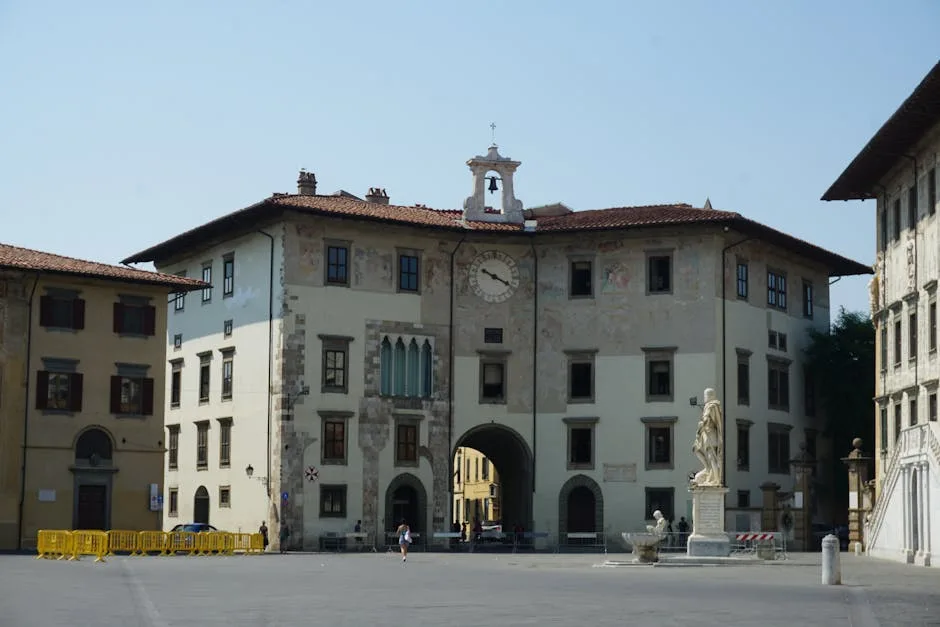
In-depth description: the Palazzo della Carovana (Piazza dei Cavalieri, 7, 56126 Pisa PI) is home to the Scuola Normale Superiore (École Normale Supérieure). Its decorated façades and grand ceremonial staircase speak to its former prestige. Nearby stands the church of Santo Stefano dei Cavalieri (Piazza dei Cavalieri, 4, 56126 Pisa PI), notable for interiors that quietly house religious artworks and maritime ex-votos. The square sometimes hosts open-air concerts and academic events, especially during the university year.
Hours and fees: the square is freely accessible 24/7. To visit the interior of Palazzo della Carovana you’ll often need to join a guided tour organized by the university or visit during temporary exhibitions: prices vary (typically €5–€12). The church of Santo Stefano dei Cavalieri is usually open 10:00–13:00 and 16:00–18:00; entry is free or by suggested donation. Check for occasional closures during university ceremonies.
Practical tips: pair a visit to Piazza dei Cavalieri with a coffee break in a nearby café, then wander the surrounding lanes to find small bookshops and workshops. If you love architecture, look for Vasari’s decorative details and carved coats of arms above doorways. Photographers will find the morning light particularly flattering on the ochre and white façades.
Lungarno and Santa Maria della Spina: a riverside stroll
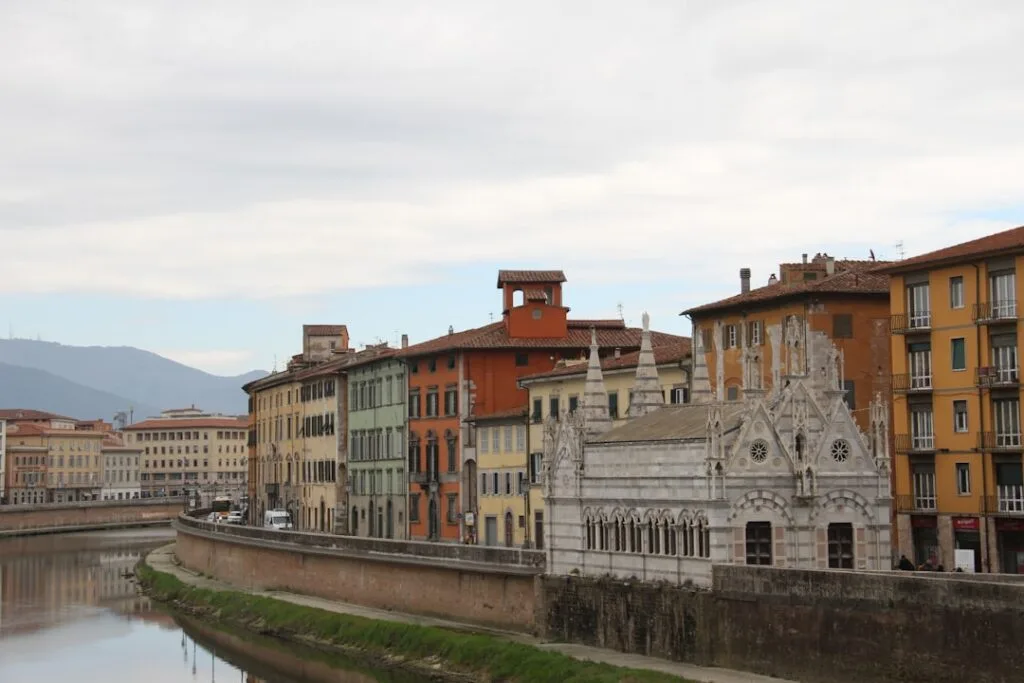
The Lungarno is the riverside promenade along the Arno in Pisa, offering a different view of the city: colourful façades, historic bridges and riverfront perspectives on monuments. One must-see stop is the church of Santa Maria della Spina (Piazza Santa Maria, 56125 Pisa PI, Italy), a small 13th-century Gothic chapel right on the water’s edge. The Lungarno is where you can witness daily Pisan life: students, amateur anglers and strollers.
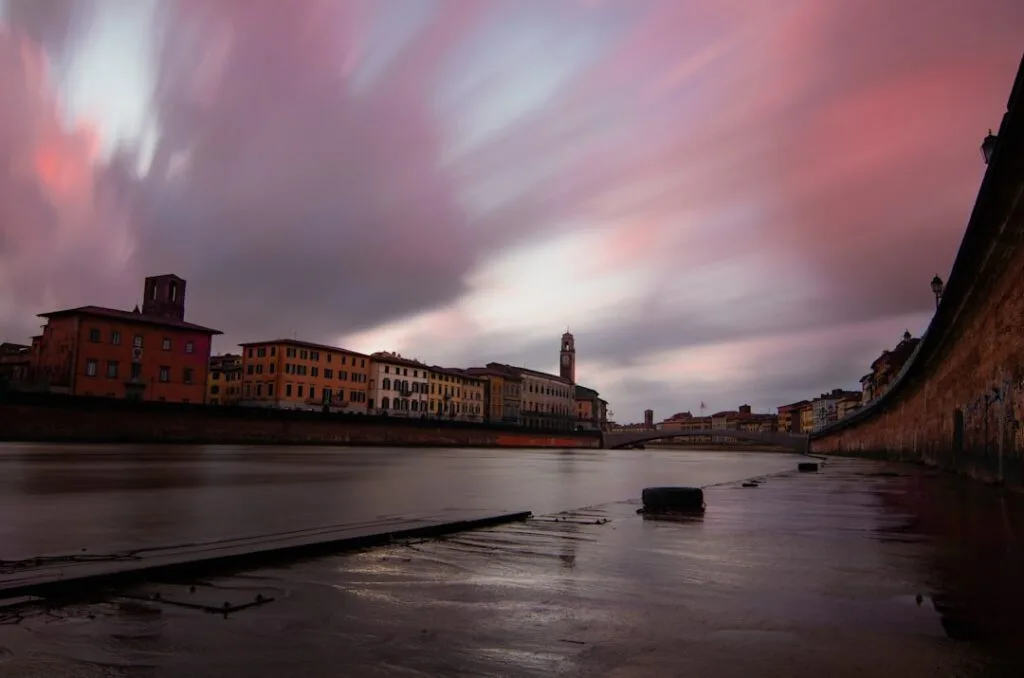
Description: walking along Lungarno Galileo Galilei and Lungarno Pacinotti, you’ll pass noble palaces, cafés and picturesque bridges like Ponte di Mezzo. Santa Maria della Spina, though small, stands out for its delicate stonework: statues, pinnacles and finely detailed marble carving. In 1871 the church was moved stone by stone to protect it from floods; it houses small artworks and an intimate atmosphere away from the crowds.
Hours and prices: the Lungarno promenade is free to enjoy any time of day. Santa Maria della Spina is often open during daytime hours (times vary); entry is free or by suggested donation, and it may occasionally be closed for restoration. Museums along the Lungarno, such as the Museo Nazionale di San Matteo (Lungarno Mediceo, 56127 Pisa PI), generally open 09:00–19:00 with entry around €6–€8; check their sites for current schedules.
Practical tips: for a memorable moment, walk at sunset — the low light on the Arno flatters the pastel façades and paints golden reflections on the water. If weather allows, book a short private boat ride (prices vary, roughly €40–€70 depending on duration and group size) or grab an artisanal gelato and sit on a bench. Avoid heavy rain: the Arno can rise and some riverbanks get muddy. For photographers, Ponte di Mezzo provides a classic composition with aligned façades and city life in motion.
University quarter and museums: San Paolo and hidden treasures
Pisa’s university quarter, centered around the Università di Pisa (Lungarno Pacinotti 43, 56127 Pisa PI) and the San Paolo façades, is a lively area full of students, cafés, bookshops and museums that see fewer tourists. Don’t miss the Museo dell’Opera del Duomo (Piazza del Duomo, 56126 Pisa PI) and the Museo Nazionale di San Matteo (Piazza San Matteo in Soarta, 1, 56127 Pisa PI).
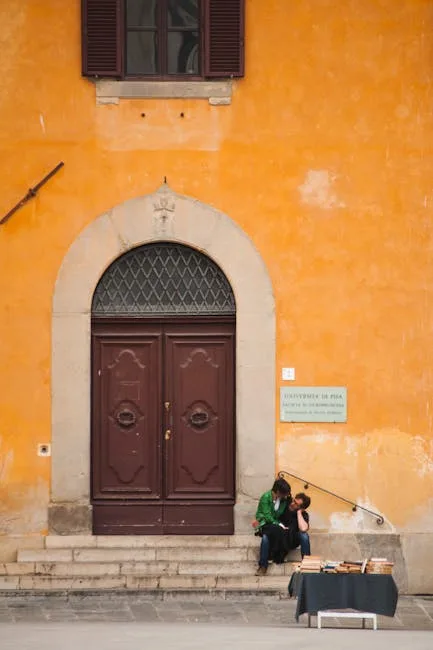
Detailed description: the Università di Pisa radiates from historic buildings where you’ll pass hurried students, study groups and cultural events. The Museo dell’Opera del Duomo displays sculptures and works from the cathedral and the monumental complex: medieval sculptures, marble fragments and restored relics. Address: Museo dell’Opera del Duomo, Piazza del Duomo, 8, 56126 Pisa PI. Indicative hours: 09:00–18:00; admission around €6–€10.
The Museo Nazionale di San Matteo, housed in a former Benedictine convent, holds a rich collection of medieval and Renaissance art, including paintings, altarpieces and sculptures by local artists such as Niccolò Pisano. Address: Museo Nazionale di San Matteo, Piazza San Matteo in Soarta, 1, 56127 Pisa PI. Typical hours: 09:00–19:00; admission about €5–€8. These museums offer an interesting contrast to Piazza dei Miracoli: here art is experienced within the urban fabric, away from the staged tourist setting.
Practical tips: take advantage of university libraries for a quiet break, try student-budget eateries (student menus often €7–€12) and explore old bookstores for rare Italian editions. If you’re an art history fan, book a themed guided tour in a museum (€10–€20) to get behind-the-scenes insights into restorations. And if you’re in Pisa on a Thursday evening, look out for student events and temporary exhibitions, often free or discounted.
Click here to Book Opera del Duomo museum and cathedral audioguide
General tips for visiting the neighborhoods
- Transport: the main train station is Pisa Centrale (Piazza della Stazione, 56125 Pisa PI). From there you can walk to the historic center in 15–20 minutes or take a local bus (tickets €1.50–€2.00).
- Tickets: favour skip-the-line tickets online for the Torre Pendente and major museums. Always double-check your timed slot.
- Accessibility: Piazza dei Miracoli is partially accessible, but climbing the tower is not possible for people with reduced mobility. Check official sites for specific facilities.
- Safety: as in any tourist city, watch your belongings, especially around large squares and on public transport.
- Language: most cafés and museums have staff who speak English; a good guidebook or a translation app can help with menus and small shops.
Conclusion: planning your stay in Pisa to fully explore the neighborhoods
Pisa is best discovered by neighborhood, each revealing a different layer of history and local life. Piazza dei Miracoli delivers the spectacular monumental architecture; Borgo Stretto and the old town invite you into everyday Pisan life between shops and markets; Piazza dei Cavalieri echoes the political and academic past; the Lungarno and Santa Maria della Spina show the gentle pace of life by the Arno; and the university quarter and museums hide essential, less obvious treasures for understanding Pisan culture.
To make the most of your visit, plan your days by area: devote a morning to Piazza dei Miracoli (book the Torre Pendente), an afternoon to Borgo Stretto and Piazza delle Vettovaglie for lunch, an evening stroll along the Lungarno, and reserve quieter time for museums and the university district. Bring comfortable shoes, buy tickets in advance for the most popular attractions, eat where locals go for an authentic experience, and don’t be afraid to stray off the beaten path to discover the city’s intimate side.
Finally, remember that opening times and prices can vary by season and local events: always check official sites before you go (for example, opapisa.it for the Duomo complex and related museums). With a little planning, Pisa reveals much more than its tower: a lively, studious city full of charming detours. Have a great trip and happy discoveries!