





Introduction — Why a day trip to Carrara from Pisa is worth it
Leaving Pisa for a day trip to Carrara swaps the familiar outline of the Leaning Tower for gleaming white sculptures and the dramatic terraces of marble quarries. Just 70 to 90 minutes by car or train depending on how you travel, Carrara delivers a one-of-a-kind sensory experience: the distant rumble of excavators, the mineral scent of freshly cut blocks, and light revealing the subtle veins of the marble. For visitors based in Pisa, it’s a very doable escape that mixes industrial history, geology, craftsmanship and alpine views.
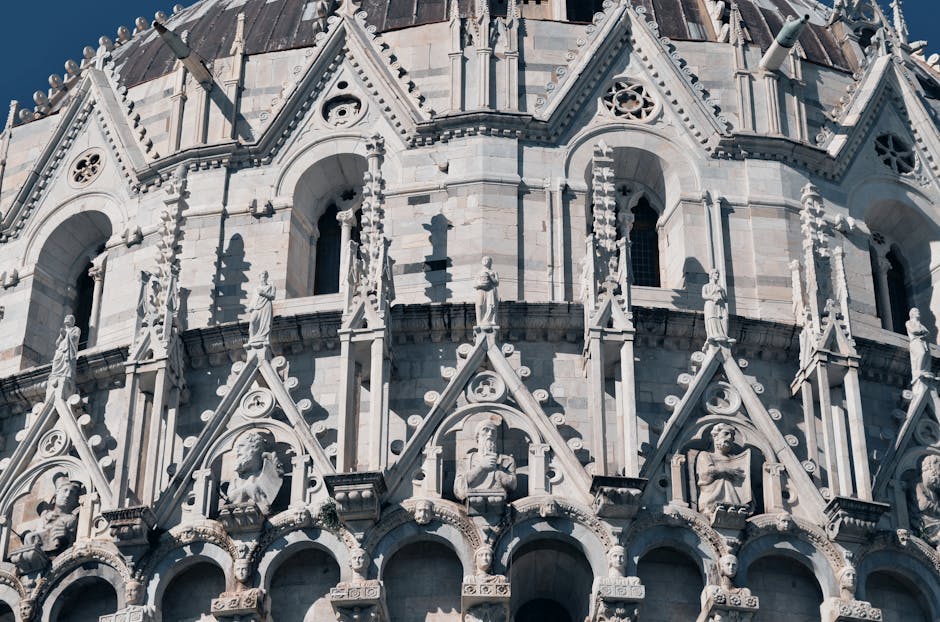
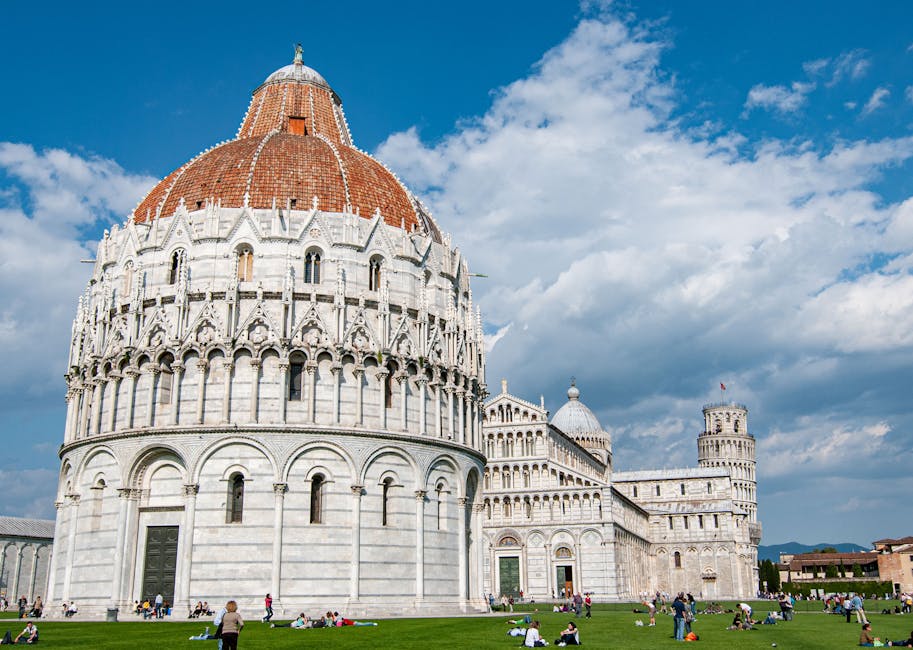
A typical day includes exploring Carrara’s historic center, visiting a marble museum, and above all climbing up to the Apuan Alps quarries where the “statuary” marble — the very stone coveted by Michelangelo and many others — is extracted. The contrast between Pisa’s Romanesque and medieval softness and the almost lunar white terraces of the quarries is striking. You’ll see how raw material becomes art, and how local life still revolves around this resource today.
Practically speaking, there are several ways to make the trip: rental car, train + local shuttle, or a guided tour leaving from Pisa. Each option has upsides: a car gives flexibility and access to higher viewpoints, the train is economical and comfortable, and an organized tour often includes access to areas normally off-limits and commentary from an expert guide. This general guide gives you everything you need: timetables, exact addresses, indicative prices in euros (€), recommended routes, local tips and advice to make the most of your day.
We’ll detail the unmissable sites, how to book, what to pack, and the best times to visit (April–June and September–October are ideal to avoid summer heat and crowds). Descriptions are immersive to help you picture each stage: from arriving at Pisa Centrale to the suspended quarries and the stone-carving workshops in Carrara’s center. Whether you love architecture, photography, geology or cultural curiosities, this day trip from Pisa is a rich, accessible discovery.
Getting to Carrara from Pisa — routes, addresses and schedules
Getting from Pisa to Carrara is straightforward and mainly done three ways: by car, by train, or via an organized excursion. Each has different schedules and constraints. Here’s a detailed guide to help you pick the best option based on your priorities.
Option 1 — By car (most flexible)
Recommended route: Start at Pisa Centrale — Piazza della Stazione, 56125 Pisa PI, Italy. Take the SS1 (Via Aurelia) then the A12/E80 toward Genova, exit Carrara/Fosdinovo. The drive is roughly 70 km and usually takes about 1h10 to 1h30 depending on traffic.
- Recommended arrival address in the town center: Piazza Matteotti, 54033 Carrara MS, Italy (historic center).
- Parking: Parcheggio Multipiano Avenza, Via Malaspina 45, 54033 Avenza (near the station), indicative rate €1–€2/hour, day max ≈ €8–€12.
- Advantage: access to mountain passes and quarry viewpoints (Cava di Fantiscritti, Cava Michelangelo) easily.
Driving tip: mountain roads up to the quarries can be narrow; favor a compact car and check the weather to avoid fog or rain that drastically reduce visibility.
Option 2 — By train (economical and comfortable)
Departure station: Pisa Centrale — Piazza della Stazione, 56125 Pisa PI, Italy. Take a regional train toward La Spezia or Genoa and get off at the “Carrara-Avenza” station (official station name: Carrara-Avenza). Approximate address of the arrival station: Piazza Garibaldi 1, 54033 Avenza (Carrara) MS, Italy.
- Duration: about 1h10 to 1h40 depending on connections (regional Trenitalia trains).
- Price: regional tickets usually €6–€12 one way (indicative Trenitalia fares).
- Schedules: regional trains run frequently (every 30–60 minutes during the day); check trenitalia.com or the Trenitalia app for exact times on the day.
From Carrara-Avenza station you can take a local bus (ATC Carrara) or a taxi to the town center (roughly a 10-minute ride, taxi fare ≈ €8–€15). Some guided tours include pickup at Avenza station.

Option 3 — Organized day tour from Pisa
If you prefer convenience, several Pisa-based operators run full-day trips to the Carrara quarries with minibus transfers, a guide and sometimes quarry access. Typical example:
- Operator: « Tuscany Marble Tours » (representative example). Meeting point: Piazza dei Miracoli, 56126 Pisa PI, Italy (near the Leaning Tower of Pisa). Indicative price: €65–€95 per person (includes transport, guide, base entry), schedule: departs around 08:30, returns to Pisa around 17:30.
- What it includes: round-trip transfer, visit to a carving workshop, stop at the Museo del Marmo and a (partial) tour of the quarries with a guide.
Tip: always check what’s included (4×4 quarry access, lunch, entrance fees) and consider cancellation insurance if the price is high. Tours are great if you want history and safety without worrying about logistics yourself.
 Click here to book a van tour to the Carrara marble quarries
What to see in Carrara in one day — detailed itinerary and exact addresses
To make the most of a day, follow this optimized itinerary: arrive in Carrara in the morning, explore the center and the Museo del Marmo, lunch at a local trattoria, then transfer to the quarries in the afternoon for a guided visit and sunset panorama. Below each step is described with addresses, typical opening times and indicative prices.
Morning — Historic center and Museo del Marmo
Start with a walk around Carrara’s heart. Stroll down Via Roma and Piazza Alberica. Don’t miss the Museo del Marmo (Apuan Marble Museum). Address: Museo del Marmo, Via Cesare Battisti 1, 54033 Carrara MS, Italy. Opening hours: usually open Tuesday to Sunday, 09:30–13:00 and 15:00–18:00; closed Mondays (hours vary by season). Price: adult entry ≈ €6–€10, reduced €3–€6.
Immersive description: the museum blends geology, extraction history and marble artworks. You’ll find traditional tools, quarry models and carved pieces that show how raw stone becomes finished art. The exhibits will help you read the veins and quality of marble once you see it on site.
Lunch — Trattorias and local specialties
For lunch, pick a trattoria serving Tuscan dishes and seafood. Example: Trattoria La Cantina del Marmoraro, Address: Via Roma 72, 54033 Carrara MS, Italy. Hours: 12:00–15:00 and 19:00–22:30. Budget: €12–€25 per person for a main course, €25–€40 with wine.
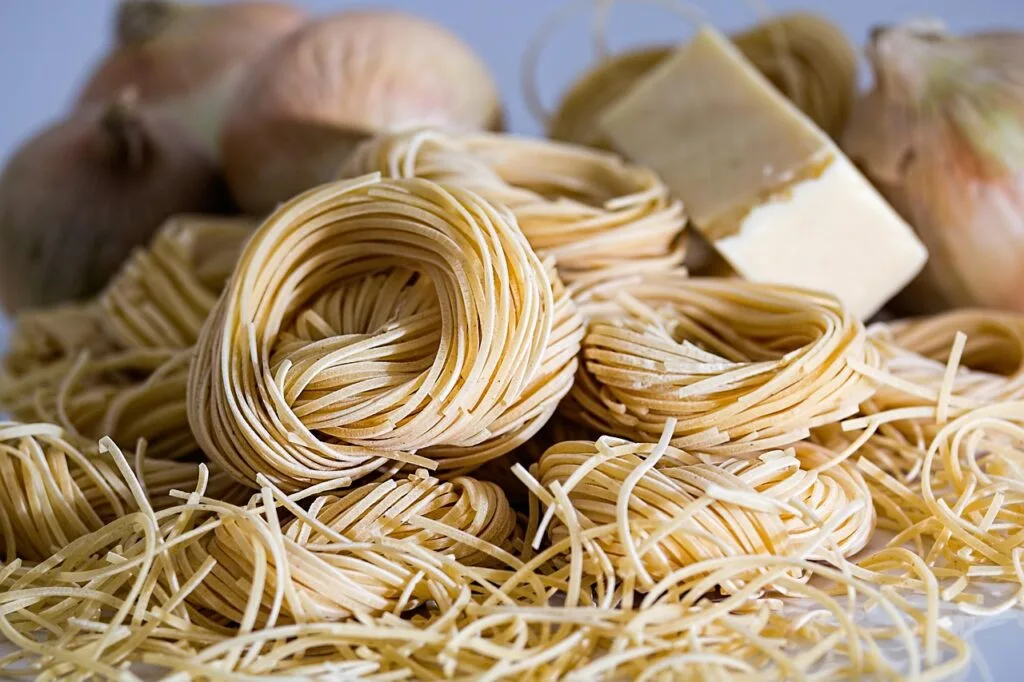
Food tip: try the torta di ceci (chickpea flatbread) as an antipasto, then fresh pasta like tagliatelle al ragù di carne. Pair your meal with a glass of Vermentino della Costa Toscana or a local Chianti.
Afternoon — The quarries (guided visit recommended)
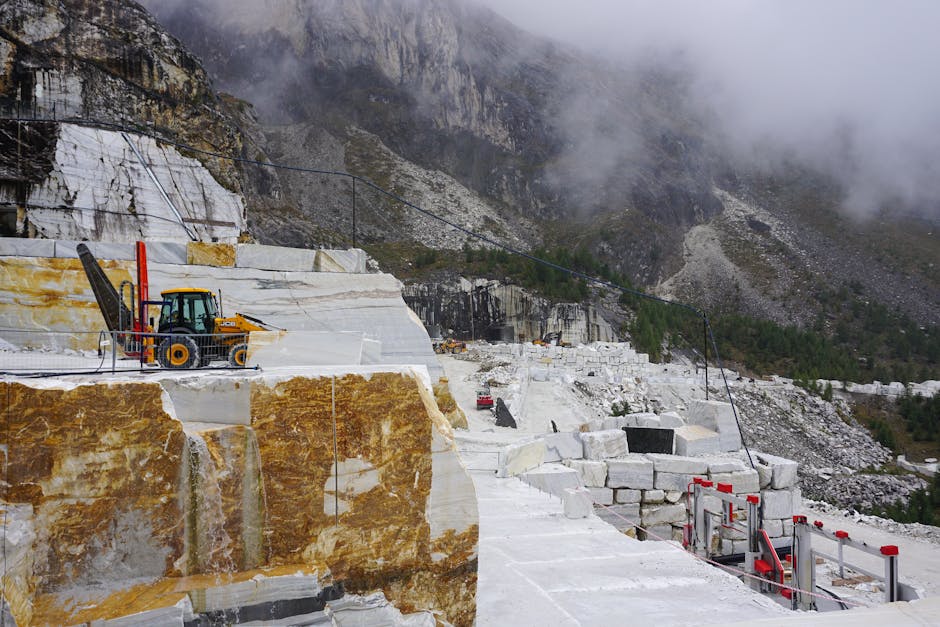
The main draw is a quarry visit: Cava di Fantiscritti and Cava Michelangelo are two frequently visited sites. A guided tour lets you access regulated areas.
- Cava di Fantiscritti (typical quarry): access via Strada Provinciale N° 35, località Fantiscritti, 54033 Carrara MS, Italy. Guided tours: offered by several local operators, price ≈ €40–€70 per person for 2–3 hours (including guide, helmet, 4×4 transfer for certain zones).
- Cava Michelangelo (panoramic area): often reachable as a viewpoint from the road; landmark address: Via dei Marmi, 54033 Carrara MS, Italy. Public access to the overlook is free, but entry to active cuts requires a guide.
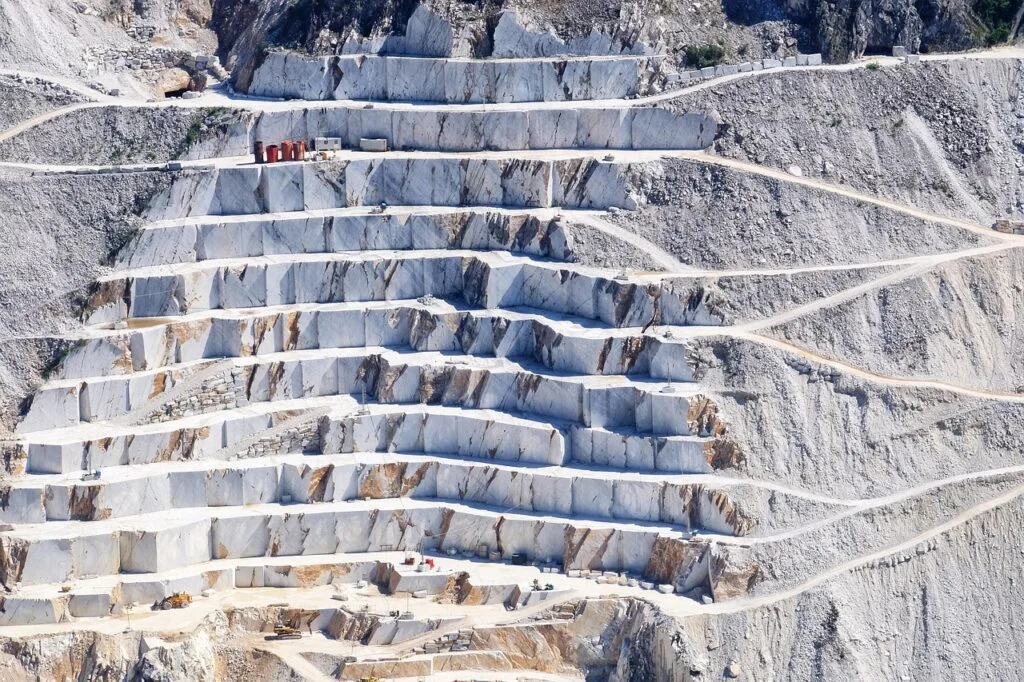
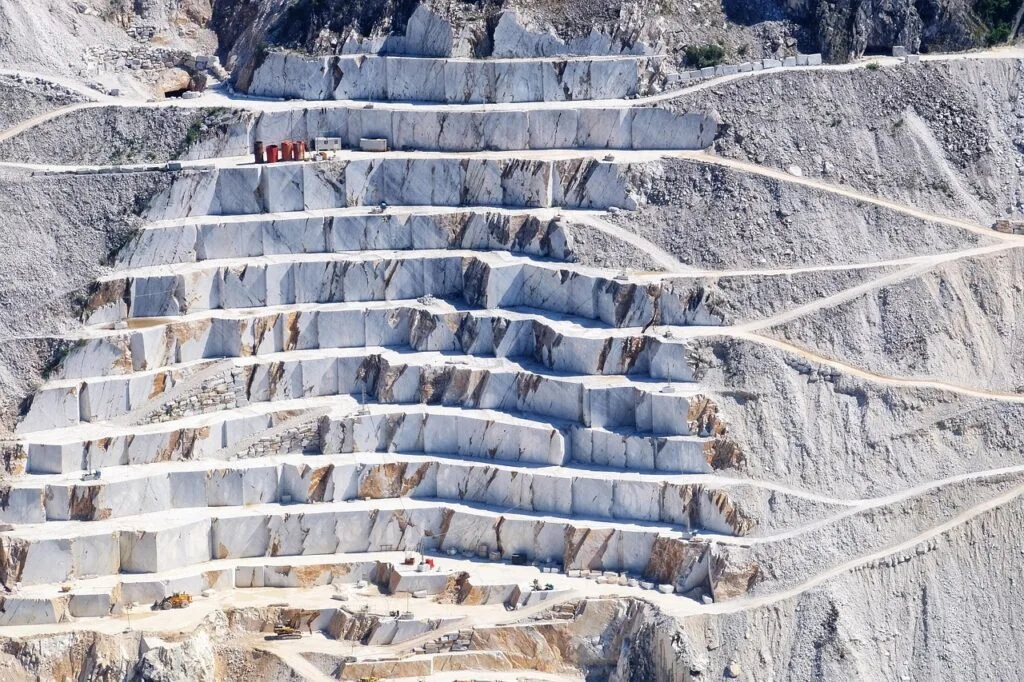
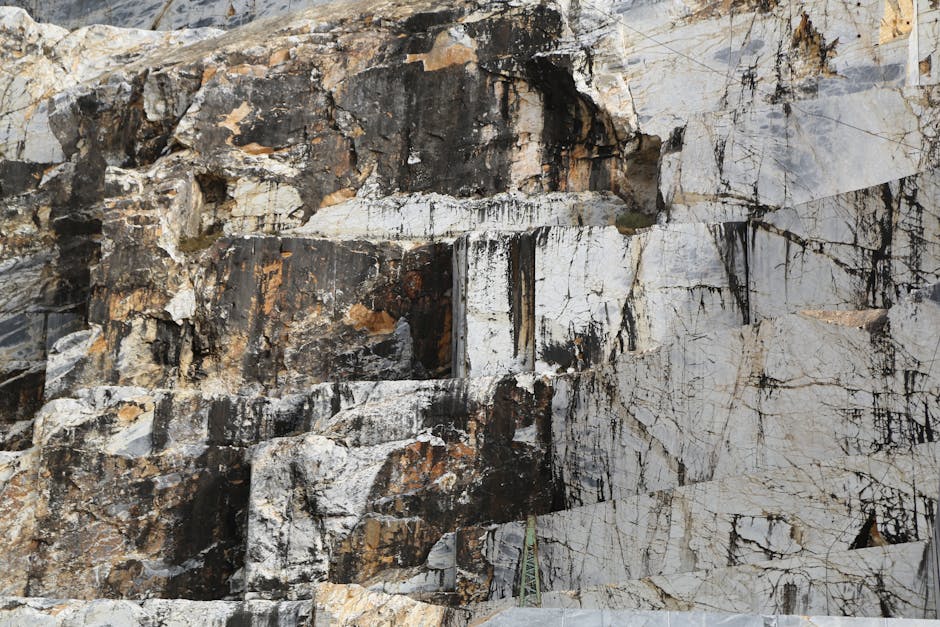
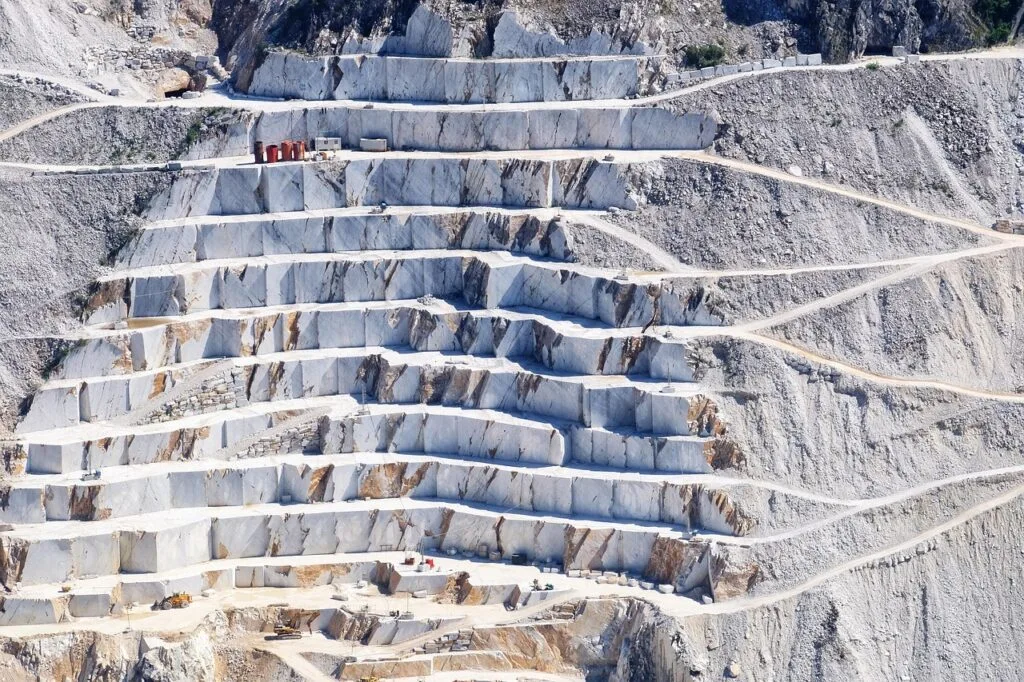
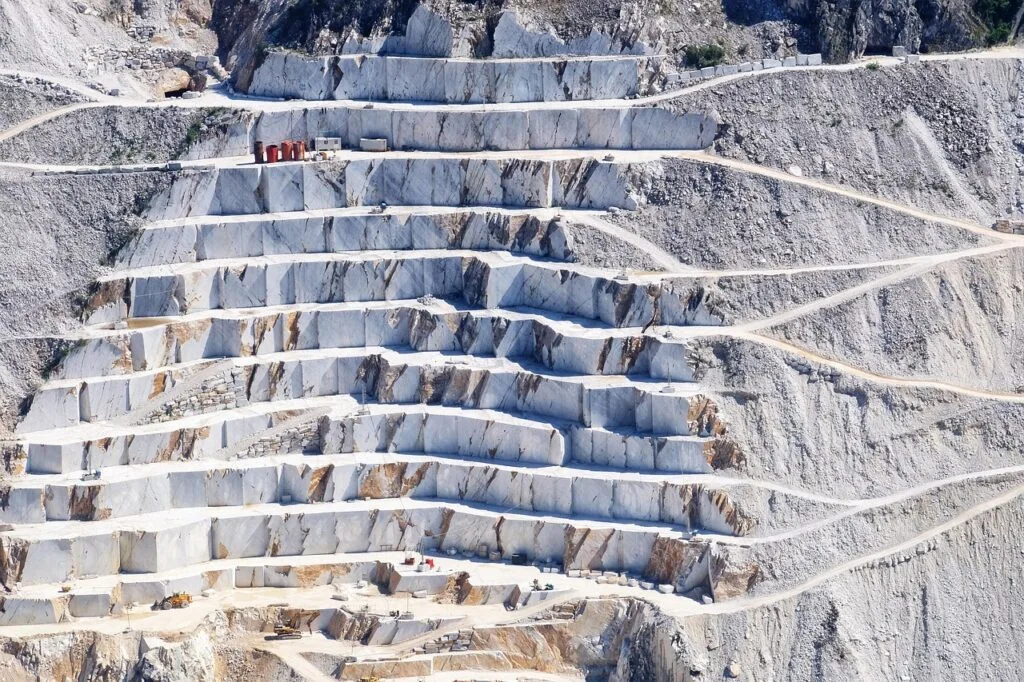
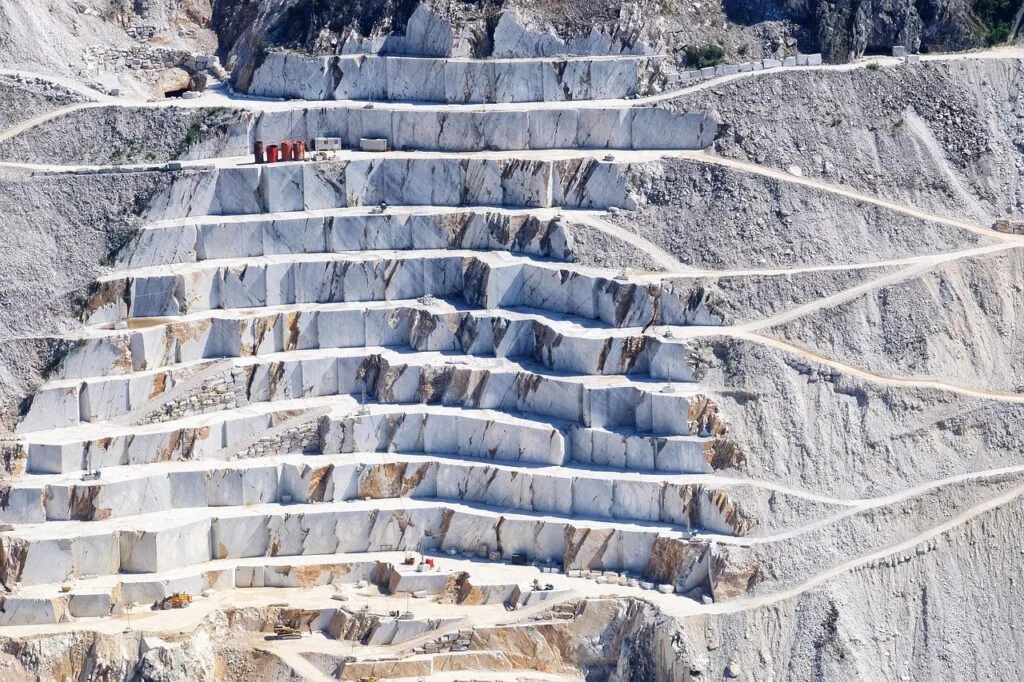
Immersive description: picture enormous white terraces cut like giant steps where sunlight plays on smooth and rough surfaces. Guides explain extraction techniques (diamond saws, drilling, wedging) and show blocks ready to be sent to workshops. The quarries can be dazzling — protect your eyes and bring a jacket against the wind, as the altitude often cools the air.
Workshops, shops and hands-on experiences in Carrara
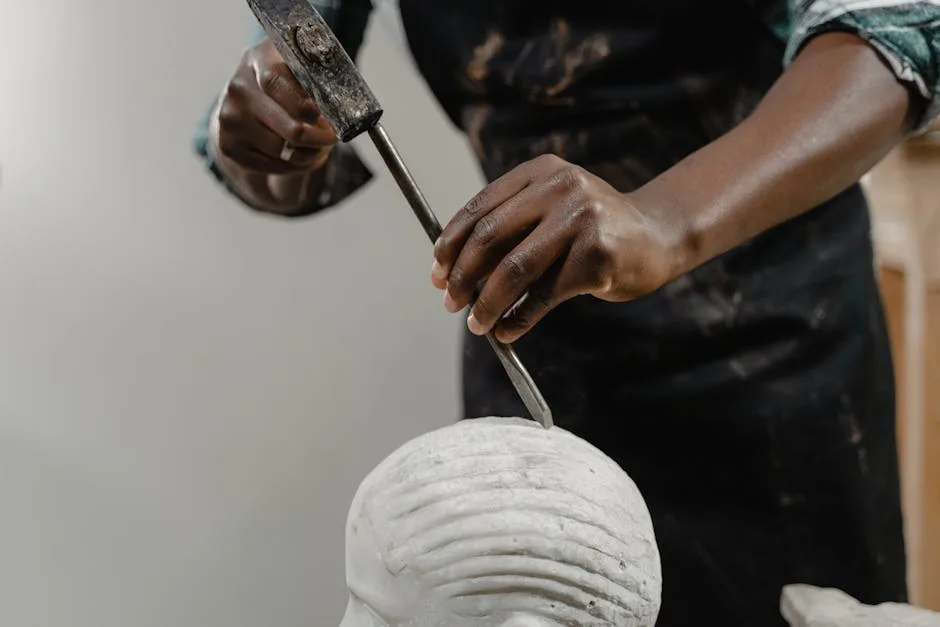
Visiting Carrara isn’t just about the quarries: the town and its surroundings are full of artisan workshops and shops where marble becomes both useful objects and art. You can easily spend half a day visiting these places to see sculptors at work, talk to master marble workers, and buy authentic souvenirs.
Recommended workshops and addresses
- Atelier Scultoreo Michelangelo S.r.l. — Via Avenza 36, 54033 Carrara MS, Italy. Hours: 09:00–13:00 / 15:00–18:00 (by appointment). Visits by reservation. Price: often free if you make a purchase, or demonstration fee ≈ €10–€25.
- Officina Marmi Carrara — Via dei Marmi 12, 54033 Carrara MS, Italy. Hours: 08:30–12:30 / 14:30–18:00. Sells design marble objects, small souvenirs €15–€80.
- Studio Gallery Galleria Paci — Via Carriona 17, 54033 Carrara MS, Italy. Temporary exhibitions and contemporary sculptures. Entry free or donations recommended.
Experience: book a marble-carving demonstration (sawing, polishing, finishing) — typical cost for a guided demo ≈ €15–€30 per person. These workshops show the full process from raw stone to finished product: sinks, tabletops, sculptures and design pieces.
Buying advice: choose shops that provide a certificate of origin (Apuan Alps Carrara marble) and avoid items that feel too light or poorly finished. Genuine marble has noticeable density and feels cool to the touch.
Practical tips and safety — what to know for a successful day
Safety is paramount, especially on quarry visits. Always follow the guide’s instructions and wear provided equipment: helmet, high-visibility vest, closed shoes. Quarries are industrial zones with heavy machinery and potential rockfalls.
- Best time to visit: spring (April–June) and fall (September–October). In summer, heat and glare off the white stone can be intense; in winter, mountain roads can be wet and slippery.
- Clothing and gear: closed walking shoes, hat, sunglasses, sunscreen, a windproof jacket. Bring water: 1–2 liters per person for the day.
- Health and accessibility: some quarry areas require good physical condition; check before booking. Museums and city workshops are generally accessible, but mountain viewpoints can be hard to reach for people with reduced mobility.
- Indicative daily budget: transport (car + parking €10–€25 or train €12 return), museum €6–€10, guided quarry visit €40–€70, lunch €15–€30 — total approx. €73–€135 per person depending on options.
Local tip: buy a marble soap or a small piece directly from a workshop rather than tourist stalls; that way you support local artisans. If possible, hire an English/Italian-speaking guide who can explain not only the geology but also the economic and environmental issues around extraction.
Photography and best viewpoints — where to take memorable photos
Carrara is a photographer’s dream. The textures, cut lines, and shadow-play on marble create striking compositions. Here are spots and tips to capture the most dramatic images.
- Fantiscritti viewpoint: located along the access road to the quarries, offers a sweeping view over the white terraces. Best time: late afternoon for low, raking light. Gear: wide-angle (16–35mm) and a telephoto to isolate cut details.
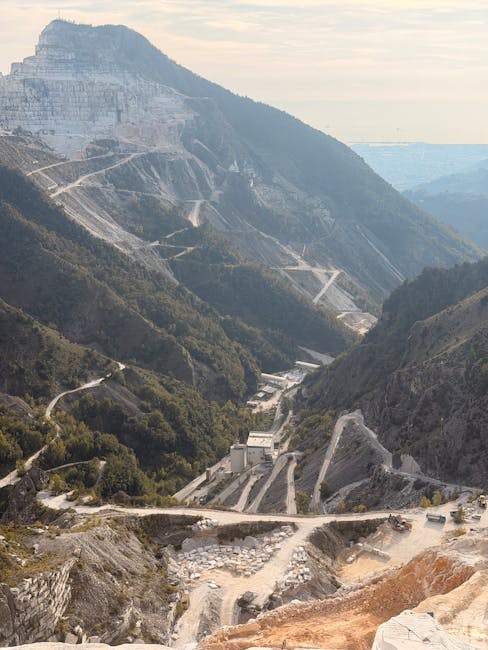
- Cava Michelangelo viewpoint: panorama over the valley and quarries with the sea in the background on clear days. Timing: sunset for warm colors. Be careful with safety when setting up a tripod.
- Workshops and museums: soft indoor light for textures; shoot tools and chisel marks for narrative images. Respect museum photography rules, which can sometimes be restricted or paid.
Technical tip: use a polarizing filter to reduce reflections on polished surfaces and a tripod for interior shots. For perspective shots of the quarry terraces, find an elevated vantage point that reveals the strata.
Conclusion — Summary and final recommendations for a memorable day
A day trip to Carrara from Pisa is a full immersion into a rare industrial and artistic landscape. In a single day you can connect the history of marble to contemporary life: visit the Museo del Marmo, lunch in a local trattoria, explore artisan workshops and, most importantly, climb to the quarries to see the material in its raw state. The trip is accessible by car, train or guided tour; each option brings different benefits in flexibility, cost and depth of experience.
For the best day, plan an early departure from Pisa Centrale (Piazza della Stazione, 56125 Pisa PI, Italy), book a guided quarry tour in advance (indicative price €40–€70), and allow at least 2–3 hours in the quarry area to fully appreciate the site’s vast scale. Check museum hours (Museo del Marmo, Via Cesare Battisti 1, 54033 Carrara MS) before you go and confirm return train connections if you don’t have a car.
Finally, respect the environment and local rules: don’t enter restricted areas, don’t take pieces of stone without permission and favor local purchases to support independent sculptors and workshops. Carrara is a place where natural beauty and human craft meet; with a bit of planning from Pisa you’ll leave with powerful images, a deeper understanding of marble, and perhaps a small handcrafted memento made by expert hands.
Click here to book a private Carrara quarries day trip