





Introduction
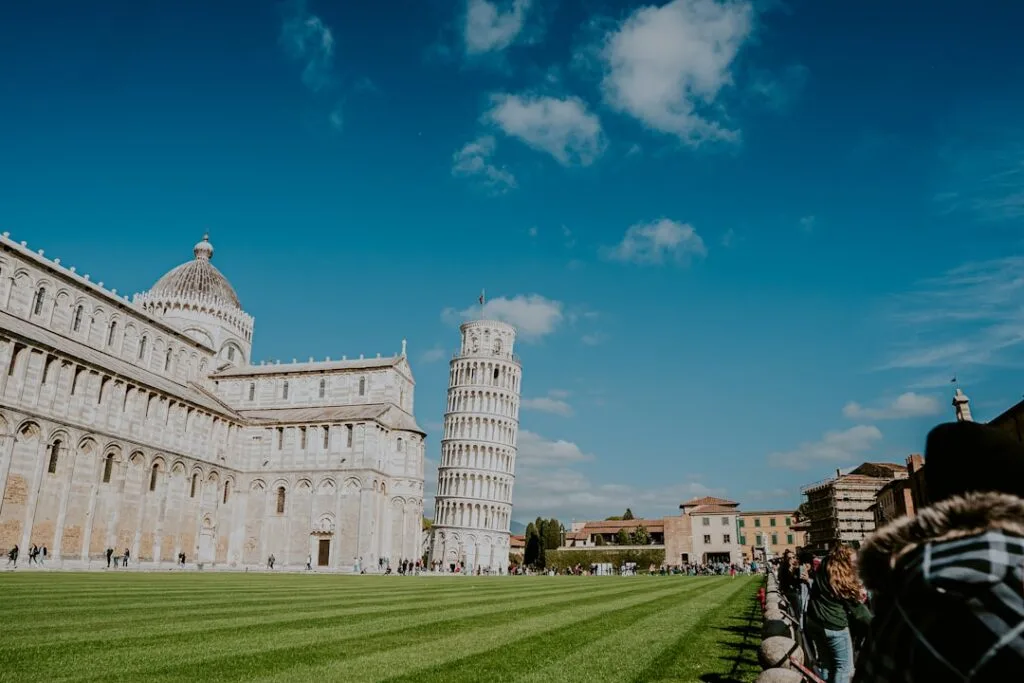
Pisa is more than just the home of the famous Torre Pendente: it’s a playground for lovers of minimalist photography. Between white marble and umbrella-shaded walkways, along the banks of the Arno and down medieval lanes, the Tuscan city offers pared-back compositions where light, texture and lines take precedence over visual clutter. A minimalist approach means stripping an image down to essentials: geometric shapes, strong contrasts, flat surfaces and negative space. Pisa, with its marble facades, bright arcades and calm waters, lends itself perfectly to this kind of framing.
In this article I lay out a route designed to capture Pisa from a minimalist perspective, focusing on iconic spots and lesser-known corners that are just as photogenic. Each location includes the exact address, typical opening hours, entrance fees in euros, an immersive description and practical local tips to nail your clean shots — from the best time to shoot to rules of conduct and gear suggestions. Whether you’re a pro photographer, a traveler with a small camera or a smartphone user, you’ll find concrete pointers to turn ordinary scenes into striking, graphic images.
Minimalist urban photography in Pisa often relies on: using low-angle light at dawn or dusk, hunting for reflections on the Arno or on wet paving, exploiting the contrast between white marble and blue sky, or highlighting a single architectural detail in a cleared frame. You’ll also learn to play with symmetry — abundant on church facades — and with asymmetry, common along quays and little squares. I also share local practical tips: where to set up a tripod (and where not to), how to avoid crowds at sunrise, and how to negotiate access into certain monuments to get emptier shots.
Finally, bear in mind that practical information (opening hours, prices) can change: it’s wise to check official sites before you go. I’ve made an effort to provide accurate, up-to-date guidance to prepare your photo outings. Follow this guide to turn Pisa into a series of monochrome, geometric and serene images, and return home with a coherent collection that highlights the city’s stripped-back beauty.
Piazza dei Miracoli: the minimalist essence of marble
Piazza dei Miracoli is the unmissable starting point for a minimalist photographer. Address: Piazza del Duomo, 56126 Pisa PI, Italy. It’s a large grassy forecourt surrounding the Torre di Pisa (Leaning Tower of Pisa), the Cattedrale di Santa Maria Assunta, the Battistero di San Giovanni and the Camposanto Monumentale. The park itself is accessible 24/7 from the square, but access inside the monuments is subject to opening hours and tickets. For the Torre di Pisa, the ticket to climb is about €20 (price varies by season) and time slots are sold online; typical hours: 09:00–20:00 (high season). Entry to the Cattedrale di Santa Maria Assunta is generally free but often requires reservation and crowd control; typical hours: 10:00–17:00. Battistero di San Giovanni: address Piazza del Duomo, 56126 Pisa PI, entry fee around €5–€7, hours 09:00–19:00. Camposanto Monumentale: address Piazza del Duomo, 56126 Pisa PI, combined ticket with other monuments about €8–€12. These rates are indicative and may change; check official sites before visiting.
 Click here to book your ticket for Piazza dei Miracoli monuments
Click here to book a professional photo session at the Tower
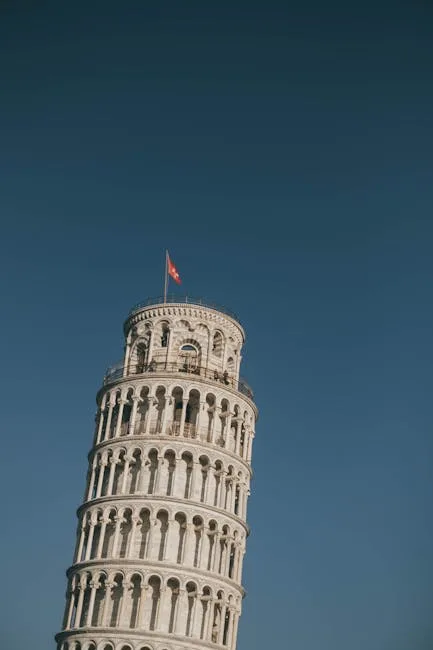
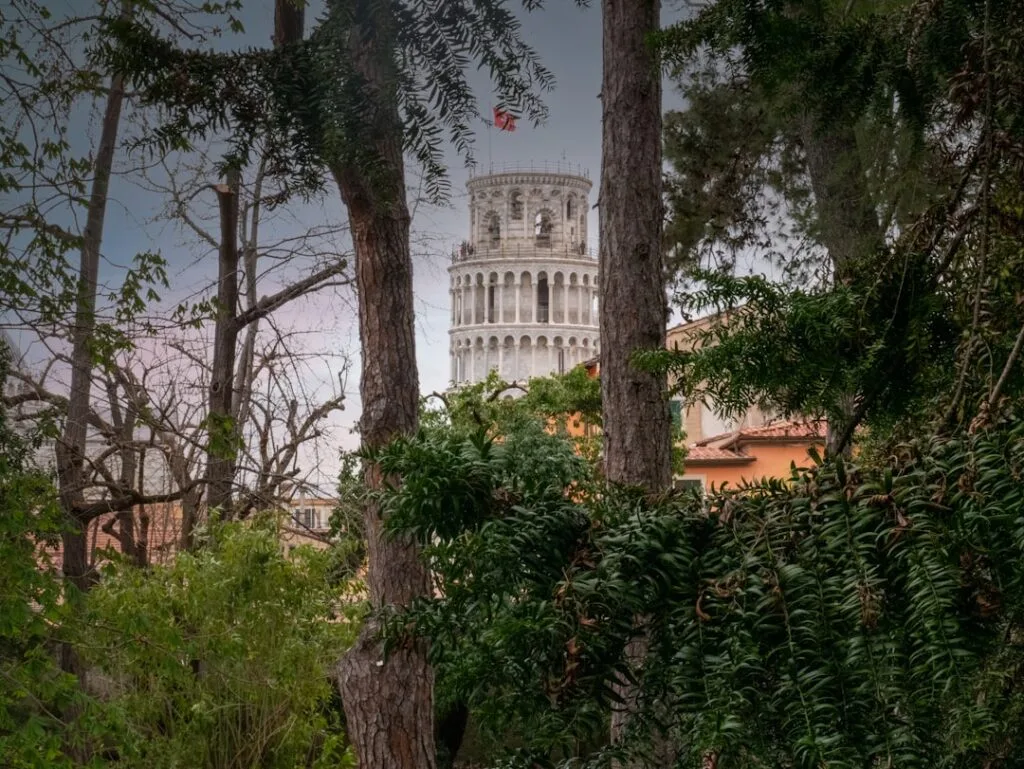
How to create minimalist images here? Step back to isolate the Torre di Pisa against a clear sky — early morning or late afternoon work best — and use a tight vertical crop to remove distracting elements. The white marble of the Cattedrale and the Baptistery is perfect for texture studies: shoot close-ups of a single column, a capital or repeating arcades. The central lawn provides a large area of negative space that, after rain, can slightly reflect the monuments — ideal for symmetrical compositions. Practical tips: arrive before 08:00 in high season for crowd-free views; avoid mass times if you want empty interiors. Tripods may be tolerated outside, but inside monuments their use can be restricted — ask staff. Finally, bring a medium telephoto to isolate carved details and a moderate wide angle (24–35 mm) to play with facade geometry.
Lungarno and the Arno reflections: lines and negative space
The Lungarno is the riverfront along the Arno and offers countless opportunities for minimalist photography. Generic location reference: Lungarno Mediceo / Lungarno Galileo Galilei, 56100 Pisa PI. The quays are open 24/7. For ideal light, aim for the blue hour or early morning when the water is calm and buildings reflect with clarity. A classic yet spare view is Ponte di Mezzo (Ponte di Mezzo, Lungarno Mediceo, 56100 Pisa PI) framing rows of houses: by composing horizontally and leaving the sky empty above, you create strong negative space that highlights the roofline and its reflection. The quays are public and free; no ticket required.
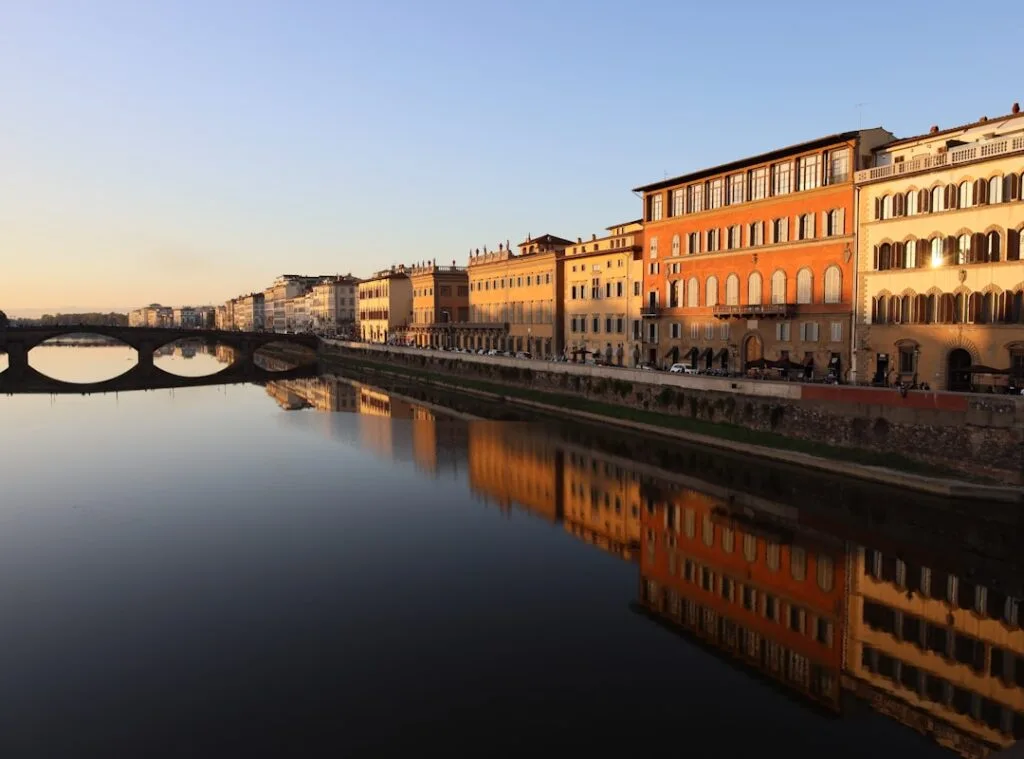
Technique: use a slow shutter (1/4 to 1/2 second) with an ND filter or a tripod to smooth the water and strengthen reflections. Interesting textures also come from the typically sober facades along the Lungarno — look for a single door, an isolated balcony or a bike leaning against a wall to introduce a focal point into a clean frame. Vertical compositions work very well to capture a portion of facade with its symmetrical reflection below. Local tips: the quays can be windy, so protect your gear; avoid leaving your bag on the parapet to prevent it from falling into the water. In the evening several cafes along the Lungarno stay open until 23:00, but their lights can create glare — position yourself slightly back for more minimalist images.
Piazza dei Cavalieri and Borgo Stretto: urban geometry and details
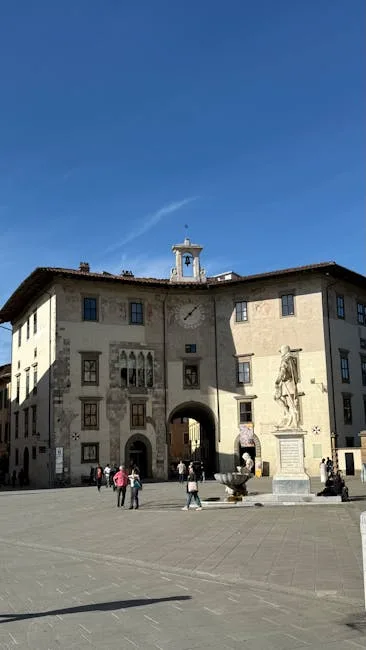
Piazza dei Cavalieri (Piazza dei Cavalieri, 56125 Pisa PI) sits in the heart of the old town and is a fantastic spot for minimalist photos focused on geometry and contrast. Once the knights’ square, it’s now dominated by the Palazzo della Carovana (Piazza dei Cavalieri, 1, 56125 Pisa PI); its richly decorated facade offers repeating patterns and strong lines. External access to the square is free and open all day; guided tours into some palaces may be paid (variable fee, often around €5–€10) with typical visiting hours 09:00–18:00.
Borgo Stretto (Via Borgo Stretto, 56125 Pisa PI) is the arcade-lined shopping street adjacent to the historic center. It’s a perfect place to isolate forms: repeated arches, columns and neatly aligned shopfronts. General address: Via Borgo Stretto, 56125 Pisa PI. Long shots composed of repeating arches, pillars and a cleared central aisle of pedestrians are very effective (try early morning or during the Italian siesta). Shops are generally open 09:00–13:00 and 16:00–19:30, some close on Sundays; the passage is free. For a minimalist look choose a mid focal length (35–50 mm) and stop down to emphasize the repetition of arches while isolating a single element in shallow depth of field — for example, an old sign or a lone street lamp.
Click here to take a walking tour to discover Pisa
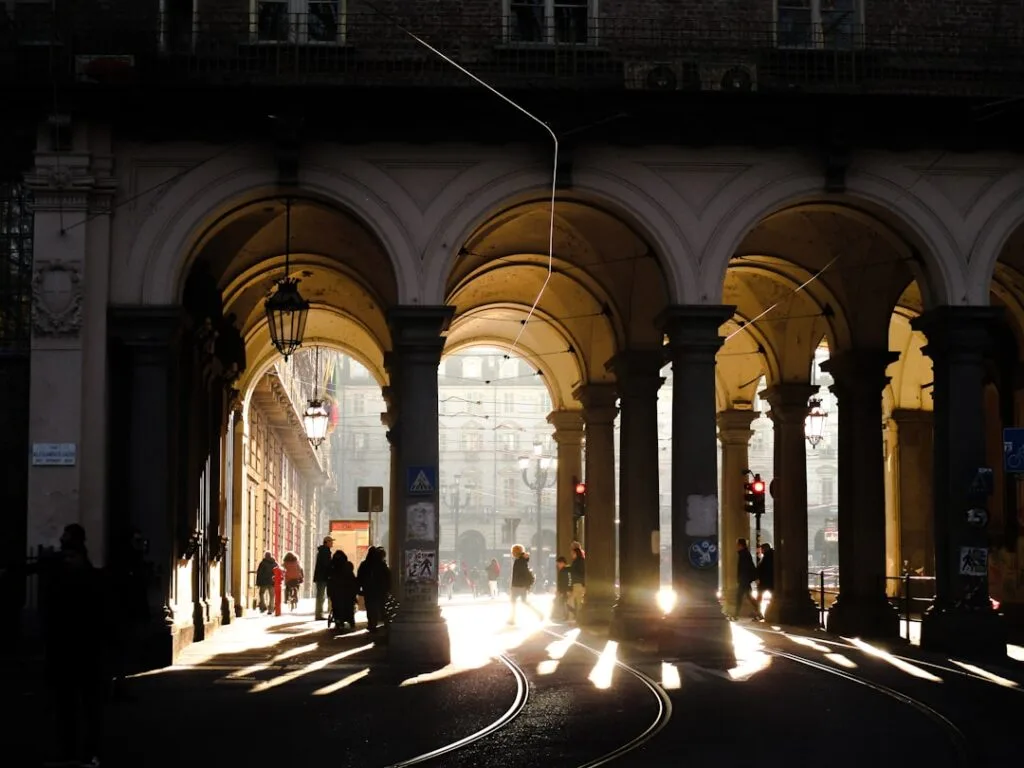
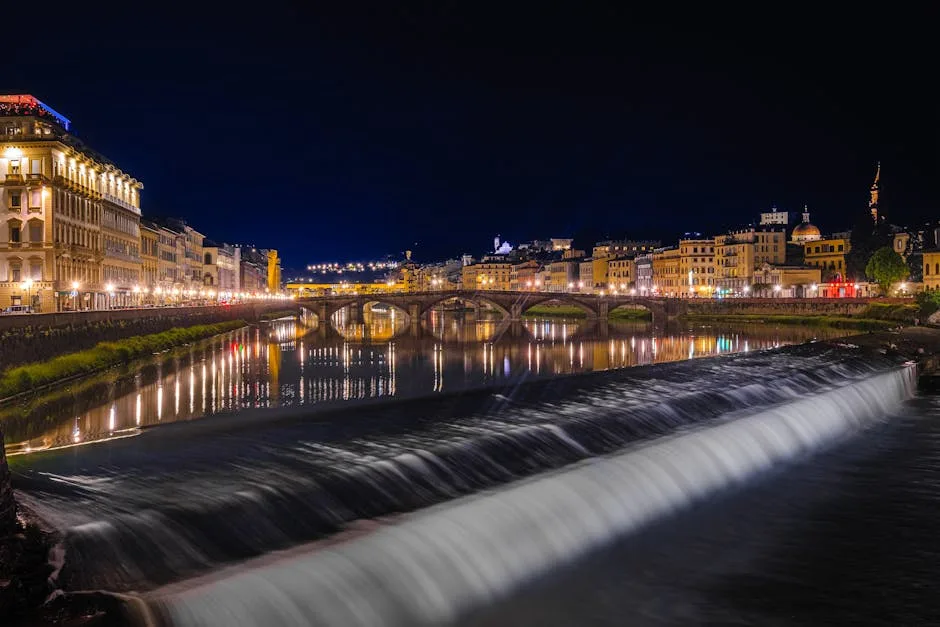
Extra tips: search for perfect symmetry by lining up directly in front of facades, or break it deliberately to create visual tension. Cast shadows at dusk create graphic stripes on stone — ideal for black-and-white work. If you plan to use a tripod, make sure it doesn’t block foot traffic. For very spare night shots, take advantage of the warm street lamps that bring out the texture in marble and brick, and wait until shops close to reduce people in the frame.
Orto Botanico di Pisa and minimalist green corners
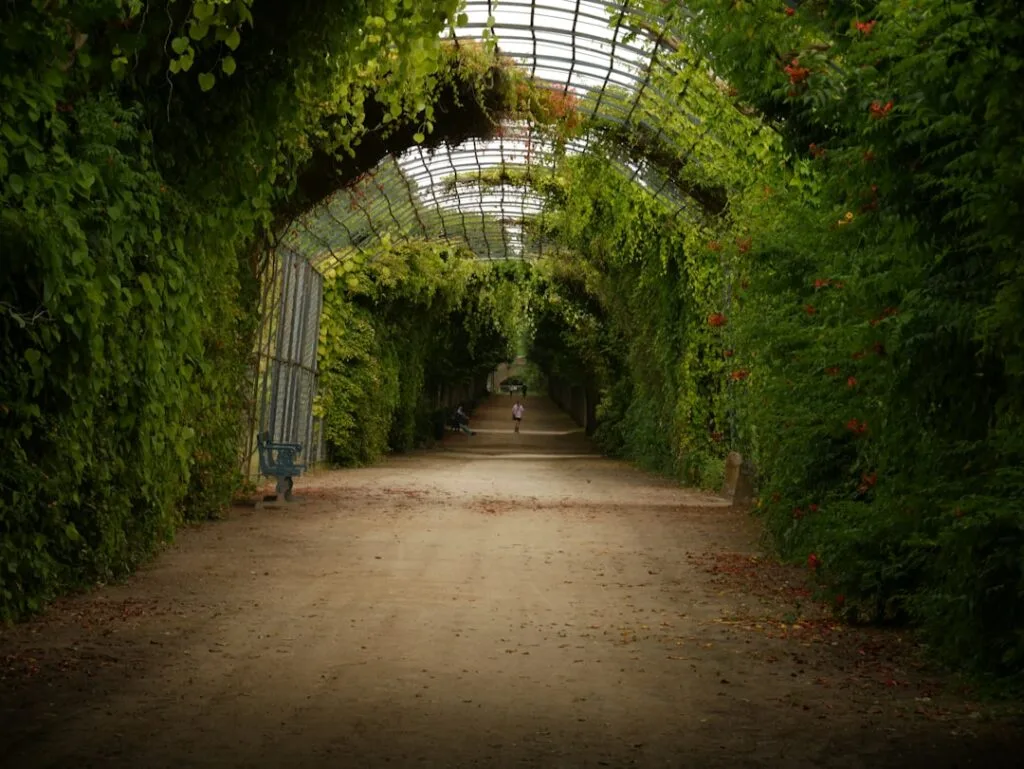
The Orto Botanico di Pisa (Botanical Garden of Pisa) provides a vegetal counterpoint to the city’s stone: straight paths, greenhouses and beds create simple, calming frames. Address: Orto Botanico di Pisa, Via Luca Ghini, 13, 56126 Pisa PI. Usual hours: 09:00–19:00 (high season); entry fee about €4–€6 (reduced rates possible). Founded in 1544, it is one of Europe’s oldest university botanical gardens and belongs to the Università di Pisa. Structured paths, glass greenhouses and reflective pools are perfect subjects for a minimalist approach: a single bench silhouetted against a green walkway, a row of pots, or a perspective leading to a small gate.
Technique: favor longer focal lengths to isolate repeating patterns (rows of pots, columns of statues) and use shallow depth of field to make a single plant stand out. Greenhouses also offer diffuse light ideal for photographing organic shapes with a soft, almost monochrome look. Beds after rain give reflective surfaces; a well-centered shot of a pond with a single floating leaf can achieve strong minimalism. Practical tips: respect signs and don’t touch protected plants; avoid flash which can harm some species. Note that dogs are often prohibited and some interior spaces require quiet and discretion — perfect for shoots without sudden movement.
Museo dell’Opera del Duomo and sculpted details
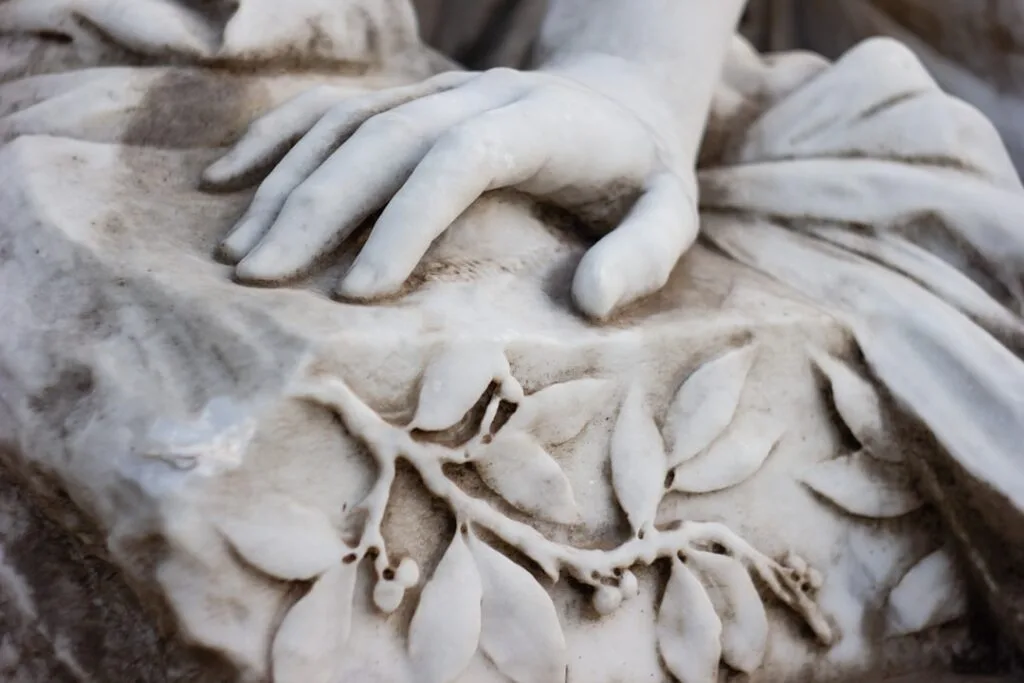
The Museo dell’Opera del Duomo (address: Piazza del Duomo, 16, 56126 Pisa PI) is a key stop for anyone wanting to practice minimalism with sculptural elements and architectural fragments. Typical hours: 09:00–19:00; approximate entry fee: €8–€12 for the museum (often included in combined tickets). The museum houses original works removed from the cathedral and baptistery, including columns, reliefs and fragmentary statues that lend themselves perfectly to minimalist photography. A detail of a capital against a neutral background, the texture of polished marble or the curve of a bas-relief can become powerful images when tightly framed.
Click here to book entry to the Opera del Duomo museum
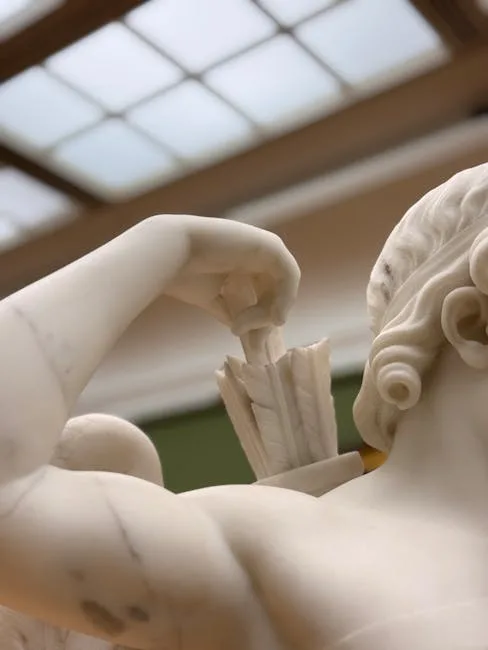
Technique and tips: mount a macro lens or a mid focal length to capture the material and grain of marble. Work with natural light when possible: the museum often provides directional lighting that highlights texture without distraction. Ask permission for interior photography (most Italian museums allow photos without flash, but check signs). For a minimalist result, convert to black-and-white and slightly boost contrast to emphasize sculpted detail. Local tip: the museum is less busy in the late afternoon; buy a combined ticket to access other Duomo monuments and optimize your time (often cheaper than buying separate tickets).
Conclusion
Pisa is a city where minimalist photography finds expression around every corner. From the open, airy spaces of Piazza dei Miracoli to the intimate lines of the arcades on Borgo Stretto, through the reflective surface of the Lungarno, the botanical garden and the sculpted details of the Museo dell’Opera del Duomo, there’s a wide variety of subjects that suit a pared-back aesthetic. The secret to a successful series is patience: wait for the right light, pick a strong element and let the rest of the frame breathe. Careful framing and simplicity are your allies.
Before you go, keep a few practical rules in mind: check official hours and prices (they change by season), book Torre di Pisa time slots online to avoid queues (ticket ~ €20 variable), follow monument rules (no tripod inside without permission, no flash) and aim for off-peak times to minimize people in your compositions. Consider legal and civic aspects too: don’t block public thoroughfares, ask permission before photographing people, and protect your gear when you’re near the Arno.
Finally, experiment: minimalism isn’t the absence of creativity but a fertile constraint. Play with reflections, marble/sky contrasts, repeating arches and the solitude of a bench at dawn. Return to the same spot at different times of day — the look can change dramatically with light and weather. With these pointers and locations, you’re ready to compose a cohesive and inspired photo series that will show Pisa through a stripped-back yet deeply evocative lens.