



Introduction
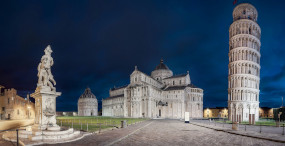
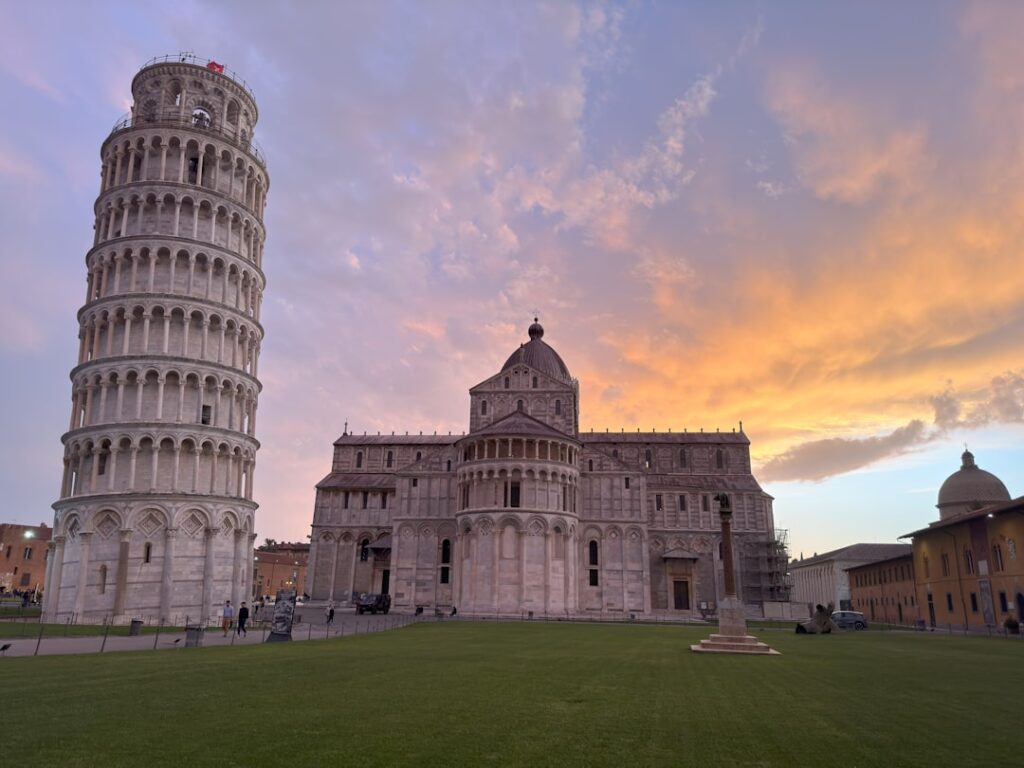
Traveling to Pisa is like stepping into a Renaissance painting where stone whispers centuries of history, faith and architectural daring. At the heart of this Tuscan city, the perfect view of the Duomo di Pisa (Pisa Cathedral) and the famous Campanile di Pisa — better known as the Leaning Tower of Pisa — captures the imagination of visitors from around the globe. But the « perfect view » is more than a photograph: it’s a full sensory experience. It blends the soft morning light that caresses the white marbles, the murmur of tourists and guides, the scent of an espresso on a terrace, and the monumental perspective offered by the broad esplanade of the Piazza del Duomo.
Contenu de l'article
In this guide I offer a comprehensive roadmap to reach that perfect view. You’ll find not only the must-see spots — the Cattedrale di Pisa, the Campanile, the Battistero di San Giovanni, the Campo Santo Monumentale and the Museo dell’Opera del Duomo — but also exact addresses, opening hours, estimated prices, immersive descriptions and practical tips for photographing, visiting and feeling the soul of the site. Whether you have an hour or a full day, I map out routes that will deliver the most memorable perspective, from dawn to dusk.
The Piazza del Duomo (also nicknamed the Campo dei Miracoli) is more than a collection of monuments: it’s a stage. From certain angles you’ll be dazzled by the carved façade of the Cattedrale di Santa Maria Assunta, the dome of the Battistero di San Giovanni reaching for the sky, or the elegant tilt of the Campanile di Pisa challenging gravity. Savvy visitors know the best light for a shot isn’t always midday; early morning and late afternoon reveal reliefs, warm the marbles and cast shadows that bring out the artistic details.

This guide is for everyone: families, photographers, art lovers, urban pilgrims and food-curious travelers. I explain how to book a climb up the Tower, where to position yourself for a crowd-free shot, which exhibits to catch at the Museo dell’Opera del Duomo, and how to combine your visit with a stroll along the Arno. At the end you’ll find practical advice: buying tickets online, times to avoid, safety rules (restricted bags, limited visitor numbers per rotation), and accessibility options for people with reduced mobility.
Get your camera, comfy shoes and curiosity ready: the perfect view of Pisa’s Duomo awaits — and to fully enjoy it you’ll want to know where to look, when to go and how to tune into every carved stone.
La Piazza del Duomo and the Cattedrale di Pisa: description, address and opening hours
The Piazza del Duomo, often called the Campo dei Miracoli, is Pisa’s historic and visual heart. It’s a grassy esplanade ringed by the main monuments: the Cattedrale di Santa Maria Assunta (Duomo di Pisa), the Campanile di Pisa (Leaning Tower), the Battistero di San Giovanni and the Campo Santo Monumentale. The official address of the Piazza del Duomo is: Piazza del Duomo, 56126 Pisa PI, Italia. This is where most picture-perfect compositions are staged.
 Click here to buy your ticket for the Square of Miracles

The Cattedrale di Pisa (Duomo) is dedicated to Santa Maria Assunta. Its white and grey marble façade, decorated with columns, arcades and sculptures, is a masterpiece of Pisan-Romanesque architecture. Inside, the nave, side chapels, the majestic dome mosaics and the imposing bronze lectern draw the eye as much as they invite quiet reflection. The Duomo’s address is the same as the square: Piazza del Duomo, 56126 Pisa PI, Italia.
Indicative opening hours (check before you visit):
- Cattedrale di Pisa: generally 10:00–20:00 in high season; hours may vary in low season or during religious services.
- Duomo entry: often free for short visits (depending on visitor flow) but controlled; there is a ticket/time-slot system to manage access during peak times.
Estimated prices:
- Access to the Duomo: sometimes free but booking via Operapisa is recommended; otherwise a symbolic entrance fee may apply as part of a combined ticket. (Tip: budget €0–€8 per person depending on temporary exhibitions.)
Practical tips: arrive early (before 9:30) to avoid the tourist rush and enjoy soft light. The best times to visit the Tower confirm that dawn and dusk offer ideal conditions for marble tones. If you want to attend a religious service, check the mass schedule: services can restrict tourist access. Respect dress codes: no bare shoulders or overly short shorts to enter. For a panoramic angle that includes both the Duomo and the Tower, head to the south side of the square near the lawns: certain vantage points let you frame the Duomo’s façade with the Campanile in the background for a classic but always effective composition.
La Torre Pendente (Campanile di Pisa): climbing, prices and experience
The Campanile di Pisa, internationally known as the Leaning Tower of Pisa, is a marble bell tower that began leaning during construction in the 12th century due to unstable ground. Entry is at: Campanile di Pisa, Piazza del Duomo, 56126 Pisa PI, Italia. Climbing the tower is a unique experience despite the physical effort: 294 spiral steps (no elevator) lead to the top where you’ll be rewarded with a spectacular view over the Piazza del Duomo and the rooftops of Pisa.
Indicative hours: generally 09:00–20:00 (extended hours in summer). Ascents are scheduled in timed slots, often 30 minutes, for safety and conservation reasons. It’s essential to book a timed slot online via the official Torre di Pisa site or authorized resellers. Visitor numbers are limited to around 8–10 people per slot.
Estimated prices:
- Ticket for climbing the Tower: around €18–€22 per adult (2024 indicative rates).
- Discounts may be available for students, seniors and children; very young children may be restricted for safety reasons.
Rules and tips:
- Large backpacks are often forbidden; plan for a small bag or a locker if available.
- Wear comfortable clothing and shoes: the steps are uneven and the tilt requires balance.
- Photography is allowed but be mindful of safety — avoid bulky equipment during busy times.
- Accessibility: the climb is not suitable for people with reduced mobility or for strollers.
Immersive experience: the ascent takes place in a confined stairwell with occasional openings offering partial views. At the top, the circular platform lets you appreciate the tilt and enjoy sweeping views of the Piazza del Duomo, the Arno and Pisa’s red-tiled roofs. Photographers should favor a mid-range lens (35–50mm) to capture context, and a short telephoto to isolate carved details of the Duomo from the Tower.
Click here to book your ticket to climb the Tower
Battistero di San Giovanni, Campo Santo and Museo dell’Opera: addresses, prices and suggested routes
Around the Cathedral you’ll find other gems that are often overlooked but essential to understanding the site. The Battistero di San Giovanni (Baptistery), the Campo Santo Monumentale (monumental cemetery) and the Museo dell’Opera del Duomo form a museum and liturgical ensemble that completes the visit.
Addresses:
- Battistero di San Giovanni: Piazza del Duomo, 56126 Pisa PI, Italia.
- Campo Santo Monumentale: Piazza del Duomo, 56126 Pisa PI, Italia.
- Museo dell’Opera del Duomo: Piazza del Duomo, 14, 56126 Pisa PI, Italia.
Indicative hours:
- Battistery: 08:30–19:30 (hours vary by season).
- Campo Santo: 08:30–18:00 (may close earlier in low season).
- Museo dell’Opera del Duomo: 09:00–19:00 (temporary exhibitions possible).
Estimated prices and tickets:
- Combined « Camposanto–Battistero–Museo » ticket: around €10–€20 depending on package and age (2024 indicative rates).
- Entry to the Museo dell’Opera only: around €5–€8.
- Combined tickets that include the Tower: expect around €25–€30 if included.
Click here to buy your ticket for the cathedral and museums

Immersive descriptions: The Baptistery stands out for its circular form and extraordinary acoustics: a cappella singing resonates magically beneath its dome. Inside, don’t miss the pulpit carved by Nicola Pisano and the remarkable mix of marble and mosaics. The Campo Santo houses sarcophagi and medieval frescoes: its walls tell biblical and chivalric stories in a solemn atmosphere. The Museo dell’Opera preserves original works from the cathedral and restored pieces, giving an intimate look at the sculptures and liturgical objects that were once displayed on the Duomo.
Practical tips:
- Allow at least 1.5 hours for a combined visit to the Baptistery and Campo Santo, plus an additional 45–60 minutes for the Museum.
- Check for audio guides available at the Museum to contextualize the works (often in multiple languages).
- Take time to study the Campo Santo frescoes in the filtered light: a guide can help point out rare iconographic details.
- If you have a museum pass or a European discount card, check eligibility: reduced tickets are often available for youth and seniors.

Suggested route: after admiring the Duomo’s façade, go inside the cathedral, then head to the Baptistery to experience the acoustics; next cross the green to reach the Campo Santo and finish at the Museo dell’Opera for a historical and artistic synthesis. This circular route optimizes your reading of the site and gives you the best perspectives to photograph the square from every side.
Alternative viewpoints, photography and local tips
To get the « perfect view » of Pisa’s Duomo you need to think beyond the Piazza del Duomo. Several alternative viewpoints offer unique compositions — from reflections on the Arno to the medieval lanes of Borgo Stretto. Here are concrete suggestions, with addresses and tips for photographers and discerning visitors.
Recommended vantage points:
- Lungarno (riverbank along the Arno) — Walk along the riverbank, on the southwest side heading toward the Ponte di Mezzo. Useful address: Lungarno Galilei, 56125 Pisa PI. Reflections of the Duomo and façades on the water at sunset create romantic images.
- Borgo Stretto — Historic shopping street ideal for framing local life scenes with the Duomo in the background. Address: Borgo Stretto, 56125 Pisa PI. Don’t miss the adjacent medieval alleys that reveal unexpected perspectives.
- Museo Nazionale di San Matteo — From its upper windows and rooms you can capture fragments of the urban landscape and rooftops, perfect for a more intimate viewpoint. Address: Piazza San Matteo in Soarta, 1, 56125 Pisa PI.
Photography rules and timing: the golden morning light (around 07:00–09:00 depending on the season) and the blue hour after sunset produce exceptional results. Avoid midday when the light is harsh and the lawns are crowded. Use a tripod if you plan long exposures at dusk (check local rules about tripods in heavily trafficked areas).
Click here to book a 2-hour walking tour
Local practical advice:
- Parking: the « Piazza Manin » and « Park Piazza del Duomo » car parks are nearby; GPS address: Piazza Manin, 56125 Pisa PI. Expect €2–€3/hour in the central zone; prefer public transport from the station.
- From Pisa Centrale station (Piazza della Stazione, 56125 Pisa PI): take a local bus or walk 20–30 minutes to the Campo dei Miracoli; several urban buses serve the piazza (check local lines like LAM Rossa or buses 4/6 depending on season).
- Restaurants and cafés: for a quick espresso look for bars near the Piazza del Duomo but avoid those immediately adjacent to the square that tend to overcharge. Head up a street behind the Duomo to find cafés frequented by locals.
- Safety: pickpockets can be active in high season; keep your belongings close and avoid leaving bags open on the lawns.

Experiences not to miss: listen to a small concert or liturgical chant in the Baptistery to experience the acoustics, book your Tower slot for sunset for warm light, and spend an hour in the Museo dell’Opera to understand materials and sculpting techniques.
Conclusion
The « perfect view of Pisa’s Duomo » is both a photographic goal and an emotional quest: it’s built by combining angles, light, history and a few practical attentions. The Piazza del Duomo, with the majestic Cattedrale di Santa Maria Assunta, the tilted Campanile di Pisa, the circular Battistero di San Giovanni and the solemn Campo Santo Monumentale, forms an ensemble where every stone has a story and every façade a lesson in art. Precise addresses like Piazza del Duomo, 56126 Pisa PI, Italia help you locate these treasures; the museums and monuments (for example the Museo dell’Opera del Duomo, Piazza del Duomo, 14) offer tickets and hours that it’s wise to check online before you go.
Practical tips: book your Tower tickets in advance (indicative price €18–€22), allow time for the Baptistery and the Campo Santo (combined tickets around €10–€20), and favor quiet hours in the morning and at sunset for calmer photos and a more peaceful experience. Don’t overlook alternative viewpoints along the Lungarno or from Borgo Stretto for original compositions. Finally, respect visiting rules (dress codes, bag restrictions, access limitations during religious services) — they help preserve a harmonious balance between tourism and a place of worship.
In short, the perfect view of Pisa’s Duomo is within reach for everyone: it simply asks a bit of planning, some willingness to walk and an openness to unexpected encounters — a shaft of sunlight on the marble, a chant in the baptistery, a guide’s forgotten anecdote. Take away not only images but also the memory of an atmosphere where history reveals itself around every column, where sculptural technique converses with faith, and where behind the Tower’s famous tilt Pisa unveils its true beauty — both intimate and communal.