





Introduction — Why Pisa is a Photographer’s Hidden Playground
Pisa is far more than the famous Torre Pendente (Leaning Tower): it’s a human-scale city where every alley, riverbank and square hides unexpected vantage points that can turn the ordinary into memorable images. While the Piazza del Duomo (also called Piazza dei Miracoli) draws crowds for the iconic leaning-tower shot, true photo enthusiasts know that stepping a few metres aside — or waiting for the right light — uncovers far more intimate and original compositions. In this guide I share “secret” photo spots in Pisa: exact addresses, opening hours and prices, plus practical tips on framing, handling light and avoiding the crowds.
I base my tips on real places: the Torre di Pisa (Piazza del Duomo, 56126 Pisa PI), the Battistero di San Giovanni, the Cattedrale di Santa Maria Assunta, the Lungarno Gambacorti with the church of Santa Maria della Spina, and lesser-known gems like the Giardino dell’Orto Botanico dell’Università di Pisa, Piazza dei Cavalieri, Borgo Stretto, and some municipal roofs and gardens. For each spot you’ll find exact addresses, practical info (opening hours, prices in euros) and recommendations on best shooting times, how to use Arno reflections, where to position yourself for dramatic low angles or minimalist compositions.
Shooting in Pisa also means understanding local constraints: how to deal with high-traffic areas around Piazza dei Miracoli, tripod restrictions inside some museums, and the best times to catch a sunrise without tourists in the frame. I also give logistical tips: where to park, which bus lines to take, alternatives to the official Torre di Pisa ticket, and budget options for museum entry. My goal is for you to come away with images that feel “seen nowhere else”, while respecting local rules and the fragile atmosphere of the sites.
Follow these routes and tips to turn your Pisa snaps into cohesive, aesthetic series — whether you’re shooting on a smartphone or a full-frame camera with multiple lenses. Throughout the article you’ll find actionable reference points, immersive descriptions for every location, and composition suggestions that tell a story.
1) Secret Angles Around the Piazza dei Miracoli (Piazza del Duomo)
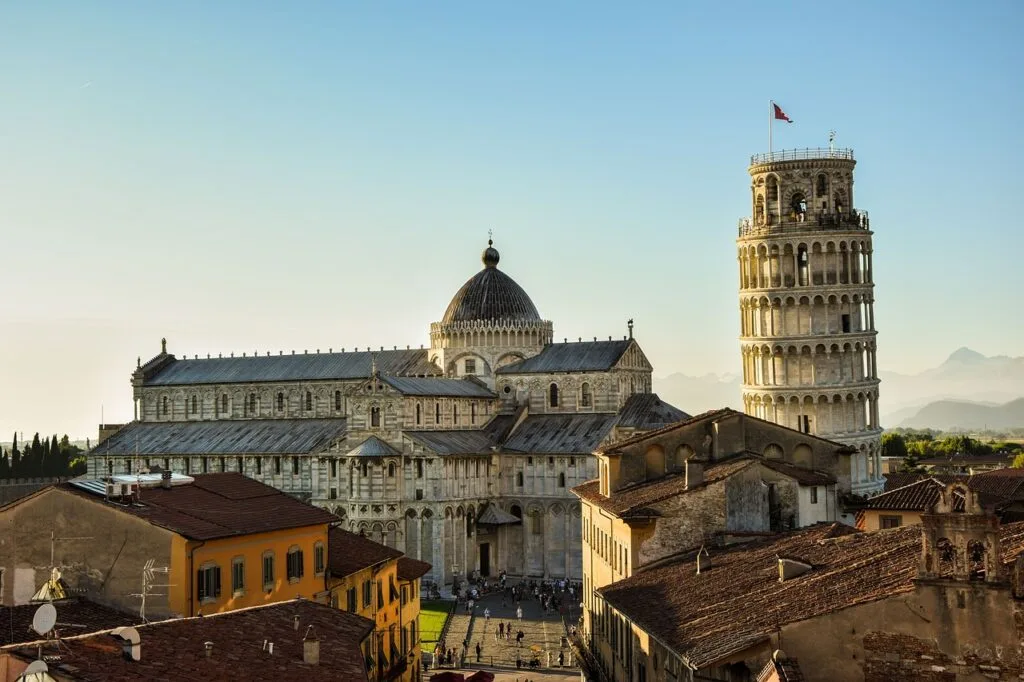
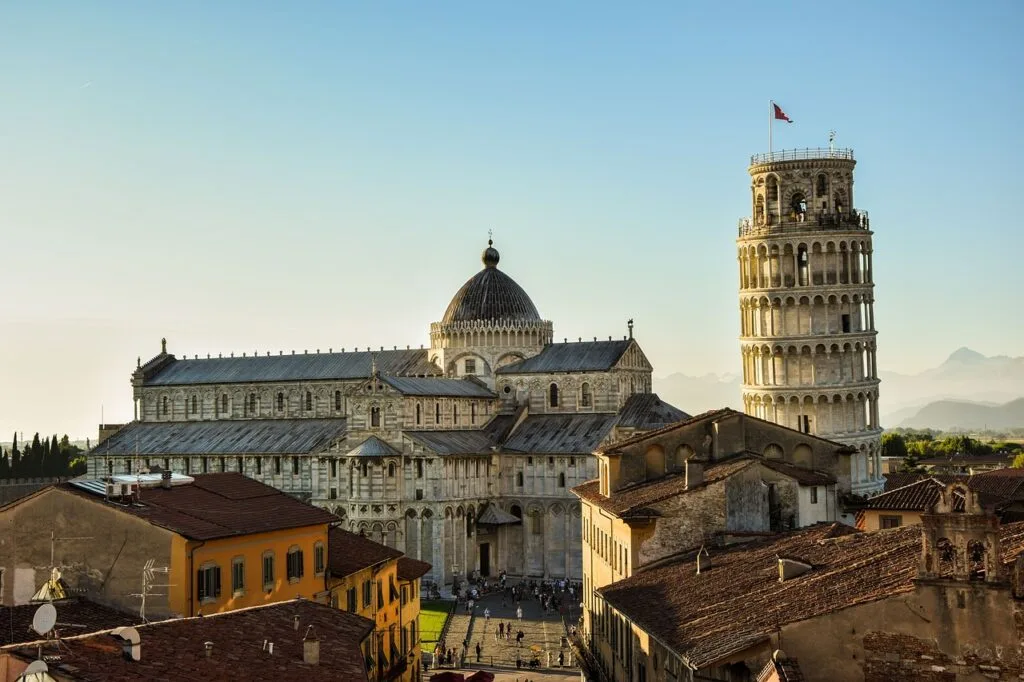
The Piazza del Duomo, officially Piazza del Duomo/Campo dei Miracoli (Piazza del Duomo, 56126 Pisa PI), is Pisa’s monumental heart. Besides the Torre di Pisa (Leaning Tower), you’ll find the Duomo di Pisa – Cattedrale di Santa Maria Assunta (Piazza del Duomo, 56126 Pisa PI), the Battistero di San Giovanni, and the Camposanto Monumentale. For original shots, skip the classic straight-on photo: look for diagonals that include both the cathedral and the tower, or use the morning paving stones and shadows to create leading lines.
Opening hours and prices (check before visiting): climbing the Torre di Pisa generally costs between €20 and €30 depending on season and time slot; the Cattedrale is often free but may require a combined ticket to access certain areas (museums or rooftop), while the Battistero and the Camposanto usually require a combined Campo dei Miracoli ticket around €18–€22. Times vary: typically 9:00–20:00 in high season and 10:00–17:00 in low season. Tower tickets are sold for specific time slots; book online to avoid queues.
Photo tips: for a perfect reflection, look for puddles after rain on the paths toward the Battistero; for warm light choose the morning golden hour, especially in autumn and winter. The northeast side of the Field of Miracles gives a perspective where the tower seems to point into the sky and background clouds. Use a short focal length (24–35mm on full frame) to include surrounding architecture, or compress perspective (70–200mm) to isolate the tower and cathedral.
 Click here to book your tickets for the Piazza dei Miracoli
Click here to book your tickets for the Piazza dei Miracoli
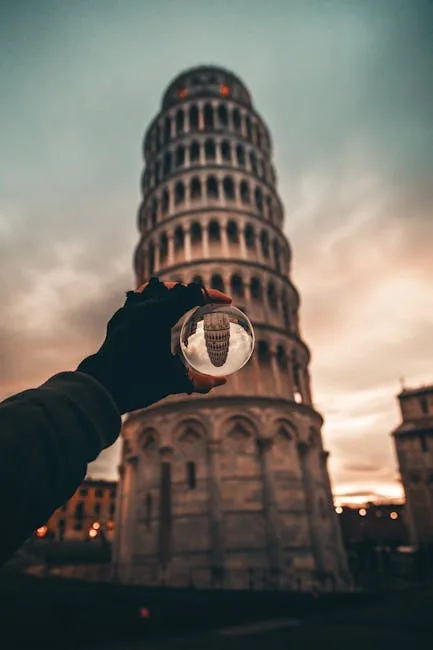
Practical tip: access to the lawn around the Piazza dei Miracoli is sometimes restricted to protect the grass; respect closed areas and stick to marked paths. If you want crowd-free photos, arrive 30–45 minutes before official opening — you’ll enjoy soft light and almost-empty spaces.
2) The Arno Banks and Lungarno Gambacorti: Reflections and Details
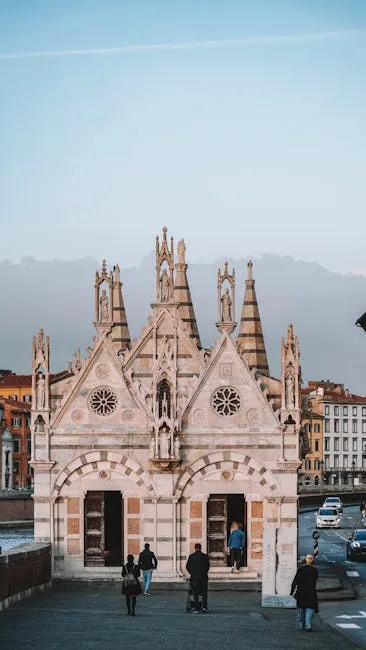
Nothing beats the Arno in Pisa for playing with reflections and symmetry. Lungarno Gambacorti (Lungarno Gambacorti, central Pisa) runs along the Arno and offers charming views of colorful facades, fishing boats and the little Gothic church of Santa Maria della Spina (Lungarno Gambacorti 2, 56125 Pisa) — a small jewel right on the riverbank. The best time is the blue hour, just after sunset, when the lights on the Arno reflect in the water and the scene turns almost cinematic.
Santa Maria della Spina often has limited opening hours: generally 10:00–13:00 and 14:30–18:00, entrance free or by suggested donation (check locally). Lungarno is punctuated by bridges like Ponte di Mezzo and Ponte della Fortezza, which are perfect for framing converging lines that lead to a focal point in the distance.
Shooting techniques: to capture clean reflections, use a slow shutter (1/2–1/4s) with an ND filter or a stable tripod. A rule-of-thirds composition works well: water in the foreground, facades in the middle, sky behind. Also seek out details: gargoyles, weathered wooden doors, or wrought-iron shop signs on Borgo Stretto (Via Borgo Stretto), great subjects for low-angle shots.
Click here to join a guided walking tour of Pisa
Click here to join a guided walking tour of Pisa
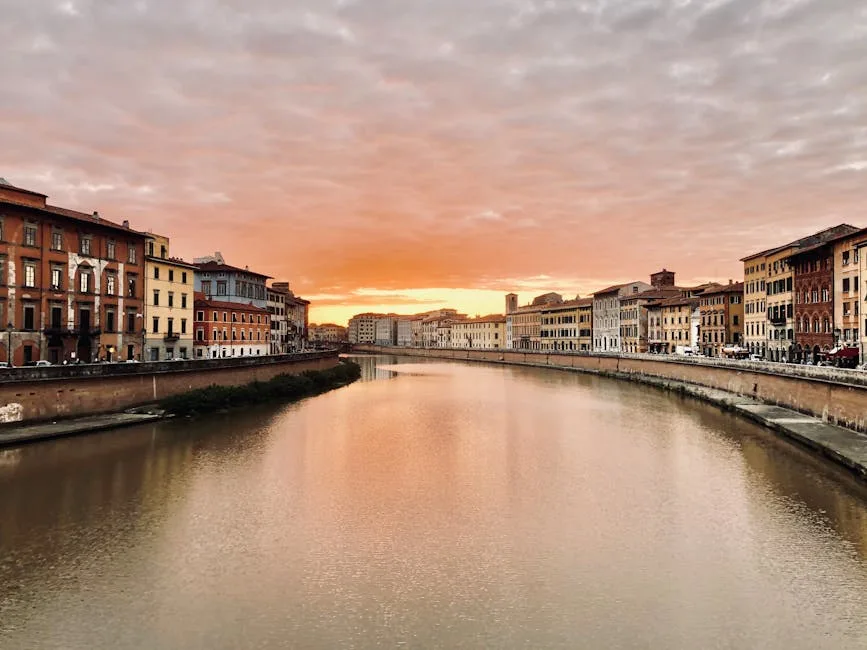
Local tip: avoid using large tripods on narrow sidewalks during peak hours; a monopod or compact setup is more accepted. For a panoramic view from the south bank, walk toward Piazza dei Cavalieri and head back up — you’ll find multiple angles over roofs and the Arno.
3) Medieval Streets, Markets and Rooftops: Borgo Stretto and Piazza dei Cavalieri
The small streets around Borgo Stretto (Via Borgo Stretto, 56125 Pisa) and Piazza dei Cavalieri (Piazza dei Cavalieri, 56125 Pisa) hide medieval facades, photogenic arcades and historic cafés. Borgo Stretto is perfect early in the morning for shots of closed shopfronts, carved signs and reflections on the cobbles. Piazza dei Cavalieri, an old political and academic square, reveals the Palazzo della Carovana (Scuola Normale Superiore) with its solemn facades and sculpted details.
Hours and access: the streets are public and open 24/7. Nearby monuments may have separate opening times — the Palazzo della Carovana is sometimes open for temporary exhibitions (hours vary, admission usually €3–€8). Cafés and small shops typically open between 08:00 and 20:00; the local market on Via Santa Maria (near Borgo Stretto) has early morning hours and is ideal for colourful stall photos.
Photographic angles: play with backlighting under the arcades, use shallow depth of field to isolate a storefront, or capture repeating arches for a graphic effect. Rooftop views from higher vantage points offer a mosaic of orange tiles and chimneys — perfect for elevated series. For night shots, the old street lamps give a warm atmosphere; try moderate ISO (800–1600) and wide apertures (f/2.8–f/4) if you can stabilise your camera.
Practical tip: most shopkeepers don’t mind photos of their exteriors, but always ask before photographing the inside of a shop or a vendor. To shoot from a private balcony or roof, look into short-term rentals (Airbnb, guesthouses) that sometimes include small panoramic terraces.
Click here to book a professional photo session in Pisa
Click here to book a private photoshoot with a professional
4) Gardens, Small Churches and Offbeat Museums
For quieter, more contemplative shots, explore the Orto Botanico dell’Università di Pisa (Botanical Garden, Via Luca Ghini 5, 56126 Pisa PI). Founded in 1544, it’s one of Europe’s oldest university botanical gardens. Entrance is modest, often €3–€5, and hours vary by season (usually 9:00–18:00 in summer, 9:00–16:00 in winter). The greenhouses, ponds and shaded paths offer textures, patterns and colours ideal for macro work or portraits in soft light.
Other places to know: the Museo Nazionale di San Matteo (Lungarno Mediceo, 56125 Pisa) houses medieval sculptures and panels that make excellent subjects under zenithal light (approx. €4–€8, usually 9:00–19:00, sometimes closed on Mondays). The small church of San Paolo a Ripa d’Arno and the Basilica di San Nicola offer lesser-known facades, colours and sculpted details suited for historical compositions.
Techniques: for botanical macro work, stop down to f/8–f/11 for good sharpness; for garden portraits, try a 50mm f/1.8 to get pleasing bokeh behind foliage. Museums often ban flash — work handheld with higher ISO settings or ask permission to use a tripod.
Click here to buy a ticket for the cathedral and museums
Click here to buy tickets for the cathedral and museums
Local tip: combined tickets (museums + religious sites) sometimes exist and can save you money. Check the local tourist office (Ufficio Informazioni Turistiche, Piazza Vittorio Emanuele II) for updated maps and hours. If you plan a shoot with a model or a drone, ask about municipal permits — drone flights over historic monuments are generally forbidden without authorization.
Conclusion — Building a Cohesive, Respectful Photo Series in Pisa
Pisa offers a variety of photographic subjects that go well beyond the standard tourist shot of the Torre di Pisa. By combining viewpoints at the Piazza dei Miracoli, Arno reflections on Lungarno Gambacorti, the alleys of Borgo Stretto and historic gardens like the Orto Botanico, you can create a cohesive series mixing architecture, nature, details and urban life. Every place I mention includes an exact address and access information — essential for planning a productive shoot. The hours and prices given are guidelines: always verify online or with the local tourist office before you go.
Respecting the sites is golden rule number one: don’t trample the lawns, don’t block public access with your gear, ask permission before shooting indoors and obey no-entry signs. For gear, favour versatility: a wide-angle for squares, a mid-range zoom for architectural details, and a fast lens for portraits and night work. A small tripod or monopod and ND filters will open up many creative options.
Finally, leave room for the unexpected: the best shot can come from a sudden light on an old detail, a local market setting up, or a unique reflection on the Arno. Pisa is small but dense — wander, retrace your steps and take time to watch how the light changes. With these addresses, practical tips and recommended angles, you’re ready to capture images that reveal Pisa’s lesser-known soul — authentic, intimate and deeply photogenic.