


Introduction
The city of Pisa, set on the banks of the Arno in Tuscany, is often reduced to a single image: the famous Torre Pendente di Pisa. Yet beyond that universal symbol, Pisa’s medieval core hides a dense weave of alleys, squares, churches and palaces whose atmosphere instantly transports visitors to the heart of the Italian Middle Ages and maritime Renaissance. A walk through this medieval center—anchored around the Piazza del Duomo, extending to the Piazza dei Cavalieri and then down to the riverbanks—offers a compact dose of history, art and everyday Pisan life.
Contenu de l'article
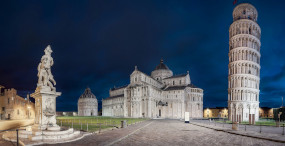
Most visits start at the Piazza del Duomo, officially called Piazza dei Miracoli, home to the Cattedrale di Santa Maria Assunta, the Battistero di San Giovanni, the Campanile (Torre Pendente) and the Camposanto Monumentale. These monuments, lined up like performers on a sacred stage, form part of a UNESCO World Heritage site and represent the pinnacle of Pisan religious architecture from the 11th to the 13th century. But the medieval city is much more than this monumental square: you need to venture into lanes like Borgo Stretto, linger over sunlit façades along the Lungarno Gambacorti, and cross the Piazza dei Cavalieri to feel Pisa’s civic and military imprint, dominated by the Palazzo della Carovana (now the Scuola Normale Superiore di Pisa).
This article offers a detailed, immersive walk through Pisa’s medieval center, with precise addresses, practical opening times, prices in euros, sensory descriptions of the places and local tips to optimize your visit (best times, recommended routes, transport options and money- and time-saving tricks). Whether you love history, are a photographer hunting for surprising compositions, or simply a curious stroller, I’ll guide you step by step to make the most of your day—or your stay—in the heart of Pisa.

Piazza del Duomo and Its Treasures: Cattedrale di Santa Maria Assunta, the Leaning Tower, the Baptistery
The Piazza del Duomo (also known as Piazza dei Miracoli) is located at Piazza del Duomo, 56126 Pisa PI, Italy. It’s the unmissable starting point for any visit to the medieval center. When you arrive at the square, you’re struck by the harmony of volumes and the contrast between the white marble façades and the play of shadow cast by the colonnades.

 Click here to book your ticket to the Square of Miracles
The Cattedrale di Santa Maria Assunta (Piazza del Duomo, 56126 Pisa PI) is typically open from 10:00 to 19:00 (times vary with the season and religious services). Admission is often free, but it’s recommended to pick up either a free or paid ticket at the information point to guarantee entry and to access an audio guide or guided tour through the Opera della Primaziale Pisana. Inside, admire the mosaic floors, the rich marble decoration, medieval frescoes and the majestic ciborium.
The Torre Pendente di Pisa (Leaning Tower of Pisa) sits at the heart of Piazza del Duomo, at Piazza del Duomo, 56126 Pisa PI. It’s the freestanding bell tower of the cathedral, famous for its tilt. Climbing tickets cost around €20 for an adult (indicative rates subject to season and discounts); access is limited to roughly 30 people per time slot, and opening hours can run roughly from 09:00 to 20:00 in high season (times vary). Booking online is strongly advised to avoid long lines.
The Battistero di San Giovanni (Piazza del Duomo, 56126 Pisa PI) is just a few steps away; it showcases remarkable Romanesque-Gothic architecture with an elegant dome. Typical opening hours: 08:30–19:30; entrance fee: approximately €5–10. Don’t miss its exceptional acoustics and the sculpture by Nicola Pisano.

Camposanto Monumentale and the Museo dell’Opera del Duomo: Funerary Art and History
The Camposanto Monumentale (Piazza del Duomo, 56126 Pisa PI) is the large monumental cemetery located on the north side of the square. Built around a supposed Romanesque cloister, it houses vast frescoes (partially restored) and superb ancient sarcophagi. It’s typically open from 09:00 to 19:00 with an entrance fee of around €8–10. Walking under the vaults, feeling the coolness of the columns and observing the fresco fragments—Old Testament scenes, danse macabre—creates a contemplative atmosphere that contrasts with the crowds often present in other parts of the square.

Right next door, the Museo dell’Opera del Duomo (Piazza del Duomo, 14, 56126 Pisa PI) houses a remarkable collection of liturgical objects, medieval sculptures and conserved pieces moved from the cathedral and baptistery. Hours: generally 09:00–18:00; guide price: around €8. The museum helps you understand the origin of the works seen on the square and to appreciate pieces by Pisan masters like Giovanni Pisano.
Practical tip: buy a combined « Opera della Primaziale » ticket if you plan to visit several monuments on the Piazza del Duomo (cathedral, baptistery, tower, Camposanto, Museo dell’Opera)—it’s often cheaper than individual tickets and includes time slots. Religious services at the Duomo may cause temporary closures; check opening times before you go.
Click here to buy your tickets for the Square of Miracles
Piazza dei Cavalieri, Palazzo della Carovana and the Civic Medieval Core
A 10–12 minute walk from the Piazza del Duomo is the Piazza dei Cavalieri (Piazza dei Cavalieri, 56126 Pisa PI), the city’s former political and military square, now a hub of university activity. Dominating the square, the Palazzo della Carovana (Piazza dei Cavalieri, 2, 56126 Pisa PI) is a Giorgio Vasari creation (16th century) and today houses the Scuola Normale Superiore di Pisa. Its façade, decorated with coats of arms and trompe-l’oeil, is superb at sunset.
The piazza reveals another medieval facet—the civic organization: this is where alliances, finances and military commands were negotiated. Nearby, the Chiesa di Santo Stefano dei Cavalieri (Piazza dei Cavalieri) preserves paintings and ex-votos linked to knightly orders. These places are open depending on university and tourist activities; access to the inner courtyards of the Palazzo della Carovana is sometimes possible during public events.
Click here to discover Pisa on a private walking tour

Practical tips for this area: visit in the morning to enjoy the light on the façades and avoid tour groups. Pop into the small bookstores and cafés around Via dei Mercanti and Borgo Stretto, where local crafts and espresso are excellent. If possible, check for guided tours offered by the Scuola Normale that sometimes open historical rooms usually closed to the public.
Borgo Stretto, Via Santa Maria and Medieval Lanes: Wandering and Discoveries
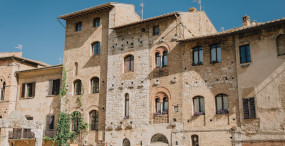
A short stroll away from the Piazza del Duomo brings you into the network of medieval streets between Borgo Stretto, Via Santa Maria and Via San Martino. Borgo Stretto (general address: Borgo Stretto, 56125 Pisa PI) is one of the historic commercial arteries, lined with arcades, old shops and signs that recall the city’s medieval trading activity. The walk here is a lesson in medieval urbanism: covered passages, small hidden squares, inner courtyards and façades partially covered in ivy.

Click here to taste the street food on a walking tour
Via Santa Maria leads toward the Lungarno and runs past historic palazzos. You’ll find artisan workshops, leather shops and local pastry shops where you can try Pisan specialties like « cecina » or the region’s dry biscuits. Don’t hesitate to step into small churches like the Chiesa di San Paolo a Ripa d’Arno or to look for commemorative plaques that tell stories of the city’s medieval life.
Tips: for photographing Borgo Stretto aim for early morning when the arcades are empty and the low light highlights textures. Look for pretty inner courtyards where you can sometimes sip a quiet coffee; these spots are often less frequented by tour buses. Finally, keep some euro coins handy for small shops and markets—some vendors only accept cash.
Lungarno, Ponte di Mezzo and Santa Maria della Spina: Views over the Arno
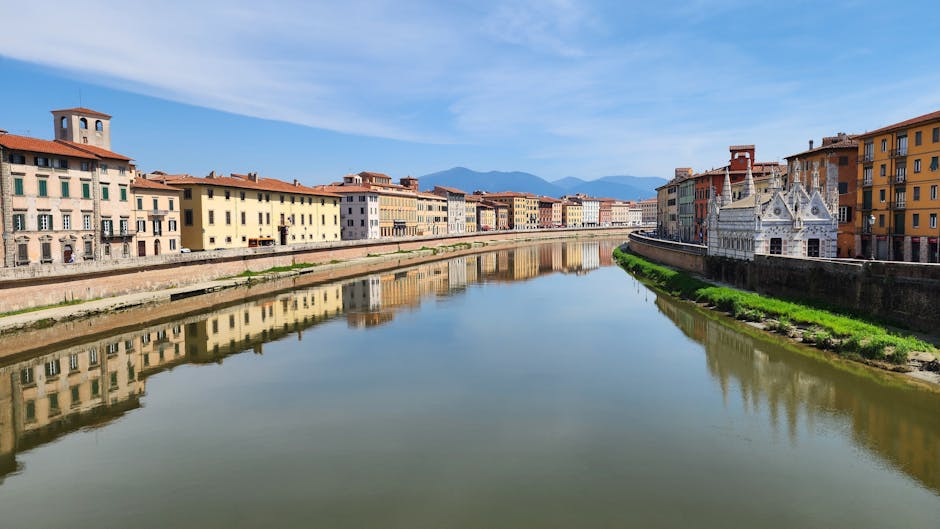
The Lungarno (examples: Lungarno Pacinotti, Lungarno Gambacorti) is the riverside promenade that offers unique perspectives on Pisa’s medieval center. One of the best viewpoints is around the Ponte di Mezzo (Ponte di Mezzo, 56125 Pisa PI), the city’s central axis where urban life buzzes, especially in the evening when cafés come alive.
Not to be missed: the Chiesa di Santa Maria della Spina (Lungarno Gambacorti, 56125 Pisa PI), a small Gothic church right on the banks of the Arno. Its exact address is Lungarno Gambacorti, 56125 Pisa PI. Built in the 13th century and reconstructed stone by stone in the 19th century to preserve it, it’s famous for its delicate Gothic ornamentation and its picturesque position at water level. Hours vary (often 10:00–18:00); entry is sometimes modest or by voluntary donation.

Photo tip: stand on the opposite Lungarno at dusk to capture Santa Maria della Spina’s silhouette and its reflections in the water. Also stroll the small riverside food market in the morning to sample local products and enjoy a more intimate atmosphere.
Complementary Museums: Museo Nazionale di San Matteo and Thematic Routes
To deepen your understanding of medieval Pisa, visit the Museo Nazionale di San Matteo (address: Piazza San Matteo in Soarta, 1, 56125 Pisa PI — check the exact entrance when you arrive). The museum holds an outstanding collection of medieval and Renaissance works—panel paintings, sculptures and goldsmithing from Pisan churches. Typical hours: 09:00–19:00; entrance fee: around €6–8.

Recommended thematic routes:
- « Religious Architecture » route: Piazza del Duomo → Duomo → Battistero → Camposanto → Museo dell’Opera del Duomo.
- « Civic and University Life » route: Piazza dei Cavalieri → Palazzo della Carovana → Borgo Stretto → Scuola Normale Superiore (occasional public visits).
- « Rivers and Views » route: Lungarno Gambacorti → Ponte di Mezzo → Santa Maria della Spina → riverside gardens.
These circuits can be done on foot in a day with breaks; adapt them to opening times and the reservations needed for the Torre Pendente.
Local Practical Tips and Safety
– Tickets: book online for the Torre Pendente and certain museums. Combined « Opera della Primaziale » tickets are often advantageous.
– Hours: opening times vary with the season and religious services; check official sites (Opera della Primaziale, Museo Nazionale di San Matteo) before your visit.
– Prices: budget about €40–60 per person if you plan to visit the Tower, the Museo dell’Opera and the Museo Nazionale; discounts are available for students/young people/over 65s with ID.
– Accessibility: historic monuments have constraints (stairs, uneven floors); check wheelchair access in advance.
– Food: try the « cecina » (chickpea flatbread) and « cantucci » with vin santo at small trattorie in Borgo Stretto.
– Transport: the center is best explored on foot; main station: Pisa Centrale (Piazza della Stazione, 56125 Pisa PI) is a 20–25 minute walk or a 10-minute taxi ride from Piazza del Duomo.
Conclusion
Strolling through Pisa’s medieval center isn’t just about ticking the must-see box by posing in front of the Torre Pendente: it’s an immersion in a city where every stone tells of trade, maritime rivalries and artistic impulses that shaped Tuscany. From the sacred majesty of the Cattedrale di Santa Maria Assunta to the intimate Gothic charm of the Chiesa di Santa Maria della Spina, and the scholarly austerity of the Piazza dei Cavalieri, Pisa offers historical layers that are both visible and palpable. Walking through Borgo Stretto or along the Lungarno reveals the city’s everyday life, where artisans and students meet tourists, and local flavors pleasantly punctuate the cultural discovery.
To make the most of your visit: plan ahead (book the tower, check museum times), choose off-peak hours (early morning or late afternoon) for photography and to avoid crowds, and take time to get lost in the small lanes—these are often where the lesser-known treasures lie. Finally, bring comfortable shoes, a bottle of water and a pocket guide or an app with offline maps: the medieval center is best savored on foot, not rushed.
Pisa can’t be reduced to a single image: it reveals itself step by step, through façades, markets and churches. Whether you have only a few hours or several days, your walk through the medieval center can be tailored to your interests—art, history, photography or simply slowly savoring an espresso on a terrace. Enjoy every moment: look for details, listen to the bells that mark the city’s rhythm and feel the air heavy with a history that still lives beneath your feet.