





Introduction — Why choosing the right angle for the Leaning Tower of Pisa matters
The Leaning Tower of Pisa, officially the Torre Pendente di Pisa, is more than just a bell tower: it’s a global icon, a magnet for tourists, and a fascinating photographic subject. Located at the heart of the Piazza del Duomo in Pisa (address: Piazza del Duomo, 56126 Pisa PI, Italy), the Tower draws millions of visitors each year. Yet despite its worldwide fame, few people really explore the full range of angles and perspectives the site offers. Picking the right viewpoint not only helps you get a standout photo, but also lets you tell a story—historical, architectural, human—that goes beyond the typical tourist “holding up the tower” shot.
This practical guide is written with photographers and curious travelers in mind: you’ll find tested angles, exact spots with precise addresses, timing tips for optimal light, ticket info, and gear suggestions. Whether you’re an amateur photographer, videographer, travel blogger or simply curious, you’ll get recommendations to make your images—and your visit—count. We’ll cover perspectives from the Piazza del Duomo, the Battistero di San Giovanni, the Camposanto Monumentale, the banks of the Arno, the medieval lanes around Borgo Stretto and more. Each location includes practical details: where to stand, best time of day, which lens to use, how to handle crowds, plus tips for capturing reflections, silhouettes and panoramic night shots.
Getting a great picture of the Tower isn’t just about framing: it’s about anticipating conditions (light, weather, opening hours), knowing prices and access rules (for example, the ticket to climb the Tower of Pisa usually costs around €22 per person, though discounts may apply; check the official site before visiting), and respecting site regulations (some areas like the Cathedral of Santa Maria Assunta have restricted access). This guide also shares local tips to avoid tourist traps, optimize your timing and respect the heritage. Throughout, we include visual cues and image markers to inspire your compositions.
A few quick reminders before we dive into the specific spots: the main address for the area is Piazza del Duomo, 56126 Pisa PI, Italy. The Campo dei Miracoli complex—home to the Tower, the Cathedral (Cattedrale di Santa Maria Assunta), the Baptistery (Battistero di San Giovanni) and the Camposanto Monumentale—operates daily on seasonal hours, generally from 9:00 to 20:00, but the bell tower has limited time slots for climbing; plan to reserve a timed entry online. With that in mind, let’s explore the must-see angles to capture the Tower of Pisa at its best.
Classic view from the Piazza del Duomo (Piazza dei Miracoli) — frontal composition and playing with scale
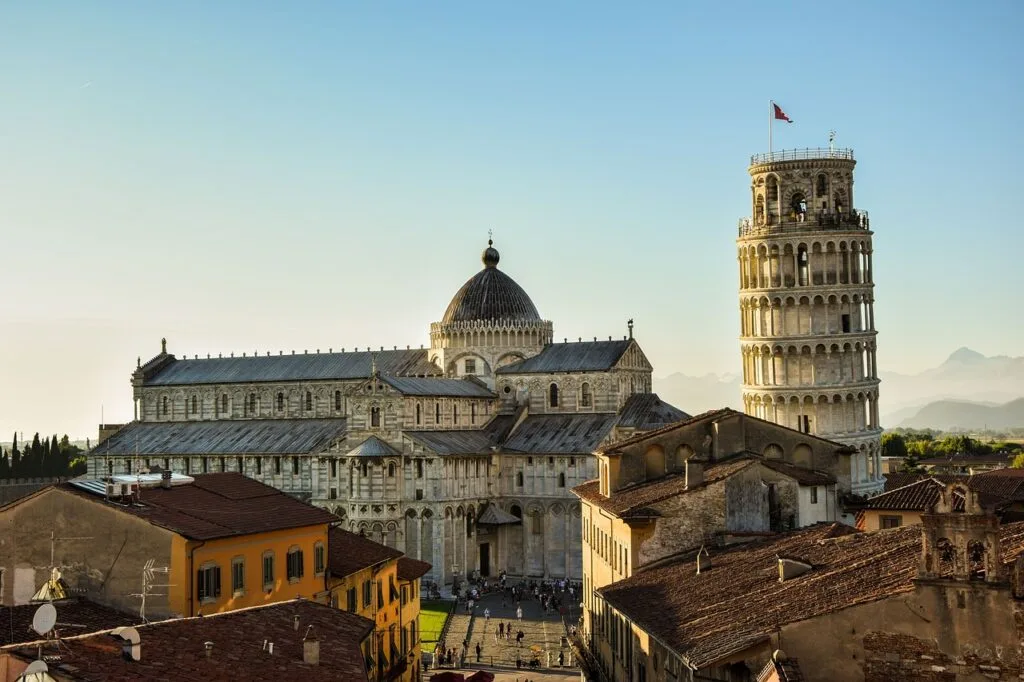
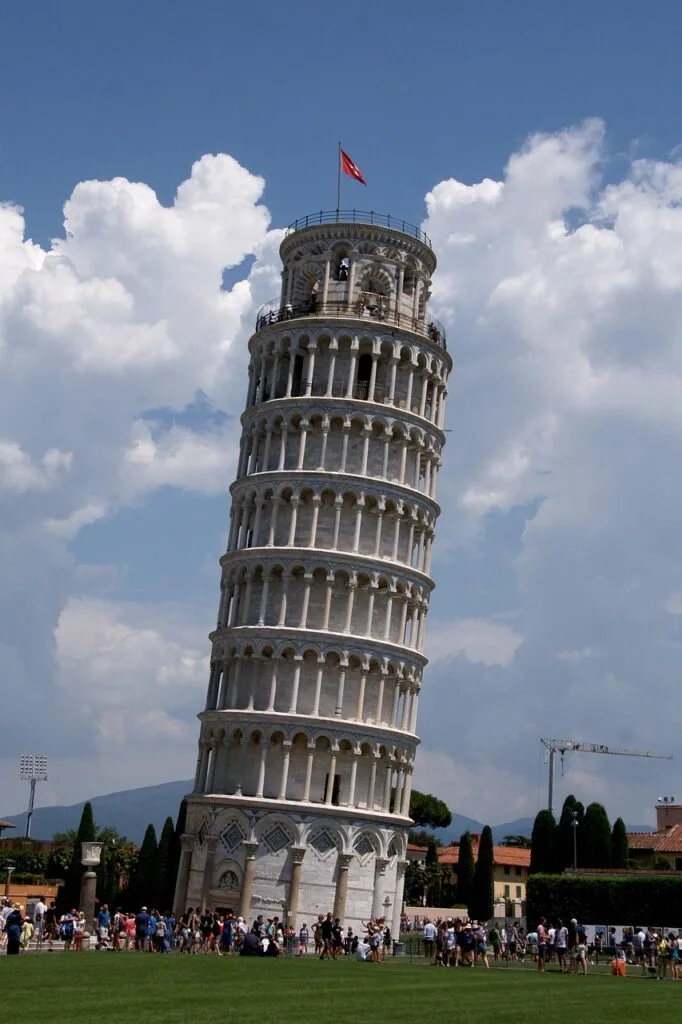
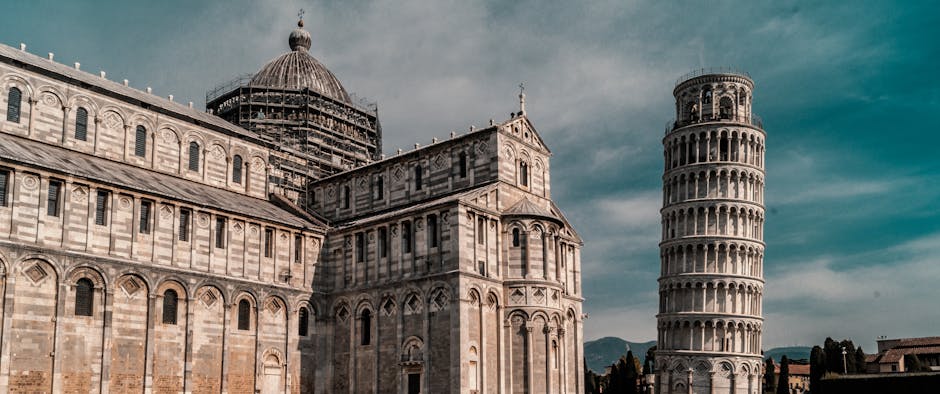
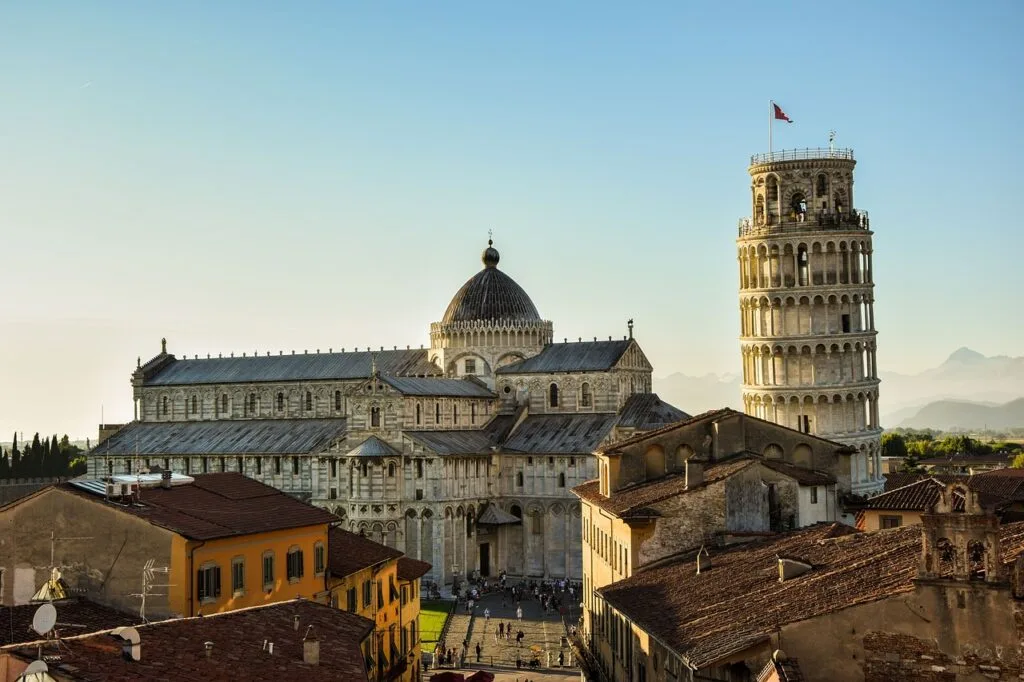
The Piazza del Duomo, often called the Piazza dei Miracoli, is the most obvious spot—and yet it’s full of photographic opportunities. Address: Piazza del Duomo, 56126 Pisa PI, Italy. From this open space you can create frontal compositions that highlight the Tower’s tilted verticality against the other monuments: the Cattedrale di Santa Maria Assunta (Cathedral of Pisa) and the Battistero di San Giovanni (Piazza del Duomo, 56126 Pisa PI, Italy). For an iconic shot, stand on the central axis of the Piazza, a little nearer the northern fountain to include the contrast between the green lawn and the white marble.
Timings and ticket notes: access to the Piazza itself is free, but interior visits to the monuments run on set schedules. The Cattedrale di Santa Maria Assunta typically offers free entry (subject to limited checks; occasionally a recommended donation), while the Baptistery has an entrance fee of about €8. The Torre di Pisa (Leaning Tower of Pisa) sells timed tickets: roughly €22 for an adult ticket (rates may change), with discounts for children and seniors. Opening hours vary by season: in high season the Piazza can be accessible from around 8:30 until 20:00 and even later for special events—always check the official site.
Composition tips: use a wide-angle lens (24–35 mm) if you want to include the Cathedral gate and the lawn in a single frame. To isolate the Tower, an 85–135 mm lens will reduce foreground clutter while compressing perspective. The best light is in the morning (sunrise) for soft eastern light, or late afternoon when the marble facades warm up. Avoid midday when light is harsh and shadows are unflattering.
Handling crowds: the Piazza del Duomo is extremely busy between 10:00 and 17:00. For crowd-free images, arrive before 8:00 in high season or after 19:30 in low season. If you want portraits with people, always ask permission before posting their faces on social media. Another classic angle here is the wide view from the steps of the Camposanto Monumentale: it frames the Tower with the monumental cemetery in the foreground, adding texture and depth.
 Click here to book entry for the Piazza dei Miracoli monuments
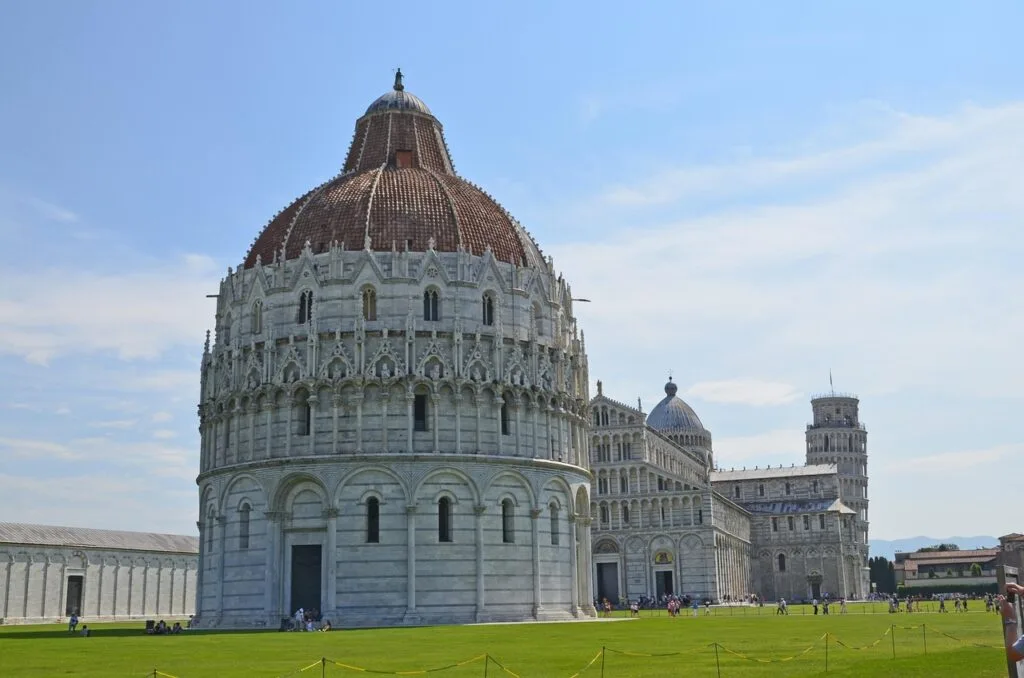
West-side perspectives and the Baptistery — reflections, symmetry and carved details
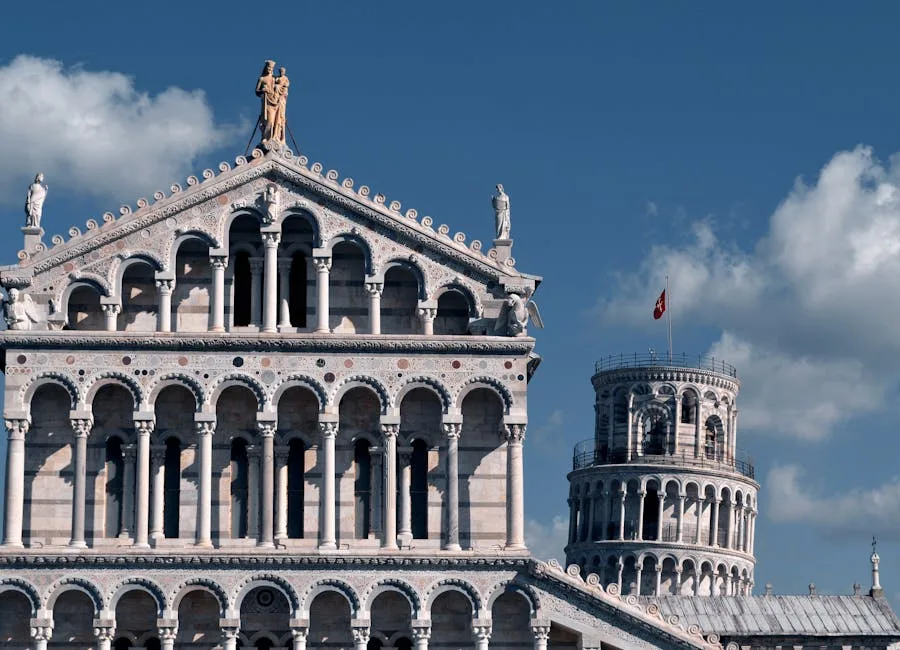
The west side of the Tower, close to the Battistero di San Giovanni (Piazza del Duomo, 56126 Pisa PI, Italy), is perfect for capturing symmetry and reflections after rain. The Baptistery’s circular white-and-grey marble structure acts like a bright counterpoint to the Tower, creating a compelling architectural dialogue. The Baptistery is open to visitors: entry around €8, high-season hours often from 9:00 to 19:00. The curve of the Baptistery set against the Tower’s tilt makes for dynamic compositions.
Shooting techniques: to make the most of reflections, look for puddles on the paving after rain or use a polarizer to deepen the sky and reduce unwanted glare. A 35–70 mm lens is versatile here: 35 mm brings more context into the frame, while 70 mm isolates details in the columns and sculpted scenes of the Baptistery and the Tower’s arcades. Use the repeated vertical lines—columns, windows and arches—to build rhythmic compositions.
Light tip: the best light for this side is late afternoon when the sun moves west. Shadows will add relief to columns and low-relief carvings. For portraits, place your subject with their back to the sun and use the Tower and Baptistery as a softly blurred (bokeh) backdrop. Evenings can be magical: artificial lights emphasize sculpted profiles and the Tower pops against a dark sky.
Access and logistics: the Baptistery operates on regular visiting hours, and guided tours are available via the local tourist office (Piazza del Duomo). For a more intimate angle, climb the small steps near the Museo dell’Opera del Duomo (Piazza del Duomo, 56126 Pisa PI, Italy). That museum sometimes hosts temporary exhibits; entrance about €6–9, hours generally from 9:30 to 18:30. From those steps, the perspective on the Tower and the Baptistery creates pleasing depth—ideal for black-and-white work.
Click here to reserve baptistery and cathedral audioguide tickets
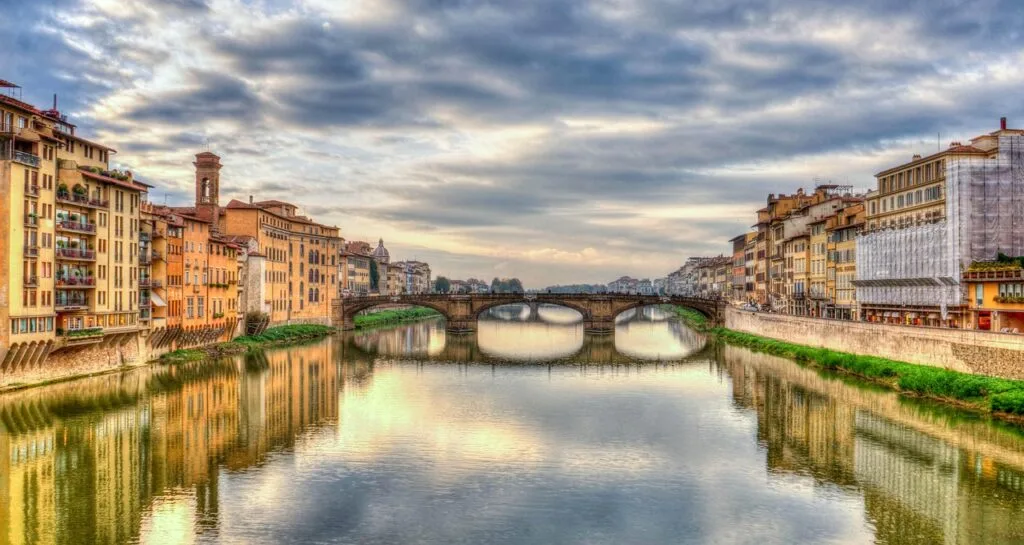
Panoramic angles from the Arno and its bridges — urban vistas and river reflections
Stepping 5 to 15 minutes away from the Piazza del Duomo along the Arno will dramatically change your view of the Tower. Walking the riverbanks (lungarni) reveals quieter, more urban perspectives, with rooflines, historic bridges and compelling reflections in the water. Notable spots include the Ponte di Mezzo or the Ponte della Cittadella depending on where you stand; for a precise point try Lungarno Galileo Galilei, 56125 Pisa PI, Italy—a stroll along this bank will let you frame the Tower among colorful facades and moored boats.
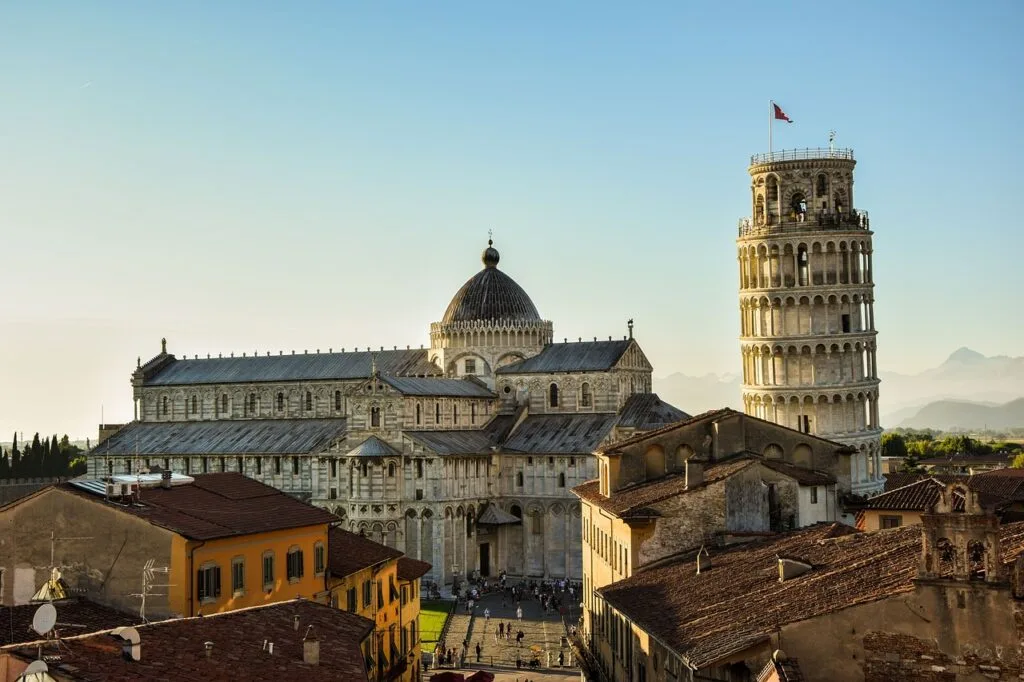
Ponte di Mezzo (Ponte di Mezzo, 56125 Pisa PI, Italy) offers a perspective where the Tower seems to align with Tuscan rooftops. The best times to shoot from the Arno banks are at sunset (golden hour) and during the blue hour when city lights come on and the water turns mirror-smooth. Use a 70–200 mm telephoto to compress the scene and create a stacked “pile-up” of buildings around the Tower; a tripod and long exposures (5–15 seconds) will smooth river reflections.
Practicalities: access to the riverbanks is free at all hours, but check café and bridge opening times if you plan to stay late. Lungarno Pacinotti and Lungarno Gambacorti also offer excellent viewpoints; useful address: Lungarno Gambacorti, 56125 Pisa PI, Italy. In the evening, several riverside restaurants have terraces—stopping for a drink is a great way to extend your shoot into twilight.
Local tips: to avoid distracting reflections on the water, shift your angle slightly or use a graduated ND filter when the sun is low. Watch for urban clutter (signs, bins): moving 3–5 meters can dramatically clean your composition. For a narrative shot, include locals—a passerby, a fisherman or a couple on a bench—to give human scale to the Tower and show the contrast between extraordinary architecture and everyday Pisan life.
Click here to book a guided walking tour of Pisa
Medieval streets and hidden perspectives — Borgo Stretto and adjacent alleys
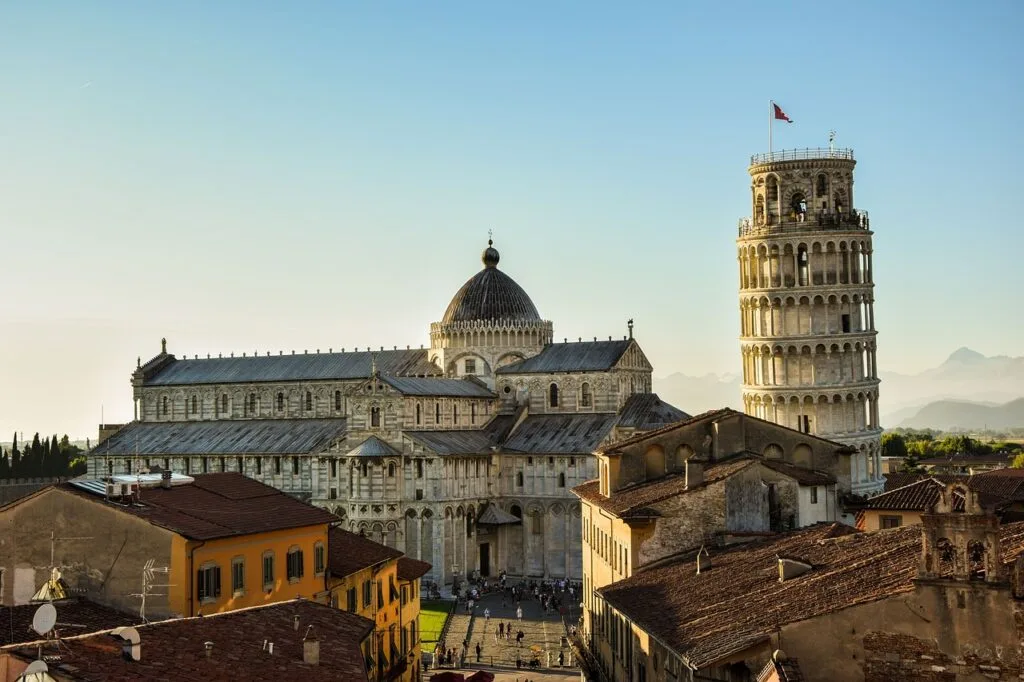
For more intimate, less postcard-like angles, wander the medieval lanes around the Piazza dei Miracoli—particularly Via Santa Maria, Borgo Stretto and the little side streets. Key address: Borgo Stretto, 56125 Pisa PI, Italy. These streets let the Tower appear as an unexpected element in a dense urban scene: framed by arcades, an antique lamp-post, or an iron shop sign. These views are perfect for editorial, lifestyle or black-and-white images that emphasize texture and perspective.
Technique and gear: a 50 mm or 35 mm lens works best in tight spaces. Play with depth of field to isolate a foreground detail (a wooden door, a metal plaque) while keeping the Tower softly out of focus in the background. Look for leading lines that draw the eye toward the Tower: paving stones, gutters, rows of windows or even overhead wires. Consider late-afternoon side light, which often flatters narrow streets.
Practical advice: Borgo Stretto is a historic shopping area with cafés and stores. If you need a break during your shoot, stop at Caffè dell’Orologio (address: Borgo Stretto 60R, 56125 Pisa PI, Italy) or visit a local artisan for an espresso. It’s a good chance to rest and scout new angles as the light shifts. Avoid delivery hours (early morning) when streets can get congested.
Safety and respect: these streets are lively and sometimes narrow—be mindful of residents and businesses. Ask permission before photographing inside shops or private courtyards. For editorial portraits, offer a copy of the photo to your subject—that’s a friendly way to exchange and often leads to tips about lesser-known viewpoints.
Click here to book a 2-hour walking tour of Pisa
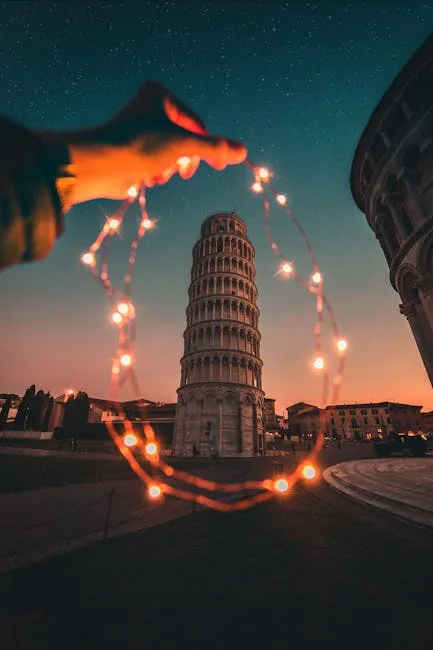
Night angles and long exposures — the illuminated Tower
The Tower of Pisa transforms after dark. Night lighting highlights reliefs and alters the marble’s color, opening up dramatic long-exposure possibilities. The best night views are from the Piazza del Duomo or from the Arno banks to capture both the Tower and its reflection. In high season, public illumination often runs until around 23:00 or later. Nighttime safety in the tourist zone is generally good, but stay alert and don’t leave gear unattended.
Technique: use a sturdy tripod and a remote shutter release. Try long exposures (10–30 seconds) to capture ambient glow and blur moving crowds, or shorter exposures (1–2 seconds) to retain some texture in the sky. Keep ISO low (100–200) to reduce noise and stop down to f/8–f/11 for maximum sharpness. If you’re aiming for star shots, check for low light pollution and consider longer exposures combined with slight framing shifts to reduce wind blur.
Creative options: light painting—briefly illuminating parts of the scene with a flashlight during a long exposure—can bring out base details or sculptures in the Camposanto. For a cinematic feel, include street lamps or a distant tram crossing a bridge. Human silhouettes against the lit Tower make powerful, story-driven images.
Logistics and permits: for larger setups (big lights, bulky tripods on the lawn), consult the local authority (Opera della Primaziale Pisana) about permissions. Don’t block other visitors and respect protective barriers. Bring a headlamp and a blanket to stay warm during long sessions by the river.
Local tips and practical info — tickets, transport, recommended gear
Tickets and booking: if you plan to climb the Tower of Pisa, booking online on the official site is strongly recommended. Typical price: €22 for an adult (includes about a 30-minute climb window); reduced rates for children and groups. Battistero di San Giovanni: roughly €8. Museo dell’Opera del Duomo: about €6–9. Prices are indicative and may change with season or events—always double-check the official Opera della Primaziale Pisana website.
Opening hours: monuments in the Piazza del Duomo generally open around 9:00 and close between 17:00 and 20:00 depending on the season; the Torre di Pisa usually runs timed slots from around 9:00 to 18:30 in low season and later in summer. The tourist information office (Ufficio Informazioni Turistiche) near the square can provide up-to-date hours and combined-ticket options.
Transport: Pisa is served by the Aeroporto Internazionale di Pisa – Galileo Galilei (Via delle Cascine, 56122 Pisa PI, Italy), about 10–15 minutes by taxi from the historic center. The main train station is Pisa Centrale (Piazza della Stazione, 56125 Pisa PI, Italy), a 20–25 minute walk to the Piazza dei Miracoli or about 10 minutes by bus. Local buses, ride-hailing services and taxis make getting around easy.
Recommended gear: a wide-angle 16–35 mm, a versatile 35–70 mm and a telephoto 70–200 mm will cover most needs. Don’t forget a compact tripod for night shots, a polarizing filter, and spare batteries. For portraits, a small reflector helps soften shadows. Bring an extra memory card—the site is one where you’ll be shooting a lot.
Local advice: arrive early to beat the crowds, buy tickets in advance, respect the site (don’t walk on the lawn outside permitted areas), and taste local Pisan cuisine—try the cecina (a chickpea pancake) at a neighborhood spot in Borgo Stretto. For alternative views, ask locals: some hotel terraces and small B&B rooftops offer exclusive lines of sight (seasonal rooftops and guesthouse windows are worth checking).
Click here to book entry for the Leaning Tower climb and cathedral
Click here to book a professional photo session at the Tower of Pisa
Conclusion — Getting the most out of your visit to Pisa
The Leaning Tower of Pisa is not a static, photogenic relic: it’s a sensory, spatial experience. By exploring different angles—from the Piazza del Duomo to the Arno banks, through the medieval arcades of Borgo Stretto and the night viewpoints—you can turn a routine visit into a varied visual story. Each angle reveals a different side of the Tower: architectural grandeur, human scale, dialogue with neighboring sacred buildings, or an intimate encounter in a historic alley.
Plan your route around opening hours and light conditions: arrive early for clean images, use reflections after rain, and don’t underestimate the narrative power of a silhouette at sunset. Bring the right tools (varied lenses, tripod, filters) and follow local rules on the lawn and inside monuments. Check online for exact prices and reservations—the climb is paid (about €22) and time-limited, so planning is key. For photography enthusiasts, experiment: panoramas, long exposures, tight bokeh, black-and-white—the Tower responds to every style.
Finally, leave room for the unexpected: a weather shift can bring incredible light, a local parade might add unforgettable characters, and a friendly resident could point you to a rarely photographed viewpoint. Beyond photos, take time to enjoy the city: sample Pisan cuisine, walk the Arno, visit the Museo dell’Opera del Duomo (Piazza del Duomo, 56126 Pisa PI, Italy) and the Camposanto Monumentale to deepen your understanding of the place. With preparation, curiosity and respect, you’ll leave with not just great images but a rewarding, memorable experience of Pisa.